Blog

  • Circulating Supply vs Total Supply vs Max Supply Explained

    Circulating Supply vs Total Supply vs Max Supply Explained

    What is Circulating Supply?

    Circulating supply refers to the number of coins or tokens currently available in the market and generally accessible to the public.

    These tokens may be held by individual investors, traders, exchanges, or other market participants.

    For example, imagine a cryptocurrency has:

    • 100 million tokens created.
    • 60 million tokens available in the market.
    • 40 million tokens locked or reserved.

    In this example, its circulating supply is 60 million tokens.

    Why does this matter?

    Circulating supply helps calculate a cryptocurrency’s market capitalisation.

    The formula is:
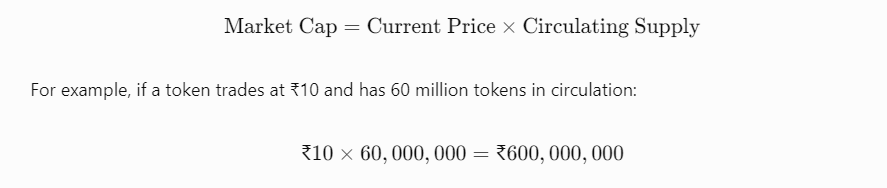
    Its market capitalisation would be ₹60 crore.

    However, circulating supply does not tell you the complete story. You should also check how many tokens are locked, reserved, or scheduled for release.

    What is Total Supply?

    Total supply refers to the total number of coins or tokens that have been created, minus any tokens that have been permanently burned.

    It generally includes tokens that are currently circulating as well as tokens that are locked, reserved, or held for future distribution.

    Let’s continue with the previous example:

    • Circulating supply: 60 million tokens.
    • Locked tokens: 40 million tokens.
    • Total supply: 100 million tokens.

    This means the project has created 100 million tokens, but only 60 million are currently circulating.

    Why is total supply important?

    It helps investors understand how many tokens already exist, including those that may enter circulation later.

    For example, if a project plans to unlock a large number of tokens in the future, the additional supply could affect market dynamics.

    Important: Total supply does not always mean that every token is available for trading. Some tokens may remain locked or restricted.

    What is Maximum Supply?

    Maximum supply refers to the highest number of coins or tokens that can ever exist under a cryptocurrency’s current protocol or token rules.

    In simple terms, it represents the supply limit.

    For example, Bitcoin has a maximum supply of 21 million BTC. Its protocol sets this limit, and new bitcoins enter circulation through mining rewards.

    However, not every cryptocurrency has a fixed maximum supply.

    Some projects have:

    • A fixed maximum supply.
    • No predefined maximum supply.
    • Supply rules that allow additional tokens to be created through governance or protocol changes.

    Therefore, always check a project’s tokenomics to understand whether its maximum supply is fixed or can change.

    Circulating Supply vs Total Supply vs Max Supply

    Now that we understand each term, let’s compare them.

    FeatureCirculating SupplyTotal SupplyMaximum Supply
    MeaningTokens currently circulating in the marketTokens created minus permanently burned tokensHighest possible supply under current rules
    Includes locked tokens?Generally noYes, if already createdRepresents the supply limit
    Changes over time?YesYes, if new tokens are created or burnedUsually fixed, but depends on protocol rules
    Main purposeHelps calculate market capitalisationShows existing token supplyShows potential supply limit

    In simple terms:

    • Circulating supply tells you how many tokens are currently in circulation.
    • Total supply tells you how many tokens exist after accounting for burns.
    • Maximum supply tells you how many tokens can exist at most under the current rules.

    Practical Example: Understanding All Three Together

    Imagine a fictional cryptocurrency called ABC Token.

    Its tokenomics look like this:
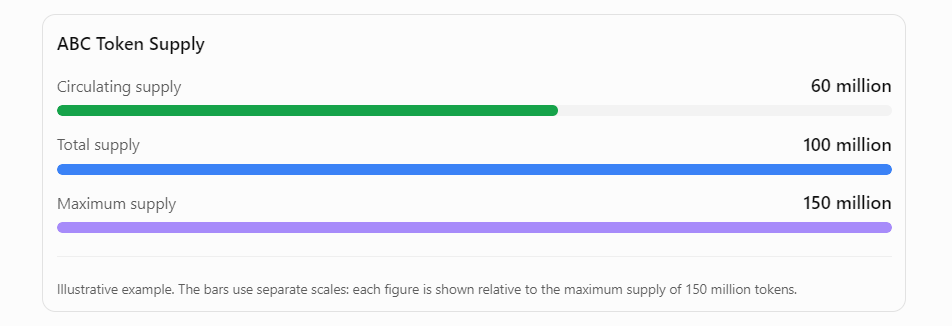
    Here’s what these numbers tell us:

    • 60 million tokens are currently circulating.
    • 40 million tokens exist but are not currently circulating.
    • Another 50 million tokens could potentially be created in the future.

    This means the project has a maximum supply of 150 million tokens, but only 60 million are currently circulating.

    As more tokens enter circulation, the circulating supply may increase. However, the actual impact on price depends on demand, liquidity, token distribution, and other market conditions.

    Why Do These Supply Metrics Matter to Crypto Investors?

    Understanding token supply is important because it helps you look beyond the current token price.

    Here are four reasons why these metrics matter.

    1. Understanding Market Capitalisation

    Market capitalisation uses circulating supply, not maximum supply.

    Therefore, two cryptocurrencies with the same token price can have very different market capitalisations if their circulating supplies differ.

    2. Identifying Future Token Unlocks

    Some projects release tokens gradually to teams, investors, or ecosystem funds.

    When locked tokens enter circulation, the available supply increases. If demand does not grow at a similar pace, this additional supply may create selling pressure.

    However, an unlock does not automatically mean that the token price will fall.

    3. Understanding Fully Diluted Valuation (FDV)

    Fully Diluted Valuation estimates the value of a cryptocurrency if its maximum supply were circulating, using the current token price.

    The formula is:

    Its FDV would be ₹150 crore.

    FDV helps investors compare the current market capitalisation with the potential valuation based on maximum supply.

    However, FDV is an estimate, not a prediction of future market value.

    4. Evaluating Tokenomics

    Token supply is an important part of tokenomics.

    Before evaluating a cryptocurrency, check:

    • How many tokens are currently circulating?
    • How many tokens already exist?
    • Is there a maximum supply?
    • Are tokens locked for future release?
    • Can the project create additional tokens?
    • Are tokens regularly burned?

    These questions can help you understand how a project’s supply may change over time.

    Common Mistakes to Avoid

    Beginners often misunderstand token supply metrics. Watch out for these mistakes:

    1. Assuming total supply and maximum supply are the same

    They are different. Total supply represents existing tokens after burns, while maximum supply represents the upper limit under current rules.

    2. Looking only at circulating supply

    A low circulating supply may make a token’s market capitalisation appear small. However, a large amount of locked supply could enter circulation later.

    3. Assuming maximum supply is always fixed

    Some cryptocurrencies have no fixed maximum supply. Others may allow changes through governance or protocol upgrades.

    4. Assuming token burns always increase prices

    Burning tokens reduces supply, but it does not guarantee a price increase. Demand and broader market conditions also matter.

    Frequently Asked Questions (FAQs)

    1. Which is more important: circulating supply or total supply?

    Both are important. Circulating supply helps calculate market capitalisation, while total supply shows how many tokens already exist, including locked tokens.

    2. Can circulating supply increase over time?

    Yes. Circulating supply can increase when locked or reserved tokens become available for distribution. It can also decrease if tokens are permanently burned or otherwise removed from circulation.

    3. Is maximum supply always fixed?

    No. Some cryptocurrencies have a fixed maximum supply, while others have no predefined limit or allow changes through protocol rules and governance.

    4. What happens when circulating supply reaches maximum supply?

    If all tokens under a fixed maximum supply enter circulation and no additional tokens can be created, circulating supply may equal maximum supply. However, permanently burned tokens or other supply rules can affect the figures.

    5. Does a higher circulating supply mean a cryptocurrency is less valuable?

    No. A higher circulating supply does not automatically make a cryptocurrency less valuable. Token price also depends on demand, utility, adoption, liquidity, and market conditions.

    Disclaimer: This article is for educational purposes only and does not constitute financial or investment advice. Cryptocurrency investments involve risk. Always research a project’s tokenomics and supply distribution before making investment decisions.

  • What is a Stop-Limit Order? A Beginner’s Guide to Crypto Trading

    What is a Stop-Limit Order? A Beginner’s Guide to Crypto Trading

    What is a Stop-Limit Order?

    A stop-limit order is a type of trading order that combines two instructions:

    • Stop price: The price that triggers the limit order.
    • Limit price: The price at which you are willing to buy or sell, or a better price.

    Once the market reaches the stop price, the exchange places a limit order in the order book.

    However, the trade will execute only if a matching buyer or seller is available at the limit price or a better price.

    In simple terms, a stop-limit order helps traders decide when an order should become active and what price they are willing to accept.

    How does a Stop-Limit Order Work?

    Let’s understand the process with an example.

    Suppose Bitcoin is currently trading at ₹80,00,000. You own some Bitcoin and want to sell if its price starts falling.

    You set the following values:

    Order detailPrice
    Current Bitcoin price₹80,00,000
    Stop price₹78,00,000
    Limit price₹77,50,000

    Here’s what happens:

    Step 1: You place the order

    You enter a stop price of ₹78,00,000 and a limit price of ₹77,50,000.

    Step 2: The market reaches the stop price

    When Bitcoin reaches ₹78,00,000, the stop condition activates.

    Step 3: The limit order enters the order book

    The exchange places your sell limit order at ₹77,50,000.

    Step 4: The order may execute

    If buyers are available at ₹77,50,000 or higher, your order can execute.

    However, if the price drops quickly below ₹77,50,000 and no buyer is available at your limit price, your order may remain unfilled.

    The important difference: The stop price activates the order, but the limit price controls the acceptable execution price.

    What are the Two Types of Stop-Limit Orders?

    Traders generally use stop-limit orders in two ways.

    1. Sell Stop-Limit Order

    A sell stop-limit order helps traders prepare to sell an asset if its price falls to a specified level.

    For example:

    • Current price: ₹80,00,000
    • Stop price: ₹78,00,000
    • Limit price: ₹77,50,000

    When Bitcoin reaches the stop price, the exchange places a sell limit order.

    Traders may use this approach to manage downside risk. However, the order may not execute if the market moves below the limit price too quickly.

    2. Buy Stop-Limit Order

    A buy stop-limit order allows traders to prepare a purchase when the price rises to a specified level.

    For example:

    • Current price: ₹80,00,000
    • Stop price: ₹82,00,000
    • Limit price: ₹82,50,000

    When Bitcoin reaches ₹82,00,000, the exchange places a buy limit order at ₹82,50,000.

    The order can execute at ₹82,50,000 or lower, provided a matching seller is available.

    Traders may use this type of order when they want to enter a position after the market crosses a particular price level.

    Stop-Limit Order vs Stop-Market Order

    Although both orders use a stop price, they work differently after the stop condition activates.

    FeatureStop-Limit OrderStop-Market Order
    TriggerStop priceStop price
    Order placed after triggerLimit orderMarket order
    Price controlYesNo fixed execution price
    Execution guaranteeNoGenerally aims for immediate execution, subject to liquidity and platform rules
    Main riskOrder may remain unfilledExecution may happen at an unfavourable price

    For example, imagine Bitcoin falls sharply after reaching your stop price.

    • With a stop-limit order, your order may remain open if the market moves beyond your limit price.
    • With a stop-market order, the exchange generally attempts to execute the order at the available market price.

    Therefore, a stop-limit order prioritises price control, while a stop-market order prioritises execution.

    What is the Difference Between a Stop-Limit Order and a Regular Limit Order?

    Both orders involve a limit price, but they serve different purposes.

    Regular Limit OrderStop-Limit Order
    Places a limit order directly in the order bookWaits for a stop price to trigger a limit order
    Does not require a separate trigger priceRequires a stop price and a limit price
    Used to buy or sell at a chosen price or betterUsed when a specific market condition should activate the order

    For example, if Bitcoin is trading at ₹80,00,000 and you want to buy at ₹78,00,000, you can place a regular buy limit order.

    However, if you want to buy only after Bitcoin rises to ₹82,00,000, you can use a buy stop-limit order with a suitable stop and limit price.

    Advantages of Using a Stop-Limit Order

    A stop-limit order offers several benefits when used correctly.

    1. Better price control

    You decide the price at which you are willing to buy or sell.

    2. Helps manage trading risk

    You can prepare an exit order in advance instead of reacting manually to every market movement.

    3. Reduces the need for constant monitoring

    Once placed, the order can activate when the specified stop condition is met, subject to the exchange’s order rules.

    4. Supports planned trading strategies

    Traders can use stop-limit orders to plan entries and exits around specific price levels.

    Risks and Limitations of Stop-Limit Orders

    Despite these advantages, stop-limit orders are not perfect.

    1. The order may not execute

    This is the biggest limitation. If the market moves beyond your limit price, the order may remain unfilled.

    2. Fast market movements can create problems

    During sudden price changes, the market may move through both the stop and limit prices before a suitable buyer or seller becomes available.

    3. It does not guarantee a loss limit

    A stop-limit order can help manage risk, but it cannot guarantee that you will sell at your intended price.

    4. Order settings can vary across exchanges

    Some platforms have different trigger-price rules, order conditions, and execution policies. Always check how your exchange handles stop-limit orders before placing one.

    Common Mistakes to Avoid

    Beginners should pay attention to these common mistakes:

    • Confusing the stop price with the limit price.
    • Setting the stop and limit prices without considering market volatility.
    • Assuming that the order will always execute after reaching the stop price.
    • Forgetting to check whether the order is still open or partially filled.
    • Using stop-limit orders without understanding the exchange’s trigger rules.

    Remember, placing an order is only one part of a trading plan. You should also understand your position size, risk tolerance, and exit strategy.

    Frequently Asked Questions (FAQs)

    1. What is a stop-limit order in crypto trading?

    A stop-limit order is a trading instruction that activates a limit order when the market reaches a specified stop price. The trade executes only if a matching order is available at the limit price or better.

    2. What is the difference between a stop price and a limit price?

    The stop price triggers the order. The limit price sets the price at which you are willing to buy or sell.

    3. Can a stop-limit order fail to execute?

    Yes. If the market moves beyond your limit price and no matching order is available, your order may remain unfilled.

    4. Is a stop-limit order the same as a stop-loss order?

    Not exactly. A stop-loss describes the purpose of an order: limiting potential losses. A stop-limit order is one way to place such an exit instruction. A stop-market order is another common approach.

    5. When should traders use a stop-limit order?

    Traders may use it when they want an order to activate at a particular price but also want control over the minimum selling price or maximum buying price.

    Disclaimer: This article is for educational purposes only and does not constitute financial or investment advice. Cryptocurrency trading involves risk. Always understand the order conditions and potential limitations before placing a trade.

  • Leverage: Why Small Moves Can Cause Large Losses

    Leverage: Why Small Moves Can Cause Large Losses

    What is Leverage in Crypto Trading?

    Leverage allows traders to control a larger trading position by using a smaller amount of their own money as margin.

    In simple terms, you borrow exposure to a larger position without paying its full value upfront. The exchange sets the margin requirements and other conditions for the trade.

    For example, suppose you have ₹1,000 and use 10x leverage.

    • Your margin: ₹1,000
    • Leverage: 10x
    • Total position size: ₹10,000

    This means you can open a position worth ₹10,000 with ₹1,000 as your initial margin.

    However, remember that leverage does not guarantee higher profits. It also increases the impact of price movements against your position.

    How does Leverage work?

    Leverage works by multiplying your market exposure compared with the margin you provide.

    The basic relationship is:

    \[ \text{Position Size} = \text{Margin} \times \text{Leverage} \]

    Let’s understand this with a simple example.

    Suppose you have ₹2,000 and decide to use 5x leverage.

    DetailAmount
    Your margin₹2,000
    Leverage5x
    Total position size₹10,000
    Market movement5%
    Profit or loss before costs₹500

    If the market moves 5% in your favour, your position gains ₹500.

    If it moves 5% against you, your position loses ₹500.

    That is a 25% change relative to your original ₹2,000 margin.

    The important point: A 5% market movement creates a 25% gain or loss on your margin in this simplified example.

    Why can small market moves cause large losses?

    Leverage increases your exposure without increasing the amount of money you initially contribute.

    As a result, even a small price movement can have a significant impact on your margin.

    Consider a trader who opens a ₹10,000 position using ₹1,000 as margin.

    Impact of different market movements

    Market movementProfit or lossReturn on ₹1,000 margin
    +2%+₹200+20%
    +5%+₹500+50%
    -2%-₹200-20%
    -5%-₹500-50%
    -8%-₹800-80%

    Illustrative calculation before trading fees, funding payments and other costs. Assumes a ₹10,000 position and ₹1,000 initial margin.

    Notice how quickly losses increase as the market moves against the position.

    Without leverage, a 5% fall in a ₹1,000 investment would mean a ₹50 loss. With a ₹10,000 leveraged position, the same 5% fall means a ₹500 loss.

    This difference explains why leveraged trading requires careful risk management.

    What is Liquidation in Leveraged Trading?

    Liquidation happens when an exchange automatically closes a leveraged position because the trader’s margin is no longer sufficient to support it under the platform’s rules.

    When the market moves against a leveraged position, the trader’s margin decreases.

    If the margin falls below the required maintenance margin, the exchange may liquidate the position to limit further losses.

    For example:

    1. A trader opens a leveraged position using ₹1,000 as margin.
    2. The market moves against the trader.
    3. The position starts accumulating losses.
    4. The remaining margin approaches the required maintenance level.
    5. The exchange may automatically close the position.

    The trader may lose a substantial part of their margin, depending on the liquidation price, fees, and exchange rules.

    Remember: Liquidation does not necessarily happen only when your entire margin reaches zero. Exchanges generally require a minimum maintenance margin.

    You can learn more in our upcoming lesson on What Is Liquidation in Leveraged Trading?

    Common Types of Leverage in Crypto Trading

    Crypto exchanges may offer different leverage levels depending on the trading pair, product, account requirements, and platform rules.

    LeverageMeaning
    2xControl a position twice the margin amount
    5xControl a position five times the margin amount
    10xControl a position ten times the margin amount
    20xControl a position twenty times the margin amount

    For example, with ₹1,000 as margin:

    • 2x leverage = ₹2,000 position
    • 5x leverage = ₹5,000 position
    • 10x leverage = ₹10,000 position
    • 20x leverage = ₹20,000 position

    As leverage increases, the margin required for a given position decreases. However, the position becomes more sensitive to price movements relative to the margin.

    Is Higher Leverage always better?

    No. Higher leverage does not automatically make a trade better.

    Although it allows traders to control larger positions with less initial margin, it also increases the risk of liquidation.

    Consider two traders who both have ₹1,000.

    • Trader A uses 2x leverage and opens a ₹2,000 position.
    • Trader B uses 20x leverage and opens a ₹20,000 position.

    If the market moves 2% against both positions:

    • Trader A loses ₹40.
    • Trader B loses ₹400.

    The same market movement creates very different losses because their position sizes are different.

    Therefore, choosing leverage should depend on risk tolerance, trading strategy, market conditions, and available capital—not simply the desire to earn more.

    Common Mistakes to Avoid When Using Leverage

    Even experienced traders can make mistakes when trading with leverage. Beginners should be especially careful about the following:

    1. Using maximum available leverage

    Just because an exchange offers high leverage does not mean you need to use it. Higher leverage can leave less room for adverse price movements.

    2. Ignoring liquidation risk

    Before entering a position, understand the liquidation price and the exchange’s maintenance margin requirements.

    3. Trading without a stop-loss plan

    A stop-loss can help manage risk by closing a position when the market reaches a specified price. However, it does not guarantee execution at that exact price, especially during fast market movements.

    4. Increasing position size after losses

    Trying to recover losses by taking larger leveraged positions can make the situation worse.

    5. Forgetting trading costs

    Trading fees, funding payments, and slippage can affect the final result. Always consider these costs when calculating potential returns and losses.

    How to Manage Risk while trading with Leverage?

    Leverage requires discipline. Before opening a position, consider these practical steps:

    • Understand your position size: Know how much exposure you are taking compared with your margin.
    • Use a clear trading plan: Decide your entry, exit, and risk limits before placing a trade.
    • Check liquidation levels: Understand when your position could be automatically closed.
    • Avoid risking too much capital: Do not put your entire trading balance into one leveraged position.
    • Consider lower leverage: Lower leverage can reduce exposure for a given margin amount.
    • Account for trading costs: Include fees, funding payments, and possible slippage in your calculations.

    Most importantly, never assume that a market will move in your expected direction.

    Frequently Asked Questions (FAQs)

    1. What does 10x leverage mean in crypto trading?

    10x leverage means a trader can control a position worth ten times their initial margin. For example, ₹1,000 in margin can support a ₹10,000 position, subject to exchange requirements.

    2. Can I lose more money than my initial margin?

    It depends on the trading product, exchange rules, margin mode, and account protections. Some platforms use liquidation and risk controls to limit losses, but these do not guarantee that losses will never exceed the initial margin. Always check the platform’s terms.

    3. Does leverage increase profit?

    Leverage increases the impact of market movements on your position. It can increase potential profits, but it also increases potential losses.

    4. What happens when a leveraged position is liquidated?

    The exchange automatically closes the position when the margin falls below the required maintenance level. The trader may lose a significant portion of the margin.

    5. Is leverage suitable for beginners?

    Leveraged trading carries additional risks and can lead to rapid losses. Beginners should first understand spot trading, position sizing, liquidation, and risk management before considering leveraged products.

    Disclaimer: This article is for educational purposes only and does not constitute financial or investment advice. Cryptocurrency trading, especially leveraged trading, involves substantial risk. You may lose some or all of your trading capital.

  • FOMO and FUD in Crypto Trading: How Emotions Affect Traders

    FOMO and FUD in Crypto Trading: How Emotions Affect Traders

    What is FOMO in Crypto Trading?

    FOMO stands for Fear of Missing Out. It happens when traders feel pressured to buy a cryptocurrency because its price is rising or other people are making profits from it.

    For example, imagine Bitcoin is rising quickly. You see posts on social media celebrating the price movement, and people are talking about how much money they have made.

    You may start thinking:

    • What if the price keeps rising?
    • What if I miss this opportunity?
    • Should I buy before it becomes more expensive?

    As a result, you might buy without checking the market conditions or considering the risks.

    This is FOMO.

    How FOMO Affects Trading Decisions

    FOMO can lead to several common trading mistakes:

    1. Buying at the wrong time

    Traders may enter a position after a major price increase because they fear missing further gains. However, the market could correct soon after they buy.

    2. Ignoring research

    Instead of checking a project’s fundamentals, trading volume, liquidity, or market conditions, traders may follow social media trends or popular opinions.

    3. Taking unnecessary risks

    Some traders invest more money than they can afford to lose because they believe the opportunity will disappear quickly.

    4. Chasing every market trend

    When one cryptocurrency rises, traders may quickly move their attention to another trending asset. This can lead to impulsive decisions and an unclear trading strategy.

    What is FUD in Crypto Trading?

    FUD stands for Fear, Uncertainty, and Doubt. It describes negative information, rumours, or opinions that create fear and uncertainty around a cryptocurrency, project, or the wider market.

    FUD can come from different sources, including:

    • Negative news reports.
    • Unverified social media posts.
    • Rumours about a crypto project.
    • Concerns about regulations.
    • Security incidents or exchange-related news.

    For example, imagine you hold a cryptocurrency and suddenly see a post claiming that the project is shutting down. You become worried and decide to sell immediately.

    Later, you discover that the information was misleading or completely false.

    This is how FUD can influence trading decisions.

    However, not all negative information is false. Genuine security issues, regulatory developments, or project failures can affect the market. Therefore, traders should verify information rather than dismiss every negative report as FUD.

    How FUD Affects Trading Decisions

    1. Panic selling

    Traders may sell their holdings quickly because they fear further losses, even when they have not verified the information.

    2. Making decisions based on rumours

    Unconfirmed reports can create unnecessary panic and lead to poor trading choices.

    3. Losing confidence in a strategy

    Constant negative news may cause traders to abandon their original plan without reviewing whether the reasons behind it have actually changed.

    4. Overreacting to market movements

    A sudden price drop can create fear. However, one price movement does not always tell the complete story of a cryptocurrency or project.

    FOMO vs FUD: What is the Difference?

    Although FOMO and FUD create different emotional reactions, both can push traders towards impulsive decisions.

    FOMOFUD
    Fear of missing an opportunityFear caused by uncertainty or negative information
    Often appears during rising markets or trendsOften appears during negative news or falling markets
    Can lead to rushed buyingCan lead to panic selling
    Driven by excitement and social pressureDriven by worry and uncertainty
    Encourages chasing price movementsEncourages reacting to negative information

    The common problem: Both can make traders act before they properly understand the situation.

    Real-Life Example: How FOMO and FUD Work

    Consider a cryptocurrency trading at ₹100.

    Stage 1: FOMO enters the market

    The price rises to ₹130. Social media discussions become increasingly positive, and traders start sharing their profits.

    A trader who missed the initial movement becomes worried about missing further gains. They buy at ₹130 without checking whether the price increase is supported by market activity.

    Stage 2: FUD spreads

    Soon after, an unverified rumour appears claiming that the project has security problems. The price falls to ₹110.

    The trader becomes nervous and sells immediately.

    Stage 3: The emotional decision

    The trader bought because of excitement and sold because of fear. They did not follow a clear trading plan or verify the information before making either decision.

    This example shows how emotions can influence decisions at both ends of a trade.

    How to Avoid FOMO and FUD in Crypto Trading?

    You cannot completely remove emotions from trading. However, you can build habits that prevent emotions from controlling your decisions.

    1. Create a Trading Plan

    Before entering a trade, decide your entry price, exit strategy, stop-loss level, and the amount you are willing to risk.

    A clear plan gives you something to follow when the market becomes unpredictable.

    2. Do Your Own Research

    Do not buy or sell a cryptocurrency simply because someone recommends it online.

    Instead, check reliable sources, project information, market activity, and relevant announcements before making a decision.

    3. Avoid Chasing Sudden Price Movements

    A rapidly rising price does not automatically mean that an asset is a good buying opportunity.

    Similarly, a sudden drop does not always mean that you should sell immediately. Take time to understand what is driving the movement.

    4. Manage Your Risk

    Never risk money you cannot afford to lose. Decide how much capital you are comfortable putting into a trade and avoid increasing your position just because of excitement or fear.

    5. Take a Break When Emotions Take Over

    If you feel pressured to buy or sell immediately, pause before acting.

    Step away from the trading screen, review your plan, and check whether your decision is based on reliable information.

    Common Mistakes Traders Should Avoid

    • Buying a cryptocurrency only because it is trending.
    • Selling immediately after reading an unverified rumour.
    • Following influencers without checking their claims.
    • Increasing trade size because of excitement.
    • Ignoring stop-loss and risk management.
    • Making repeated trades to recover previous losses.

    Remember, not every market movement requires a reaction. Sometimes, waiting and gathering more information is the better decision.

    Frequently Asked Questions (FAQs)

    1. What does FOMO mean in crypto?

    FOMO means Fear of Missing Out. It happens when traders buy a cryptocurrency because they fear missing a potential price increase or profit opportunity.

    2. What does FUD mean in cryptocurrency?

    FUD stands for Fear, Uncertainty, and Doubt. It refers to negative information, rumours, or opinions that create concern about a cryptocurrency or the market.

    3. Is FOMO always bad in trading?

    FOMO is a natural emotional response. However, acting on it without research or a trading plan can lead to poor decisions and unnecessary risks.

    4. How can beginners avoid FOMO and FUD?

    Beginners can reduce their influence by researching before trading, verifying news, following a trading plan, managing risk, and avoiding impulsive decisions.

    5. Can FUD affect cryptocurrency prices?

    Yes. Negative news, rumours, and uncertainty can influence market sentiment and contribute to buying or selling pressure. However, actual price movements depend on several market factors.

    Disclaimer: This article is for educational purposes only. It does not provide financial or investment advice. Cryptocurrency trading involves risk, and readers should conduct their own research before making financial decisions.

  • Seed Phrase vs Private Key: Know the Difference

    Seed Phrase vs Private Key: Know the Difference

    When you create a cryptocurrency wallet, you receive important security information that helps you access and manage your digital assets.

    Two terms you will often encounter are seed phrase and private key.

    Although people sometimes use these terms interchangeably, they do not mean the same thing. A seed phrase helps you recover your wallet, while a private key allows you to authorize transactions from a specific blockchain account.

    Understanding the difference can help you avoid common wallet security mistakes.

    What is a Seed Phrase?

    A seed phrase, also known as a recovery phrase or mnemonic phrase, is a sequence of words that helps you restore your cryptocurrency wallet.

    Most standard wallet recovery phrases contain 12 or 24 words, although other lengths also exist.

    When you create a wallet, the wallet software generates this phrase using a standard such as BIP-39, if the wallet supports that standard.

    For example, a seed phrase may look like this:

    word1 word2 word3 word4 ...

    This is only an illustrative format, not a real recovery phrase.

    Your wallet uses the seed phrase to derive the cryptographic keys associated with your wallet. Therefore, you can use the phrase to restore access to your wallet on a compatible device or wallet application.

    Why Is a Seed Phrase Important?

    A seed phrase acts as a backup for your wallet.

    Imagine your phone gets damaged or you accidentally delete your wallet application. You may lose access to the wallet on that device.

    However, if you have your recovery phrase, you can restore your wallet using a compatible wallet application.

    Keep in mind that your seed phrase can provide access to multiple accounts derived from it, depending on the wallet’s derivation paths and account settings.

    What Is a Private Key?

    A private key is a secret cryptographic code that allows you to control a specific blockchain account or address.

    Your wallet uses this key to create digital signatures when you authorize transactions.

    For example, when you send cryptocurrency to another wallet, the private key helps prove that you have the authority to approve the transaction.

    A private key usually appears as a long string of letters and numbers. Its format depends on the blockchain and wallet system.

    Unlike a public wallet address, you must keep your private key confidential.

    Why Is a Private Key Important?

    A private key gives you control over the funds associated with the corresponding blockchain account.

    Without the correct private key, you generally cannot authorize transactions from that account.

    However, losing your private key does not always mean you have permanently lost access. If you have the original seed phrase and know the correct wallet derivation details, you may be able to restore the private key.

    Seed Phrase vs Private Key: Key Differences

    Both play an important role in cryptocurrency security, but they serve different purposes.

    FeatureSeed PhrasePrivate Key
    MeaningA sequence of recovery wordsA secret cryptographic key
    Main purposeHelps restore wallet accessAuthorizes transactions
    FormatUsually 12 or 24 wordsLong string of letters and numbers
    Wallet accessCan restore multiple derived accountsControls a specific blockchain account or key
    RelationshipCan generate or derive private keysCan be derived from a seed phrase
    SecurityMust remain secretMust remain secret

    In simple terms, a seed phrase can act as the master backup for a wallet, while private keys control individual accounts or addresses.

    How are Seed Phrases and Private Keys Connected?

    Seed phrases and private keys work together through a process called key derivation.

    Let’s understand the relationship step by step.

    Step 1: Your Wallet Generates a Seed Phrase

    When you create a compatible wallet, the software generates a recovery phrase.

    Step 2: The Wallet Derives a Seed

    The wallet processes the recovery phrase according to its supported standards and settings to create a cryptographic seed.

    Step 3: The Wallet Derives Private Keys

    The wallet uses this seed and its derivation rules to generate private keys for different accounts and addresses.

    Step 4: The Wallet Uses Private Keys to Authorize Transactions

    When you send cryptocurrency, your wallet uses the relevant private key to create a digital signature.

    The blockchain network verifies that signature before accepting the transaction.

    Therefore, a single seed phrase can help restore multiple private keys and accounts, depending on the wallet’s structure.

    What happens if you lose your Seed Phrase or Private Key?

    Losing either one can create serious problems. However, the consequences depend on what backup information you still have.

    If You Lose Your Seed Phrase

    If you still have access to your wallet and can export or back up the necessary keys, you may be able to create a new recovery backup.

    However, if you lose your device, cannot access your wallet and have no recovery phrase or other valid backup, you may permanently lose access to your funds.

    If You Lose Your Private Key

    If you have the seed phrase and the correct wallet settings, you can generally derive the private key again.

    However, if you lose both the private key and the recovery information needed to restore it, you may lose access to the associated funds.

    This is why wallet backups matter so much.

    How to protect your Seed Phrase and Private Key?

    Your seed phrase and private key are among the most sensitive pieces of information in your crypto wallet.

    Follow these safety practices:

    1. Never share them: No legitimate support representative needs your recovery phrase or private key to help you with an ordinary account query.

    2. Avoid screenshots: Screenshots may sync to cloud storage or remain accessible through other devices.

    3. Store them offline: Consider writing your recovery phrase on paper or using a suitable secure backup method.

    4. Avoid suspicious websites: Fake wallet websites may trick you into entering your recovery phrase.

    5. Never send them through messages: Avoid sharing these details through email, social media, messaging applications or chat support.

    6. Verify wallet applications: Download wallet software only from trusted official sources.

    7. Protect your physical backup: Store it somewhere secure and protected from damage, theft and unauthorized access.

    Remember, anyone who obtains your seed phrase or private key may gain control over the associated funds.

    Common Misconceptions About Seed Phrases and Private Keys

    1. A seed phrase and private key are the same thing.

    No. A seed phrase helps restore a wallet and derive its keys. A private key authorizes transactions from a specific account.

    2. Sharing a seed phrase with customer support is safe.

    No. You should never share your seed phrase with anyone, including people claiming to represent a wallet provider or exchange.

    3. A wallet application stores your cryptocurrency.

    Not exactly. Your cryptocurrency exists on the blockchain. A wallet manages the keys that allow you to access and control your assets.

    4. Losing your phone means losing your crypto.

    Not necessarily. If you have the correct recovery information, you can usually restore access through a compatible wallet.

    5. A public wallet address is as sensitive as a private key.

    No. You can generally share a public wallet address to receive cryptocurrency. However, sharing it may reveal publicly available transaction information.

    Frequently Asked Questions

    1. Is a seed phrase more important than a private key?

    Both are important. A seed phrase can restore multiple derived accounts, while a private key controls a specific account. Protect both carefully.

    2. Can I recover my private key using a seed phrase?

    Yes, if your wallet supports the relevant recovery standards and you use the correct derivation path and account settings.

    3. Can someone steal my crypto using my seed phrase?

    Yes. Someone who obtains your seed phrase may restore your wallet and access the associated funds.

    4. Should I share my private key with a crypto exchange?

    No. Never share your private key or seed phrase with an exchange’s customer support team. Use the exchange’s official deposit and withdrawal processes instead.

    5. Is my wallet address generated from my private key?

    In many common blockchain systems, a public key and wallet address derive from a private key through cryptographic processes. The exact process depends on the blockchain.

    Disclaimer: This article is for educational purposes only and does not provide financial or investment advice. Always protect your wallet credentials and verify information through official sources.

  • What is an On-Chain Transaction Hash?

    What is an On-Chain Transaction Hash?

    Whenever you send or receive cryptocurrency, the blockchain records the transaction. But how can you identify a particular transfer among thousands of other transactions?

    An on-chain transaction hash helps you do exactly that.

    A transaction hash is a unique string of letters and numbers that identifies a specific transaction on a blockchain. It allows users to search for transaction details, check confirmation status and verify whether a transfer has taken place.

    In simple terms, you can think of it as a tracking number for a cryptocurrency transaction.

    Let’s explore how it works and why it matters.

    What is a Transaction Hash in Crypto?

    A transaction hash, also known as a transaction ID or TxHash, is a unique identifier that a blockchain network generates for a transaction.

    When you send cryptocurrency, the network processes your transaction and records it on the blockchain. The transaction hash helps distinguish that transaction from every other transaction on the network.

    For example, imagine you send 0.01 BTC to another wallet. Once the network processes your transaction, you can use its transaction hash to look up details such as:

    • Sender’s wallet address.
    • Receiver’s wallet address.
    • Amount transferred.
    • Transaction fee.
    • Block number.
    • Transaction status.
    • Date and time recorded by the network.

    However, the exact information available depends on the blockchain and the transaction type.

    How Does an On-Chain Transaction Hash Work?

    A transaction hash helps users locate a transaction within a blockchain network.

    Let’s understand the process step by step.

    Step 1: You Initiate a Transaction

    First, you open your crypto wallet or exchange account and enter the receiver’s wallet address and the amount you want to send.

    For example, you decide to transfer 0.01 BTC to another Bitcoin wallet.

    Step 2: The Network Processes Your Transaction

    Next, your wallet broadcasts the transaction to the blockchain network.

    The network checks important details, including whether the transaction follows its rules and whether the sender has sufficient funds.

    Step 3: The Blockchain Records the Transaction

    Once miners or validators include the transaction in a block, the blockchain records it.

    The network provides a transaction hash that identifies the transaction.

    Step 4: You Track It Using a Blockchain Explorer

    Finally, you can copy the transaction hash and paste it into a blockchain explorer.

    The explorer displays the available transaction details, including its status, sender, receiver and block information.

    Therefore, you can use the hash to check the progress of your transfer without relying only on a wallet notification.

    What Does a Transaction Hash Look Like?

    A transaction hash usually appears as a long string of letters and numbers.

    For example, a Bitcoin transaction ID may look like this:

    a1b2c3d4e5f6...

    This is only an illustrative shortened example, not a real transaction ID.

    Different blockchain networks use different formats and hashing methods.

    For instance:

    • Bitcoin: Uses a 64-character hexadecimal transaction ID.
    • Ethereum: Uses a transaction hash that starts with 0x, followed by 64 hexadecimal characters.

    Although their formats differ, both serve the same basic purpose: identifying a specific transaction on the network.

    What Is a Blockchain Explorer?

    A blockchain explorer is an online tool that allows users to view publicly available blockchain data.

    You can use it to search for wallet addresses, blocks and transaction hashes.

    For example:

    When you enter a transaction hash, the explorer can show information such as:

    Transaction DetailWhat It Means
    Transaction HashUnique identifier of the transaction
    From AddressWallet that initiated the transaction
    To AddressDestination wallet or contract
    AmountValue transferred
    Transaction FeeFee paid to process the transaction
    Block NumberBlock that contains the transaction
    StatusWhether the transaction succeeded, failed or remains pending

    Keep in mind that blockchain explorers display information according to the network’s data and rules.

    Why Is an On-Chain Transaction Hash Important?

    A transaction hash offers several useful benefits to crypto users.

    1. Track Your Transactions

    You can use a transaction hash to check whether your cryptocurrency transfer has entered a block and received confirmations.

    As a result, you do not have to depend only on wallet notifications.

    2. Verify Transaction Details

    A transaction hash allows you to check the sender, receiver, amount and other available transaction information.

    This can help you confirm whether a transfer reached the intended address.

    3. Help Resolve Transaction Issues

    Suppose you send cryptocurrency to another wallet, but the receiver says they have not received it.

    In that situation, you can share the transaction hash with the recipient or the relevant support team. They can use it to investigate the transfer on the blockchain.

    4. Improve Transparency

    Public blockchains allow users to inspect recorded transactions through blockchain explorers.

    Therefore, a transaction hash provides a way to independently check publicly available transaction information.

    Is a Transaction Hash the Same as a Wallet Address?

    No. Both serve different purposes.

    A wallet address identifies where someone can send cryptocurrency. On the other hand, a transaction hash identifies a particular transaction.

    Wallet AddressTransaction Hash
    Identifies a wallet or accountIdentifies a specific transaction
    Used to send and receive cryptoUsed to track and verify transactions
    Can appear in many transactionsRefers to one specific transaction
    Similar to an account destinationSimilar to a payment reference number

    For example, one wallet address can receive hundreds of transactions. Each transaction has its own unique hash.

    Does a Transaction Hash Guarantee Successful Payment?

    No. A transaction hash confirms that you can identify a transaction on the network, but it does not automatically mean the transfer succeeded.

    A transaction may remain pending while the network processes it. In addition, some networks can record failed transactions.

    Therefore, always check the transaction status in a blockchain explorer.

    Look for details such as:

    • Success: The network successfully executed the transaction.
    • Pending: The network has not yet confirmed the transaction.
    • Failed: The transaction did not execute successfully.

    Also, check the required number of confirmations when the receiving platform or service specifies one.

    Can Someone Access Your Crypto Using a Transaction Hash?

    A transaction hash does not give someone access to your wallet or allow them to spend your cryptocurrency.

    However, it may reveal transaction information on a public blockchain.

    For example, someone may be able to view the wallet addresses involved, the amount transferred and other publicly available details.

    Therefore, remember these safety points:

    • Never share your private key or recovery phrase.
    • Do not confuse a transaction hash with a wallet password.
    • Use the correct blockchain explorer for your network.
    • Verify the destination address before sending cryptocurrency.
    • Check the transaction status before assuming a transfer has succeeded.

    Common Mistakes Crypto Users Should Avoid

    1. Confusing a transaction hash with a wallet address: A wallet address identifies a destination, while a transaction hash identifies a specific transfer.

    2. Assuming every transaction hash means success: Always check the transaction status and confirmations.

    3. Using the wrong blockchain explorer: Different networks require different explorers. For example, an Ethereum transaction hash should be checked on an Ethereum-compatible explorer.

    4. Sharing private information: A transaction hash is generally public, but your private key and recovery phrase must remain secret.

    5. Ignoring the network: Sending assets through the wrong network can create serious recovery difficulties. Always verify the supported network before transferring funds.

    Frequently Asked Questions

    1. What is a transaction hash in simple words?

    A transaction hash is like a tracking number for a cryptocurrency transfer. It helps you find and verify a specific transaction on a blockchain.

    2. Where can I find my transaction hash?

    You can usually find it in your wallet’s transaction history or the withdrawal details of an exchange. Look for terms such as Transaction ID, TxID or TxHash.

    3. Can I track a transaction using its hash?

    Yes. Copy the hash and paste it into the correct blockchain explorer to view the available transaction details.

    4. Is a transaction hash private?

    No. On public blockchains, transaction hashes and related transaction details are generally publicly accessible. However, a hash does not reveal your private key.

    5. Can two transactions have the same transaction hash?

    A transaction hash is designed to uniquely identify a transaction within its blockchain. The same hash should not identify two different valid transactions on that network.

    Disclaimer: This article is for educational purposes only and does not provide financial or investment advice. Always verify transaction details and network information before transferring cryptocurrency.

  • Why Market Capitalization can mislead investors?

    Why Market Capitalization can mislead investors?

    When investors research a cryptocurrency, they often look at its market capitalization, also known as market cap. This figure gives a quick idea of a cryptocurrency’s estimated market value based on its price and circulating supply.

    However, market capitalization does not tell the complete story.

    A cryptocurrency with a high market cap may still have low trading activity, limited real-world utility, or a token supply that could increase significantly over time. Therefore, investors should look beyond this single number before evaluating a crypto project.

    Let’s understand why market capitalization can sometimes create a misleading picture.

    What Is Market Capitalization in Crypto?

    Market capitalization refers to the total estimated value of a cryptocurrency’s circulating supply.

    You can calculate it using a simple formula:

    Market Capitalization = Current Price × Circulating Supply

    For example, imagine a cryptocurrency has:

    • Current price: ₹100
    • Circulating supply: 10 million tokens

    Its market capitalization would be:

    ₹100 × 10,000,000 = ₹100 crore.

    This calculation helps investors compare cryptocurrencies based on their estimated market size.

    However, it does not mean someone has invested ₹100 crore into that cryptocurrency. Market cap represents an estimated value, not the total money invested.

    Why Can Market Capitalization Be Misleading?

    Market capitalization provides useful information, but several factors can make it difficult to understand a project’s actual value.

    Here are six important reasons.

    1. Market Cap Does Not Represent Actual Money Invested

    One common misconception is that a cryptocurrency’s market cap represents the total amount of money investors have put into it.

    That is not correct.

    Market cap simply multiplies the latest market price by the circulating supply. Even a relatively small trade can influence the price, depending on the asset’s liquidity and market conditions.

    For example, imagine a token has 10 million coins in circulation and trades at ₹100. Its market cap is ₹100 crore.

    If the token’s price rises to ₹120, its market cap becomes ₹120 crore.

    However, this does not mean investors have added ₹20 crore in fresh money. The calculation simply reflects the new market price.

    2. Low Liquidity Can Distort Market Value

    Liquidity refers to how easily investors can buy or sell a cryptocurrency without significantly affecting its price.

    A token may show a high market cap but have very little trading activity.

    For instance, a cryptocurrency might have a circulating supply of 10 million tokens and a price of ₹100. This gives it a market cap of ₹100 crore.

    However, if only a small number of tokens trade regularly, investors may struggle to sell large quantities at the displayed price.

    As a result, the quoted market cap may not reflect the price at which investors could sell their holdings.

    Therefore, always examine trading volume, order book depth and liquidity alongside market cap.

    3. Circulating Supply Can Hide Future Token Releases

    A cryptocurrency’s circulating supply does not always represent its total potential supply.

    Some projects reserve tokens for founders, development teams, early investors, ecosystem growth or future rewards.

    These tokens may enter circulation gradually through a process called token unlocking.

    For example, imagine a project has:

    • Circulating supply: 10 million tokens
    • Total supply: 100 million tokens
    • Current price: ₹10

    Its current market cap is ₹10 crore.

    However, its fully diluted valuation (FDV) is ₹100 crore.

    This difference matters because future token releases can increase the circulating supply. If demand does not grow at the same pace, additional supply may put pressure on the token’s price.

    Therefore, investors should check both circulating supply and fully diluted valuation.

    4. A High Market Cap Does Not Guarantee Real Utility

    A cryptocurrency can achieve a high market cap because of strong speculation, market attention or investor excitement.

    However, these factors do not automatically prove that the project offers useful products or services.

    For example, a token may attract attention because of social media trends. Yet, it may have limited practical use, few active users or an unclear development roadmap.

    On the other hand, a smaller project may offer a useful product but have a lower market cap.

    That is why investors should also examine the project’s purpose, technology, adoption, development activity and actual use cases.

    5. Market Cap Can Change Quickly

    Cryptocurrency prices can move sharply within a short period.

    Since market cap depends on the current token price, it also changes whenever that price moves.

    For example, if a token’s price increases by 20% while its circulating supply remains unchanged, its market cap also increases by 20%.

    Similarly, a sudden price decline can reduce market cap.

    Therefore, a high market cap at one point does not guarantee long-term stability or investor confidence.

    6. Market Cap Does Not Show How Tokens Are Distributed

    Token distribution also matters when evaluating a cryptocurrency.

    Some projects have a large share of their tokens concentrated among a small number of wallets. In such cases, a few large holders may influence market activity through significant buying or selling.

    This concentration can create additional risks for smaller investors.

    For example, if a few major holders sell large amounts of tokens, the selling pressure may affect the market price, particularly when liquidity remains low.

    Consequently, investors should examine token allocation, wallet concentration and vesting schedules instead of relying only on market cap.

    Market Capitalization vs Fully Diluted Valuation

    Market capitalization and fully diluted valuation are two different measures.

    FactorMarket CapitalizationFully Diluted Valuation
    CalculationPrice × Circulating supplyPrice × Maximum or fully diluted supply
    Supply consideredTokens currently circulatingAll tokens included in the stated fully diluted supply
    Main purposeEstimates current market sizeEstimates value at the current price if the full supply were in circulation
    Key limitationDoes not show future token releases by itselfDoes not guarantee that all tokens will enter circulation immediately

    Both metrics can help investors understand a project’s token economics. However, neither one independently determines whether a cryptocurrency is fairly valued.

    What Should Investors Check Alongside Market Cap?

    Market cap works best when investors combine it with other important indicators.

    Before evaluating a cryptocurrency, consider these factors:

    1. Trading Volume: Check how much of the cryptocurrency changes hands over a specific period. Higher volume can indicate stronger trading activity, although volume alone does not prove healthy liquidity.

    2. Liquidity: Examine whether the market can handle larger buy and sell orders without significant price changes.

    3. Circulating and Total Supply: Understand how many tokens currently circulate and how many the project may release in the future.

    4. Fully Diluted Valuation: Compare FDV with market cap to understand the difference between current and potential token supply.

    5. Token Distribution: Check whether a small number of wallets control a large share of the supply.

    6. Project Utility and Adoption: Research what the project does, who uses it and whether it solves a real problem.

    Together, these indicators provide a broader picture than market capitalization alone.

    Common Mistakes Investors Should Avoid

    • Assuming a high market cap means a cryptocurrency is safe.
    • Treating market cap as the total money invested in a project.
    • Ignoring liquidity and trading volume.
    • Overlooking future token unlocks.
    • Comparing cryptocurrencies without checking their circulating supplies.
    • Judging a project’s success only by its token price or market cap.

    Instead, combine market data with research into the project’s fundamentals and token economics.

    Frequently Asked Questions

    1. Does a high market cap mean a cryptocurrency is a good investment?

    No. A high market cap indicates a larger estimated market value, but it does not guarantee strong fundamentals, healthy liquidity or future price growth.

    2. Can market capitalization increase without new money entering a cryptocurrency?

    Yes. If the token’s market price increases, its market cap can also rise even without an equivalent amount of new money entering the market.

    3. What is the difference between market cap and trading volume?

    Market cap estimates the value of a cryptocurrency’s circulating supply. Trading volume measures how much of that cryptocurrency people buy and sell during a specific period.

    4. Why is fully diluted valuation important?

    FDV helps investors understand the estimated value of a cryptocurrency if its full stated supply were valued at the current market price. It can highlight potential differences between circulating and future token supply.

    5. Should beginners rely on market cap when choosing cryptocurrencies?

    Beginners can use market cap as a starting point. However, they should also research liquidity, trading volume, token supply, distribution and project utility before making decisions.

    Disclaimer: This article is for educational purposes only and does not provide financial or investment advice. Cryptocurrency investments involve risks. Always conduct your own research before making financial decisions.

  • Why does Bitcoin Halving matter?

    Why does Bitcoin Halving matter?

    Bitcoin follows a different supply system from traditional currencies. Instead of allowing a central authority to decide how much money enters circulation, Bitcoin follows rules built into its protocol. One of its most important rules is Bitcoin halving.

    Bitcoin halving reduces the reward miners receive for adding new blocks to the blockchain. It happens approximately every four years. As a result, fewer new bitcoins enter circulation over time.

    But why does this event matter? Does it influence Bitcoin’s price? And how does it affect miners and the wider crypto market? Let’s understand.

    What is Bitcoin Halving?

    Bitcoin halving is an event that cuts the block reward paid to miners by 50%.

    Miners use powerful computers to verify transactions and add new blocks to the Bitcoin blockchain. In return, the Bitcoin network rewards them with newly created bitcoins and transaction fees.

    However, Bitcoin follows a fixed schedule. The protocol reduces the block reward after every 210,000 blocks. Since miners produce a new block approximately every 10 minutes, this process usually takes around four years.

    For example:

    • Initially, miners earned 50 BTC per block.
    • After the first halving, the reward dropped to 25 BTC.
    • After the second halving, it dropped to 12.5 BTC.
    • Afters the third halving, it dropped to 6.25 BTC.
    • After the fourth halving in April 2024, it dropped to 3.125 BTC.

    Therefore, each halving slows the rate at which new bitcoins enter the market.

    Why does Bitcoin Halving happen?

    Bitcoin halving forms an important part of Bitcoin’s original monetary design. Its main purpose is to control the creation of new bitcoins and maintain a predictable supply schedule.

    Let’s look at three important reasons behind this system.

    1. To Control Bitcoin Supply

    Bitcoin has a maximum supply of 21 million coins. Its protocol sets this limit, and no central authority can independently change the issuance schedule.

    Every halving reduces the number of new bitcoins miners receive. Consequently, the network adds new coins to circulation at a slower rate.

    This predictable supply makes Bitcoin different from traditional currencies, where central banks can influence the money supply through monetary policy.

    2. To Introduce Digital Scarcity

    Scarcity means that something exists in a limited quantity.

    For example, people often value gold because nature limits its supply and mining requires significant resources. Bitcoin follows a different approach. Its protocol establishes a maximum supply of 21 million coins.

    Moreover, each halving reduces the rate of new bitcoin creation. This makes its supply schedule increasingly predictable.

    However, scarcity alone does not guarantee a higher price. Market demand also plays an important role.

    3. To Gradually Reduce Mining Rewards

    Bitcoin miners help secure the network by verifying transactions and adding new blocks. In return, they earn block rewards and transaction fees.

    However, every halving cuts the block subsidy by 50%. Therefore, miners receive fewer newly created bitcoins for each block they produce.

    Over time, transaction fees may become a more important part of miner revenue as the block subsidy continues to decline.

    How does Bitcoin Halving Affect Miners?

    Bitcoin halving directly affects miners because it reduces their block subsidy.

    For example, before the April 2024 halving, miners earned 6.25 BTC for each successfully mined block. After the event, the reward dropped to 3.125 BTC.

    As a result, miners receive fewer bitcoins even if their electricity and equipment costs remain the same.

    This change can create several challenges:

    • Less efficient mining operations may struggle to remain profitable.
    • Miners may need better equipment and lower electricity costs.
    • Some miners may temporarily or permanently stop operating.
    • Changes in the network’s total computing power can influence mining difficulty.

    However, miners also collect transaction fees. Therefore, their total revenue depends on both the block subsidy and the fees users pay.

    Does Bitcoin Halving increase Bitcoin’s price?

    This is one of the most common questions among crypto investors.

    Bitcoin halving reduces the number of new coins entering circulation. If demand remains strong or increases while new supply slows, this change could create upward price pressure.

    However, halving does not guarantee a Bitcoin price increase.

    Several other factors influence Bitcoin’s market price:

    • Market demand: More buyers can increase demand for Bitcoin.
    • Investor sentiment: Positive or negative market expectations can influence buying and selling.
    • Global economic conditions: Interest rates and financial market liquidity can affect investor behaviour.
    • Institutional participation: Large investors and financial institutions can influence market activity.
    • Government regulations: Regulatory developments can change how people access and trade crypto.
    • Market speculation: Traders may buy or sell based on expectations around halving.

    Previous halving events have occurred under different market conditions. Although some periods after halving saw significant price increases, past performance does not guarantee similar results in the future.

    Therefore, investors should understand halving as a supply-related event rather than a guaranteed signal to buy Bitcoin.

    Bitcoin Halving Timeline

    Bitcoin has experienced four completed halving events so far.

    HalvingYearBlock Reward After Halving
    First201225 BTC
    Second201612.5 BTC
    Third20206.25 BTC
    Fourth20243.125 BTC

    The next halving is expected around 2028. At that point, the block reward will fall to 1.5625 BTC.

    However, the exact date depends on when the network reaches the next 210,000-block milestone.

    What Happens When All 21 Million Bitcoins Are Mined?

    Bitcoin’s protocol sets a maximum supply of 21 million coins.

    As halving continues, the block subsidy will become smaller and smaller. Eventually, new bitcoin issuance will effectively stop, which experts expect around the year 2140.

    After that, miners will no longer earn newly created bitcoins as block rewards. Instead, they will rely on transaction fees for their mining revenue.

    Therefore, transaction fees will play an increasingly important role in Bitcoin’s long-term mining incentive system.

    Common Misconceptions About Bitcoin Halving

    1. Bitcoin halving guarantees a price increase.

    No. Halving reduces the rate of new supply, but market demand and other economic factors also influence Bitcoin’s price.

    2. Bitcoin’s total supply gets cut in half.

    No. Halving reduces the block reward, not the number of bitcoins already in circulation.

    3. Bitcoin halving happens on a fixed calendar date.

    No. The network triggers halving after every 210,000 blocks. Therefore, the exact date can vary.

    4. Miners stop earning Bitcoin after halving.

    No. Miners continue to earn block rewards, although the amount of newly created bitcoin decreases. They can also collect transaction fees.

    Key Takeaways

    • Bitcoin halving cuts the block reward by 50%.
    • It happens after every 210,000 blocks, usually around four years.
    • The event slows the rate at which new bitcoins enter circulation.
    • It affects mining revenue and can influence miners’ operating decisions.
    • Halving does not guarantee an increase in Bitcoin’s price.
    • Bitcoin’s maximum supply remains capped at 21 million coins.

    Frequently Asked Questions

    1. How often does Bitcoin halving happen?

    Bitcoin halving happens after every 210,000 blocks. Since the network produces a block approximately every 10 minutes, this usually takes around four years.

    2. When was the last Bitcoin halving?

    The last completed halving took place in April 2024. It reduced the block reward from 6.25 BTC to 3.125 BTC.

    3. When is the next Bitcoin halving?

    The next halving is expected around 2028. However, the exact date depends on the network’s block production speed.

    4. Can Bitcoin halving affect the crypto market?

    Yes. Halving can influence market expectations, mining economics and investor sentiment. However, its impact on prices is not guaranteed.

    5. Will Bitcoin stop being mined after the last halving?

    No. Miners will continue processing transactions and securing the network. However, once new bitcoin issuance ends, they will rely on transaction fees instead of block subsidies.

    Continue Learning

    Now that you understand Bitcoin halving, the next useful topic is Bitcoin vs Gold: Which Is a Better Store of Value? It will help you explore why people compare these two assets in terms of scarcity, supply and long-term value.

    Disclaimer: This article is for educational purposes only. It does not provide financial or investment advice. Cryptocurrency markets involve risk, so always conduct your own research before making financial decisions.

  • What is a Wallet Approval?

    What is a Wallet Approval?

    Introduction

    When using decentralised applications (dApps), you may sometimes see a request to approve access to your cryptocurrency wallet. This usually happens when you interact with decentralised exchanges, NFT marketplaces, DeFi platforms, or other blockchain-based services.

    But what does a wallet approval actually mean?

    A wallet approval is permission that allows a smart contract or decentralised application to access or use certain tokens from your wallet under specified conditions.

    Although approvals make blockchain applications easier to use, they can also create security risks if you grant permissions without understanding them.

    In this lesson, you will learn what wallet approvals are, how they work, why applications request them, and how to manage them safely.

    What Is a Wallet Approval?

    A wallet approval is a permission granted through your crypto wallet that allows a smart contract to perform certain actions involving your tokens.

    For example, imagine you want to exchange USDT for another cryptocurrency through a decentralised exchange.

    Before the exchange can use your USDT, its smart contract may require permission to spend a specified amount of your tokens.

    By approving the request, you allow the contract to use your tokens according to the permission you granted.

    However, a wallet approval does not automatically transfer your tokens. It gives the approved contract permission to use them under the conditions defined by the token and smart contract.

    How Does a Wallet Approval Work?

    Wallet approvals commonly involve a token standard such as ERC-20 on Ethereum-compatible networks.

    Here is a simplified explanation:

    1. Connect Your Wallet

    First, you connect your wallet to a decentralised application.

    For example, you may connect your wallet to a decentralised exchange to swap tokens.

    2. Select an Action

    Next, you choose the action you want to perform, such as exchanging USDT for ETH.

    The application may need permission to access the token you want to spend.

    3. Review the Approval Request

    Your wallet displays a transaction request.

    Depending on the application and token, the request may include:

    • The token being approved.
    • The smart contract receiving permission.
    • The amount of tokens allowed.
    • The network on which the approval will take place.

    Review these details before confirming.

    4. Confirm the Approval

    Once you approve the transaction, it is submitted to the blockchain.

    After confirmation, the smart contract can use the approved tokens within the permission granted.

    5. Complete the Transaction

    The decentralised application can then use the approved tokens when you perform the intended action.

    Remember, an approval and a token transfer are separate blockchain operations.

    What Is Unlimited Token Approval?

    Some decentralised applications request unlimited token approval.

    This means you grant a smart contract permission to spend up to the maximum allowance supported by the token contract, rather than limiting permission to the amount needed for one transaction.

    For example, imagine you want to exchange 100 USDT.

    The application may offer two approval choices:

    • Limited approval: Allow the contract to spend 100 USDT.
    • Unlimited approval: Allow the contract to spend up to the maximum supported allowance.

    Unlimited approvals can reduce the need to approve tokens repeatedly. However, they can also increase your exposure if the approved contract becomes compromised or behaves maliciously.

    For beginners, granting only the amount required for the intended transaction can be a more cautious approach when the application supports it.

    Wallet Approval vs Token Transfer: What Is the Difference?

    These two actions are related, but they are not the same.

    FeatureWallet ApprovalToken Transfer
    Main purposeGrants permission to use tokensMoves tokens between addresses
    Immediate resultCreates or updates a spending allowanceChanges token balances
    Token movementDoes not automatically move tokensTransfers tokens
    ExampleAllow a DEX contract to spend USDTSend USDT to another wallet
    Main riskUnwanted spending permissionsSending assets to the wrong or malicious address

    Therefore, approving a transaction does not necessarily mean that your tokens have already left your wallet.

    Why Do Decentralised Applications Need Wallet Approvals?

    Wallet approvals allow smart contracts to interact with tokens held in a user’s wallet.

    Some common examples include:

    1. Decentralised Exchanges

    A decentralised exchange may need permission to use your tokens when you swap one cryptocurrency for another.

    2. DeFi Lending Platforms

    Lending applications may request permission to use tokens when you deposit assets into a lending protocol.

    3. NFT Marketplaces

    An NFT marketplace may request token approval when you use certain tokens to purchase an NFT or interact with a marketplace feature.

    NFT approvals can also involve permission to transfer NFTs, which is different from ERC-20 token spending approval.

    4. Yield and Staking Applications

    Some DeFi applications require permission to use tokens when users deposit assets into a staking or yield-related smart contract.

    The exact permissions depend on the application and the smart contract.

    What Are the Risks of Wallet Approvals?

    Wallet approvals are a normal part of many blockchain interactions. However, careless approvals can expose your assets to security threats.

    1. Malicious Smart Contracts

    If you approve a malicious contract, it may use the permission to transfer tokens from your wallet within the allowance granted.

    2. Unlimited Approval Risks

    An unlimited approval may remain active even after you finish using an application.

    If the approved contract becomes compromised, the permission could expose your remaining token balance.

    3. Fake Applications

    Scammers may create fake decentralised exchanges, NFT websites, or other applications to trick users into approving malicious transactions.

    4. Forgotten Permissions

    You may approve a contract once and forget about it. However, the approval can remain active until it is revoked, reduced, or otherwise changed.

    5. Confusing Approval Requests

    Some wallet requests contain technical information that beginners may find difficult to understand.

    Approving without checking the token, contract address, and requested permission can increase security risks.

    How Can You Check and Revoke Wallet Approvals?

    If you no longer use a decentralised application, you may want to review its existing token permissions.

    You can use wallet features or reputable blockchain approval-checking tools to inspect active allowances.

    A general process looks like this:

    1. Open a trusted token approval checker or your wallet’s approval management feature.
    2. Connect your wallet if required.
    3. Select the relevant blockchain network.
    4. Review the smart contracts that have spending permissions.
    5. Identify permissions you no longer need.
    6. Revoke or reduce the allowance where appropriate.
    7. Confirm the revocation transaction in your wallet.

    Revoking an approval usually requires an on-chain transaction fee.

    Also, revoking a token approval does not reverse a transfer that has already happened or recover funds that have already been stolen.

    Always verify the website and contract details before connecting your wallet.

    7 Safety Tips Before Approving a Wallet Request

    Follow these basic precautions whenever a decentralised application requests permission.

    1. Check the website: Make sure you are using the genuine application.
    2. Verify the contract: Review the contract address and confirm that it belongs to the intended application.
    3. Check the allowance: Understand how many tokens the contract can spend.
    4. Avoid unnecessary unlimited approvals: Use a limited allowance when practical.
    5. Review wallet messages: Do not approve requests you cannot understand.
    6. Revoke unused permissions: Periodically review old approvals.
    7. Never share your recovery phrase: Legitimate applications do not need your seed phrase to request a token approval.

    These precautions can reduce exposure to approval-related scams and unwanted permissions.

    Common Mistakes Beginners Should Avoid

    • Assuming every wallet approval is a token transfer.
    • Approving unlimited spending without checking the contract.
    • Trusting unfamiliar websites because they look professional.
    • Ignoring the network and contract address.
    • Forgetting about old approvals.
    • Assuming revoking an approval will recover previously stolen funds.

    Instead, review every permission carefully and approve only what you understand.

    Frequently Asked Questions

    Is wallet approval safe?

    Wallet approvals are a normal part of many decentralised applications. However, approving a malicious or compromised contract can put your tokens at risk. Always verify the application and permission details.

    Can someone steal my crypto through a wallet approval?

    A malicious or compromised approved contract may be able to transfer tokens within the allowance granted. This is why checking contract permissions is important.

    Does approving a wallet request mean I have sent my crypto?

    Not necessarily. A token approval generally grants spending permission. A separate transaction may be required to transfer or use the tokens.

    What is unlimited token approval?

    Unlimited token approval allows a smart contract to spend up to the maximum allowance supported by the token contract. It can reduce repeated approval requests, but it may increase security exposure.

    Can I revoke a wallet approval?

    Yes. You can usually revoke or reduce an allowance through your wallet or a reputable blockchain approval management tool. An on-chain transaction fee may apply.

    Does disconnecting my wallet revoke approvals?

    No. Disconnecting a wallet from a website generally does not remove previously granted on-chain token approvals. You must review and revoke those permissions separately.

    Disclaimer: This article is for educational purposes only and does not constitute financial or investment advice. Blockchain transactions and smart contract interactions involve risks. Always verify permissions before approving wallet requests.

  • What is Liquidation in Leveraged Trading? A Beginner’s Guide

    Introduction

    Cryptocurrency prices can change rapidly. When traders use leverage, even a small market movement can have a significant impact on their positions.

    One important concept every futures trader should understand is liquidation.

    Liquidation happens when an exchange automatically closes a leveraged position because the trader’s margin is no longer sufficient to meet the required maintenance margin.

    In simple terms, when a trade moves too far against a leveraged position, the exchange may close it to prevent further losses from exceeding the available margin.

    In this lesson, you will learn what liquidation means, why it happens, how it works, and how traders can better understand liquidation risk.

    What Is Liquidation in Crypto Trading?

    Liquidation is the automatic closure of a leveraged trading position when the available margin falls below the exchange’s required maintenance margin.

    When traders use leverage, they control a larger position with a smaller amount of their own capital, known as margin.

    However, leverage also increases risk. If the market moves against the position, losses can reduce the margin supporting it.

    Once the position reaches the exchange’s liquidation conditions, the exchange may automatically close it.

    For example, imagine a trader opens a leveraged Bitcoin position using ₹10,000 as margin. If the market moves significantly against the position, the trader’s available margin may become insufficient.

    As a result, the exchange may liquidate the position.

    Important: Liquidation does not necessarily mean the entire margin will always be lost. The final outcome depends on the exchange’s liquidation process, fees, market conditions, and any remaining margin.

    How Does Liquidation Work?

    To understand liquidation, it helps to know how margin and leverage work together.

    Here is a simplified process:

    1. A trader opens a leveraged position: The trader deposits margin to control a larger position.
    2. The market moves: The cryptocurrency price changes, creating unrealised profit or loss.
    3. Margin decreases: If the position moves against the trader, losses reduce the available margin.
    4. Maintenance margin becomes insufficient: The account or position reaches the exchange’s required margin threshold.
    5. Liquidation occurs: The exchange automatically closes some or all of the position according to its rules.

    Therefore, liquidation is a risk-control mechanism used by derivatives platforms to manage positions that no longer meet margin requirements.

    What Is Maintenance Margin?

    Maintenance margin is the minimum amount of margin a trader must maintain to keep a leveraged position open.

    If the margin supporting a position falls below the required level, liquidation may be triggered.

    The maintenance margin requirement can depend on several factors:

    • Position size
    • Leverage and margin arrangement
    • Exchange risk limits
    • Contract type
    • Applicable maintenance margin tier

    Larger positions may face higher maintenance margin requirements on platforms that use tiered margin systems.

    For this reason, traders should check the exchange’s margin rules before opening a leveraged position.

    What Is a Liquidation Price?

    The liquidation price is the estimated price at which an exchange may automatically close a leveraged position because the applicable margin requirement is no longer met.

    The liquidation price depends on factors such as:

    • Entry price
    • Position size
    • Leverage
    • Initial margin
    • Maintenance margin
    • Trading fees and funding payments
    • Margin mode and other exchange rules

    For example, a trader holding a leveraged Bitcoin long position faces liquidation risk if Bitcoin’s price falls sufficiently.

    In contrast, a trader holding a short position faces liquidation risk if Bitcoin’s price rises sufficiently.

    The exact liquidation price varies by exchange and position structure. Therefore, always check the liquidation price displayed on your trading platform rather than relying on a simplified estimate.

    How Does Leverage Affect Liquidation Risk?

    Leverage allows traders to control a larger position using a smaller amount of margin.

    However, higher leverage generally leaves less room for an adverse price movement before liquidation.

    Consider this simplified example:

    Trading detailExample AExample B
    Margin₹10,000₹10,000
    Leverage5×10×
    Position value₹50,000₹1,00,000
    Exposure relative to margin5 times10 times

    Both traders use the same margin. However, the second trader controls a position twice as large.

    Consequently, the same percentage price movement against the position can create a larger loss relative to the initial margin.

    This is why higher leverage can increase liquidation risk.

    The table is illustrative and does not calculate actual liquidation prices. Real liquidation thresholds also depend on maintenance margin, fees, funding, and exchange rules.

    Isolated Margin vs Cross Margin

    Crypto futures platforms commonly offer two margin modes: isolated margin and cross margin.

    Understanding their differences can help traders understand how liquidation risk affects their accounts.

    1. Isolated Margin

    In isolated margin mode, a specific amount of margin is assigned to an individual position.

    If that position is liquidated, the loss is generally limited to the margin allocated to it, subject to applicable fees and exchange rules.

    For example, if a trader allocates ₹5,000 to an isolated position, the liquidation risk is primarily associated with that allocated margin.

    2. Cross Margin

    In cross margin mode, available eligible account balance may support multiple positions.

    This means other available funds can help maintain a position when it experiences losses.

    However, if market conditions become unfavourable, losses may affect a larger portion of the account balance.

    FeatureIsolated MarginCross Margin
    Margin allocationAssigned to a specific positionShared across eligible positions
    Risk exposureGenerally limited to allocated marginCan affect more available account balance
    Margin supportPosition-specificShared account resources
    Liquidation impactPrimarily affects the isolated positionMay affect multiple positions or account funds

    Neither mode removes liquidation risk. The choice depends on the trader’s understanding of margin management and the exchange’s rules.

    What Happens After Liquidation?

    When an exchange liquidates a position, it follows its own liquidation process.

    Depending on the platform and contract type, this may involve:

    • Automatically closing the position.
    • Executing a market order or another liquidation mechanism.
    • Applying liquidation-related fees.
    • Transferring the remaining position to an insurance fund or using other risk-management mechanisms.

    Some platforms may also use an auto-deleveraging (ADL) system under certain conditions.

    Therefore, traders should read the exchange’s liquidation policy to understand what happens when a position reaches its liquidation threshold.

    How Can Traders Manage Liquidation Risk?

    Liquidation cannot be completely eliminated when using leveraged products. However, traders can take steps to manage their exposure.

    1. Use Lower Leverage

    Higher leverage increases exposure relative to the margin. Using lower leverage can provide more room for adverse price movements, although it does not eliminate risk.

    2. Choose an Appropriate Position Size

    Avoid opening positions that are too large relative to your available capital.

    A smaller position can help limit the impact of an unfavourable market movement.

    3. Understand Your Liquidation Price

    Before entering a trade, check the estimated liquidation price displayed by the exchange.

    This helps you understand how far the market can move against your position before liquidation conditions may be reached.

    4. Consider Stop-Loss Orders

    A stop-loss order can help close a position when the market reaches a predefined price.

    However, it does not guarantee execution at the exact trigger price. During volatile conditions, slippage or gaps may affect the final execution.

    5. Monitor Margin and Funding Costs

    Funding payments and trading fees can affect the available margin and overall position cost.

    Therefore, monitor your position regularly, especially when holding perpetual futures for extended periods.

    6. Avoid Emotional Trading

    After a loss, some traders increase leverage or position size to recover their money quickly.

    This behaviour can increase exposure and create further losses. Instead, follow a predefined trading plan.

    Common Mistakes Beginners Should Avoid

    • Assuming liquidation happens only when the entire account balance reaches zero.
    • Using maximum leverage without understanding the risks.
    • Ignoring maintenance margin requirements.
    • Confusing liquidation price with stop-loss price.
    • Assuming isolated and cross margin offer identical protection.
    • Believing a stop-loss guarantees protection against liquidation.
    • Ignoring funding payments and trading fees.

    Instead, understand the exchange’s margin rules and calculate your position size before entering a leveraged trade.

    Frequently Asked Questions

    What causes liquidation in crypto trading?

    Liquidation generally occurs when losses reduce the margin supporting a leveraged position below the exchange’s required maintenance margin.

    Can I lose all my money through liquidation?

    Yes, you can lose the margin allocated to a position. Depending on the exchange’s rules, fees, and market conditions, the final outcome may differ. Some platforms have additional risk-management mechanisms, but these should not be treated as guarantees.

    Does higher leverage increase liquidation risk?

    Generally, yes. Higher leverage creates a larger position relative to the margin, leaving less room for adverse price movements.

    What is the difference between liquidation and a stop-loss?

    A stop-loss is an order placed to close a position at a specified trigger price. Liquidation is an exchange-controlled process that closes a position when margin requirements are no longer met.

    Can a position be liquidated even when I have money in my account?

    Yes. In isolated margin mode, funds outside the position’s allocated margin may not support it automatically. In cross margin mode, eligible account funds may support open positions, subject to the exchange’s rules.

    Disclaimer: This article is for educational purposes only and does not constitute financial or investment advice. Cryptocurrency futures and leveraged trading involve significant risk. You may lose some or all of your trading capital.