Blog

  • What is the Travel Rule in Crypto?

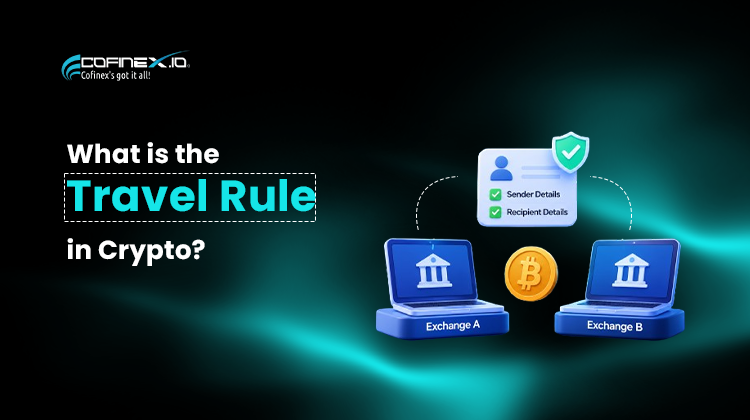
    What is the Travel Rule in Crypto?

    Introduction

    When you transfer cryptocurrency from one exchange to another, you may be asked to provide additional information about the sender or recipient. You might wonder why an exchange needs these details when blockchain transactions already record wallet addresses.

    This requirement is connected to something called the Crypto Travel Rule.

    The Travel Rule is a regulatory standard designed to make cryptocurrency transfers more transparent. It requires certain crypto service providers to collect, hold, and securely share information about the people involved in qualifying transactions.

    But what information is shared? Does it apply to every crypto transfer? And why does it matter to ordinary users?

    Let’s understand it step by step.

    What is the Crypto Travel Rule?

    The Crypto Travel Rule is an anti-money laundering (AML) and counter-terrorist financing (CTF) requirement based on the Financial Action Task Force (FATF) standards.

    It is associated with FATF Recommendation 16, which deals with transparency in financial transfers.

    Under this rule, Virtual Asset Service Providers (VASPs), such as crypto exchanges and certain other service providers, must collect and securely transmit specified information about the sender and recipient when applicable.

    The two main parties are:

    • Originator: The person or entity sending the cryptocurrency.
    • Beneficiary: The person or entity receiving the cryptocurrency.

    The purpose is to help authorities and regulated service providers identify the parties involved in transactions and detect suspicious financial activity.

    In simple terms, the Travel Rule helps ensure that relevant sender and recipient information travels alongside qualifying crypto transfers.

    Why was the Travel Rule introduced?

    Traditional financial institutions already follow requirements to include information about senders and recipients in certain money transfers.

    However, cryptocurrency introduced a different system. Digital assets can move between wallets and platforms across different countries, sometimes without the same information-sharing processes used in traditional banking.

    This can create challenges when authorities investigate financial crimes.

    The Travel Rule aims to address these challenges by improving transparency and helping prevent:

    1. Money laundering: Using cryptocurrency transfers to hide the origin of illegally obtained funds.
    2. Terrorist financing: Moving funds to support terrorist activities.
    3. Fraud and financial crime: Making it easier to investigate suspicious transactions.
    4. Regulatory gaps: Reducing opportunities to exploit differences in financial supervision between countries.

    The rule does not mean that every cryptocurrency transaction is suspicious. Instead, it establishes information-sharing requirements for relevant service providers.

    What information does the Travel Rule require?

    The exact information depends on the jurisdiction, transaction type, and applicable regulations.

    However, the information commonly includes details about both parties.

    Originator InformationBeneficiary Information
    Sender’s nameRecipient’s name
    Wallet address or account referenceWallet address or account reference
    Other identifying details, where requiredOther identifying details, where required

    Depending on local requirements, additional information may include residential details, identification numbers, or other verification information.

    Crypto service providers must handle this information securely and follow applicable data protection and record-keeping requirements.

    How does the Crypto Travel Rule work?

    Let’s understand the process through a simple example.

    Imagine that Rahul wants to transfer USDT from Exchange A to his friend’s account on Exchange B.

    Here is how the process may work:

    Step 1: Rahul initiates the transfer.

    He enters the recipient’s wallet address and selects the amount of USDT he wants to send.

    Step 2: Exchange A requests information.

    The exchange may ask Rahul to provide the recipient’s name and other required details.

    Step 3: The sending exchange checks the information.

    Exchange A collects the required originator and beneficiary information and carries out applicable compliance checks.

    Step 4: Information is securely shared.

    Where the Travel Rule applies, Exchange A securely transmits the required information to Exchange B before or alongside the transfer, according to the applicable rules.

    Step 5: Exchange B receives the transfer.

    The receiving exchange handles the transaction and associated information according to its compliance requirements.

    This process helps the two service providers maintain relevant information about the transfer.

    Note: This is a simplified example. The actual process and information requested can differ between exchanges and countries.

    Does the Travel Rule apply to every crypto transaction?

    No. Its application depends on the type of transfer and the regulations in the relevant jurisdiction.

    Here are some common situations:

    1. Transfers Between Two Crypto Exchanges

    When cryptocurrency moves between two regulated or otherwise obligated service providers, the Travel Rule generally requires relevant sender and recipient information to be collected and shared.

    For example, transferring Bitcoin from one exchange account to another may involve these requirements.

    2. Transfers to a Personal Wallet

    A personal or self-hosted wallet is a wallet controlled directly by the user rather than a third-party service provider.

    When you withdraw cryptocurrency from an exchange to your own wallet, the exchange may ask you to identify the wallet as self-hosted or provide additional information.

    Some jurisdictions also require checks to establish ownership or control of the wallet.

    The exact requirements vary. A self-hosted wallet does not automatically follow the same information-sharing process as another regulated exchange.

    3. Transfers Between Personal Wallets

    A direct transfer between two self-hosted wallets does not involve two exchanges exchanging Travel Rule information.

    However, if a regulated service provider is involved, it may still have customer information collection, monitoring, and other compliance obligations under local rules.

    Therefore, it is important to distinguish between a blockchain transfer and a transfer handled by an obligated service provider.

    What is the difference between the Travel Rule and KYC?

    Beginners often confuse these two terms because both involve identity information.

    However, they serve different purposes.

    FeatureKYCTravel Rule
    Full formKnow Your CustomerCommon name for requirements under FATF Recommendation 16
    Main purposeVerify a customer’s identityShare relevant sender and recipient information for qualifying transfers
    When it appliesDuring onboarding and other required verification checksWhen applicable transfers take place
    Information involvedCustomer identity and verification detailsOriginator and beneficiary details
    Main focusKnowing who the customer isMaintaining transparency across transfers

    In simple terms, KYC helps an exchange understand who its customer is, while the Travel Rule helps relevant service providers exchange information about the parties involved in a transfer.

    Both support financial crime prevention.

    How Does the Travel Rule Affect Crypto Users in India?

    India has brought Virtual Digital Asset Service Providers within its anti-money laundering framework under the Prevention of Money-laundering Act (PMLA).

    The Financial Intelligence Unit–India (FIU-IND) issues AML and CFT guidelines for reporting entities providing services related to virtual digital assets.

    Its guidelines include requirements concerning information associated with virtual digital asset transfers.

    As a result, users of crypto platforms in India may be asked to provide additional details when depositing or withdrawing digital assets.

    For example, an exchange may request:

    • The recipient’s name when withdrawing cryptocurrency.
    • The sender’s details when receiving a deposit.
    • Information about whether a destination wallet belongs to an exchange or is self-hosted.
    • Additional verification details where required.

    These checks help service providers meet their compliance obligations.

    The exact information requested may vary by platform and transaction. Users should follow the instructions provided by their exchange and avoid sharing sensitive wallet credentials.

    What should beginners remember before making a crypto transfer?

    The Travel Rule may introduce additional steps when you send or receive cryptocurrency. Keep these points in mind:

    1. Verify recipient details. Always double-check the recipient’s name, wallet address, and selected network before transferring assets.

    2. Provide accurate information. If an exchange asks for sender or recipient details, make sure the information is correct.

    3. Understand wallet ownership. Know whether you are sending assets to another exchange account or a self-hosted wallet.

    4. Never share your seed phrase or private key. Legitimate compliance checks do not require you to reveal these wallet credentials.

    5. Allow time for verification. Additional compliance checks may delay a deposit or withdrawal.

    6. Use trusted platforms. Choose service providers that explain their compliance procedures and protect customer information.

    Common misconceptions about the Travel Rule

    Let’s clear up a few common misunderstandings.

    • The Travel Rule tracks physical travel: No. It refers to the movement of financial information alongside certain transfers.
    • Every crypto transfer requires the same information: No. Requirements depend on local regulations and the type of transfer.
    • The Travel Rule replaces KYC: No. It works alongside customer verification and other AML requirements.
    • Exchanges can see your private key: No. The rule concerns transaction-related identity information, not access to your wallet’s private credentials.
    • The Travel Rule makes crypto transactions completely anonymous: No. It is designed to improve transparency, not provide anonymity.

    Frequently Asked Questions (FAQs)

    1. What does the Travel Rule mean in cryptocurrency?

    The Crypto Travel Rule requires certain crypto service providers to collect and securely share information about the sender and recipient of qualifying cryptocurrency transfers.

    2. Is the Travel Rule mandatory for crypto exchanges?

    Countries implement FATF standards through their own laws and regulations. Where applicable, crypto service providers must follow the relevant requirements.

    3. Does the Travel Rule apply to USDT transfers?

    It can apply to USDT and other virtual asset transfers when the transaction falls within the applicable regulatory requirements. The rule is not limited to Bitcoin.

    4. Can I transfer crypto to my personal wallet under the Travel Rule?

    Yes, but an exchange may ask for additional information or verification when you withdraw assets to a self-hosted wallet. The exact process depends on local regulations and the platform.

    5. What happens if I do not provide the requested information?

    An exchange may delay, hold, or decline a transaction if required information is missing or cannot be verified. The exact response depends on its policies and applicable regulations.

    6. Does the Travel Rule mean that crypto is no longer private?

    No. The rule requires relevant service providers to collect and share specified transaction-related information. It does not mean that every blockchain transaction publicly displays the user’s personal identity.

    Disclaimer: This article is for educational purposes only and does not constitute legal, financial, or investment advice. Crypto regulations vary by jurisdiction and may change. Always check the latest requirements applicable to your location and service provider.

  • What is a Crypto Market Heatmap? A Beginner’s Guide

    What is a Crypto Market Heatmap? A Beginner’s Guide

    Introduction

    Have you ever opened a crypto market platform and seen a screen filled with green and red boxes of different sizes? That visual display is called a crypto market heatmap.

    A crypto market heatmap helps traders and investors understand market movements at a glance. Instead of checking the price of each cryptocurrency separately, you can quickly see which assets are gaining, which are losing, and how the broader market is performing.

    But a heatmap is more than a colourful chart. It presents market information in a visual format, making it easier to compare cryptocurrencies and identify trends.

    Let’s understand how it works and how beginners can use it.

    What Is a Crypto Market Heatmap?

    A crypto market heatmap is a visual tool that displays the performance of multiple cryptocurrencies using coloured blocks or tiles.

    Each block represents a cryptocurrency. Its colour usually indicates price movement, while its size may represent market capitalisation, trading volume, or another selected metric.

    Most commonly:

    • Green: The cryptocurrency has gained value during the selected period.
    • Red: The cryptocurrency has lost value during the selected period.
    • Darker shades: Often indicate a larger percentage movement.
    • Larger blocks: Usually represent assets with a higher value or greater market share, depending on the heatmap settings.

    For example, Bitcoin may appear as a large green block while several smaller altcoins appear in red. This tells you that Bitcoin is performing positively during the selected period, while those altcoins are declining.

    However, the exact colours and block sizes depend on the platform and its settings.

    How Does a Crypto Heatmap Work?

    A heatmap takes market data and converts it into a visual layout.

    Most crypto heatmaps use three important elements:

    1. Colour

    Colour represents the direction and sometimes the magnitude of price movement.

    • Green indicates a price increase.
    • Red indicates a price decrease.
    • Neutral shades may indicate little or no movement.

    The intensity of the colour can show how strong the movement is. For example, a dark green tile may represent a larger gain than a light green one.

    2. Size

    The size of each tile depends on the metric selected by the platform.

    For example, a market-cap-based heatmap may give Bitcoin a much larger tile than a smaller cryptocurrency because Bitcoin has a higher market capitalisation.

    A volume-based heatmap may instead display larger tiles for assets with higher trading activity.

    3. Time Period

    Heatmaps allow users to select different time periods, such as:

    • 1 hour
    • 24 hours
    • 7 days
    • 30 days

    The selected period matters because an asset may show a gain over 24 hours but a loss over the past seven days.

    Always check the timeframe before interpreting the colours.

    Example: Understanding a Crypto Market Heatmap

    Imagine you are looking at a heatmap showing the 24-hour performance of five cryptocurrencies.

    Cryptocurrency24-Hour ChangeHeatmap Colour
    Bitcoin (BTC)+4.5%Dark Green
    Ethereum (ETH)+2.2%Light Green
    Solana (SOL)-1.8%Light Red
    XRP-3.5%Dark Red
    Cardano (ADA)+0.5%Slight Green

    What can you understand from this example?

    • Bitcoin has recorded the strongest gain among these five assets.
    • Ethereum is also trading higher, but its gain is smaller.
    • Solana and XRP are showing negative performance.
    • Cardano has moved only slightly.

    In a few seconds, you can compare the performance of several assets without opening five separate price charts.

    Remember, these figures are only an illustrative example, not live market data.

    Different Types of Crypto Market Heatmaps

    Not every heatmap shows the same information. Depending on the platform, you may find different types.

    1. Market Capitalisation Heatmap

    This heatmap displays cryptocurrencies based on their market capitalisation.

    Larger blocks generally represent cryptocurrencies with a higher market value. Colour indicates whether their prices are rising or falling.

    It is useful for understanding how major cryptocurrencies are performing compared with smaller assets.

    2. Trading Volume Heatmap

    A volume-based heatmap highlights trading activity across different cryptocurrencies.

    It helps users identify which assets are attracting more trading activity during a selected period.

    However, high trading volume does not automatically mean that an asset’s price will increase.

    3. Price Performance Heatmap

    This type focuses on percentage price changes over a selected timeframe.

    It helps traders quickly identify the strongest and weakest performers in the market.

    4. Liquidation Heatmap

    A liquidation heatmap is different from a standard market-performance heatmap.

    It estimates potential liquidation levels for leveraged trading positions based on market data and a platform’s methodology.

    Traders may use it to study areas where leveraged positions could face liquidation. However, these levels are estimates, not guaranteed price targets or predictions.

    Why Do Crypto Traders Use Heatmaps?

    A heatmap can make market analysis easier, especially when you want to compare several cryptocurrencies.

    Here are four common uses.

    1. Identify Market Trends

    A heatmap can help you understand whether most cryptocurrencies are moving upward or downward.

    If many large cryptocurrencies appear green, the market may be experiencing broad positive momentum. If most appear red, selling pressure may be widespread.

    2. Compare Cryptocurrency Performance

    You can quickly compare Bitcoin, Ethereum, and other altcoins.

    For example, if Bitcoin is gaining while several altcoins are declining, it may suggest that Bitcoin is showing relative strength during that period.

    3. Find Assets for Further Research

    Heatmaps can help you identify assets showing unusually strong gains, losses, or trading activity.

    However, a cryptocurrency appearing dark green does not automatically make it a good investment or trading opportunity. Always investigate the reason behind the movement.

    4. Save Time During Market Analysis

    Instead of opening multiple charts, you can use one heatmap to get a broad overview of market activity.

    This makes it a useful starting point for daily market analysis.

    Heatmap vs Traditional Price Chart

    Both tools help users understand market movements, but they serve different purposes.

    FeatureCrypto HeatmapPrice Chart
    Main purposeCompare multiple assets visuallyStudy the price movement of an asset
    DisplayColoured blocks or tilesLines, candles, or bars
    Best forMarket overview and comparisonDetailed price analysis
    Shows price directionYes, through colourYes, through chart movement
    Technical indicatorsUsually limitedOften supports multiple indicators

    A heatmap gives you a quick overview, while a price chart helps you examine an asset in greater detail.

    Common Mistakes Beginners Should Avoid

    Although heatmaps are easy to read, beginners can misinterpret the information.

    1. Assuming green means buy: A green tile only shows positive performance during a selected period. It does not guarantee future gains.

    2. Ignoring the timeframe: A cryptocurrency may be up over one hour but down over seven days. Always check the selected period.

    3. Confusing size with performance: A larger tile does not necessarily mean a stronger price increase. It may simply represent higher market capitalisation or volume.

    4. Following the biggest mover blindly: An asset with a sharp price increase may also experience a quick reversal. Research before making a decision.

    5. Treating heatmaps as prediction tools: Heatmaps display market information. They do not tell you exactly what will happen next.

    Frequently Asked Questions (FAQs)

    1. What does green mean on a crypto heatmap?

    Green generally indicates that a cryptocurrency has gained value during the selected timeframe. Darker green may represent a larger percentage increase.

    2. What does red mean on a crypto heatmap?

    Red generally indicates that an asset’s price has declined during the selected period. The shade may indicate the size of the decline.

    3. Are crypto heatmaps useful for beginners?

    Yes. They provide a simple visual overview of market movements and help beginners compare multiple cryptocurrencies without studying individual charts first.

    4. Does a larger heatmap block mean better performance?

    No. Block size usually represents a selected metric, such as market capitalisation or trading volume. It does not necessarily indicate a higher price gain.

    5. Can I use a crypto heatmap to predict prices?

    No. A heatmap displays current or historical market information. It cannot reliably predict future price movements.

    Disclaimer: This article is for educational purposes only and does not provide financial or investment advice. Cryptocurrency markets are volatile. Always conduct your own research before making trading or investment decisions.

  • ETF Inflows and Outflows: A Beginner’s Guide

    ETF Inflows and Outflows: A Beginner’s Guide

    Introduction

    When investors discuss the cryptocurrency market, you may often hear terms like ETF inflows and ETF outflows. These terms appear in market reports, financial news, and discussions about Bitcoin and Ethereum.

    But what do they actually mean?

    An Exchange-Traded Fund (ETF) allows investors to gain exposure to an asset through a fund traded on a stock exchange. Instead of directly buying and holding an asset, investors can purchase shares of an ETF that tracks its price or holds the underlying asset.

    ETF inflows and outflows help show how money is moving into or out of these funds. In crypto markets, they are often watched to understand institutional and traditional-market investor interest in assets such as Bitcoin and Ethereum.

    Let’s break down how these movements work and why they matter.

    What Are ETF Inflows?

    ETF inflows occur when more money enters an exchange-traded fund than leaves it during a particular period.

    For example, imagine a Bitcoin ETF receives $50 million in new investments on a given day. This amount is considered an inflow.

    In the case of a spot Bitcoin ETF, strong inflows can indicate that investors are showing interest in gaining exposure to Bitcoin through that fund.

    However, an inflow does not automatically mean Bitcoin’s price will increase. Market prices depend on several factors, including demand, supply, liquidity, investor sentiment, and broader economic conditions.

    What Are ETF Outflows?

    ETF outflows happen when more money leaves a fund than enters it during a particular period.

    For example, suppose investors withdraw or redeem $30 million worth of investments from a Bitcoin ETF. That amount is recorded as an outflow.

    Outflows may indicate reduced investor interest, profit-taking, portfolio adjustments, or a response to market uncertainty.

    However, one day of outflows does not necessarily mean investors have lost confidence in Bitcoin. Investors may simply be changing their portfolios or responding to short-term market conditions.

    How Do ETF Inflows and Outflows Work?

    To understand these movements, it helps to know how ETF shares are created and redeemed.

    In many ETFs, authorised participants work with the fund to create or redeem large blocks of ETF shares.

    In a spot Bitcoin ETF, the process can involve the fund receiving cash and using it to acquire Bitcoin when new shares are created. When shares are redeemed, the fund may sell Bitcoin or transfer assets, depending on the fund’s structure.

    Here is a simplified example:

    1. Investors show interest in a Bitcoin ETF.
    2. Demand for the ETF’s shares increases.
    3. The fund may create additional shares through its authorised participants.
    4. The fund may acquire more Bitcoin to support those shares.
    5. The resulting net investment activity can be reflected in reported ETF flows.

    The exact process depends on the ETF’s structure and how it handles creations and redemptions.

    Important: ETF trading volume and ETF inflows are not the same thing. Shares can change hands between investors on an exchange without creating new fund inflows.

    Why Do ETF Flows Matter in Crypto?

    ETF flows can offer useful information about investor activity. Here are four reasons market participants monitor them.

    1. They Help Track Investor Interest

    Consistent inflows may suggest that investors are increasingly interested in gaining exposure to Bitcoin or Ethereum through regulated investment products.

    On the other hand, repeated outflows may indicate weaker demand during that period.

    2. They Can Influence Market Demand

    When a spot crypto ETF receives net creations, the fund may need to acquire more of the underlying asset.

    For example, if a spot Bitcoin ETF receives significant net inflows, its fund activity may contribute to additional Bitcoin buying.

    However, the overall impact depends on the size of the flows compared with wider market activity.

    3. They Provide Insight Into Institutional Activity

    ETFs make it easier for certain traditional-market investors to access crypto exposure through familiar investment accounts and products.

    Therefore, ETF flows can help analysts understand demand from investors using these funds.

    However, ETF data does not represent every institutional investor. Some institutions buy crypto directly, while others use different investment products.

    4. They Help Understand Market Sentiment

    ETF flows can provide clues about investor confidence.

    For instance, several days of positive flows may indicate growing interest. Similarly, continued outflows may suggest caution.

    Still, flows should be considered alongside other indicators rather than treated as a standalone market signal.

    Positive vs Negative ETF Flows: An Example

    Let’s understand the difference with a simple example.

    Imagine a spot Bitcoin ETF records the following activity over three days:

    DayMoney InMoney OutNet Flow
    Monday$80 million$20 million+$60 million
    Tuesday$40 million$50 million-$10 million
    Wednesday$100 million$30 million+$70 million

    Net flow = Total inflows − Total outflows

    In this example:

    • Monday recorded positive net flows of $60 million.
    • Tuesday recorded negative net flows of $10 million.
    • Wednesday recorded positive net flows of $70 million.

    The three-day net flow is positive $120 million.

    This suggests that more money entered the fund than left it during these three days.

    However, it does not guarantee that Bitcoin’s market price will rise.

    ETF Inflows vs Outflows: Key Differences

    FeatureETF InflowsETF Outflows
    MeaningMore money enters the fundMore money leaves the fund
    Net flowPositiveNegative
    Possible interpretationStronger demand for the fundWeaker demand for the fund
    Market sentimentMay indicate growing interestMay indicate caution
    Possible effectMay lead to underlying asset purchasesMay lead to asset sales or reduced holdings

    Remember, these are possible interpretations, not guaranteed market outcomes.

    What Should Beginners Look for When Tracking ETF Flows?

    If you are following crypto ETF activity, consider these points:

    1. Look at trends, not just one day. A single day of inflows or outflows may not tell the full story. Compare activity across several days or weeks.

    2. Check the size of the flows. A $10 million inflow may have a different significance from a $500 million inflow. Also consider the fund’s size and overall market liquidity.

    3. Compare different funds. One ETF may record outflows while another records inflows. Looking at the combined net flows can provide a broader picture.

    4. Check the underlying asset’s price movement. Compare ETF flows with Bitcoin or Ethereum price action. This helps you understand whether fund activity is happening alongside a price trend or against it.

    5. Use other market indicators. Trading volume, open interest, funding rates, market capitalisation, and broader economic conditions can provide additional context.

    Common Misconceptions About ETF Flows

    Before using ETF data in your market analysis, keep these misunderstandings in mind.

    • Inflows always push prices higher: Not necessarily. Other market participants may sell, and wider market conditions can outweigh ETF demand.
    • Outflows mean investors are abandoning crypto: Not always. They may reflect short-term profit-taking or portfolio rebalancing.
    • ETF trading volume equals inflows: No. Trading existing ETF shares does not automatically create new fund investments.
    • ETF flows represent the entire crypto market: No. They cover activity in specific funds, not every crypto purchase or sale worldwide.
    • One positive day confirms a bull market: No. A sustained trend and other supporting indicators are needed to assess broader market conditions.

    Frequently Asked Questions (FAQs)

    1. What does a positive ETF inflow mean?

    A positive ETF inflow means that more money entered the fund than left it during a specific period. It may indicate stronger demand for that investment product.

    2. Are ETF outflows bad for Bitcoin?

    Not necessarily. Outflows may reflect profit-taking, portfolio adjustments, or changing investor preferences. They do not automatically indicate that Bitcoin’s price will fall.

    3. Do Bitcoin ETF inflows affect Bitcoin’s price?

    They can influence demand when a spot Bitcoin ETF needs to acquire Bitcoin to support new shares. However, Bitcoin’s price also depends on many other market factors.

    4. Where can I check Bitcoin ETF inflows and outflows?

    You can find ETF flow data through fund issuers, financial data providers, and crypto market research platforms. Always check the reporting date, methodology, and whether the figures are preliminary or final.

    5. What is the difference between ETF volume and ETF flows?

    ETF volume measures how many shares are traded during a period. ETF flows measure the net money entering or leaving the fund. They represent different types of activity.

    Disclaimer: This article is for educational purposes only. It does not provide financial or investment advice. Cryptocurrency and ETF investments involve risk, so always conduct your own research before making financial decisions.

  • Bitcoin Dominance Explained: What it means for the Crypto Market

    Bitcoin Dominance Explained: What it means for the Crypto Market

    Introduction

    Bitcoin is the largest cryptocurrency by market capitalisation. However, the crypto market includes thousands of other digital assets, commonly known as altcoins. Have you ever wondered how much of the total crypto market belongs to Bitcoin compared with all other cryptocurrencies? This is where Bitcoin Dominance becomes important.

    It is a metric that shows Bitcoin’s share of the total cryptocurrency market capitalisation. Traders and investors use it to understand Bitcoin’s relative position and observe changes in market sentiment.

    Moreover, it can help identify periods when Bitcoin is outperforming altcoins or when other cryptocurrencies are gaining market share.

    In this lesson, we will explain what Bitcoin dominance means, how it is calculated, why it changes, and how traders use it to understand market movements.

    What is Bitcoin Dominance?

    Bitcoin dominance, also known as BTC dominance or BTC.D, measures the percentage of the total cryptocurrency market capitalisation represented by Bitcoin.

    In simple terms, it tells you how much of the overall crypto market’s estimated value belongs to Bitcoin.

    For example, imagine the total crypto market has a market capitalisation of $2 trillion, while Bitcoin’s market capitalisation is $1 trillion.

    In this case, Bitcoin dominance is 50%.

    This means Bitcoin represents half of the combined market capitalisation included in the calculation.

    However, remember that Bitcoin dominance measures relative market value. It does not directly show how much money investors have deposited into Bitcoin.

    How is Bitcoin Dominance calculated?

    It is calculated using a simple formula:

    BTC Dominance (%) = (Bitcoin Market Cap ÷ Total Crypto Market Cap) × 100

    Before understanding the calculation, let’s look at two important terms.

    • Bitcoin Market Cap: Bitcoin’s current price multiplied by its circulating supply.
    • Total Crypto Market Cap: The combined market capitalisation of all cryptocurrencies included by the data provider.

    Example: Calculating Bitcoin Dominance

    Suppose the crypto market has the following values:

    Market InformationValue
    Bitcoin Market Cap$800 billion
    Total Crypto Market Cap$2 trillion

    Now, apply the formula:

    ($800 billion ÷ $2 trillion) × 100 = 40%

    Therefore, BTC dominance is 40%.

    This means Bitcoin represents 40% of the total market capitalisation in this example, while the remaining 60% belongs to other included cryptocurrencies.

    What does Rising Bitcoin Dominance mean?

    When BTC dominance rises, Bitcoin’s market capitalisation is increasing relative to the combined market capitalisation of the rest of the tracked crypto market.

    This can happen for several reasons.

    1. Bitcoin Is Outperforming Altcoins

    If Bitcoin’s price increases faster than the prices of other cryptocurrencies, its share of the total market may rise.

    2. Investors Prefer Bitcoin

    During uncertain market conditions, some investors may prefer Bitcoin over smaller or more speculative crypto assets. Consequently, Bitcoin may gain market share relative to altcoins.

    3. Altcoin Prices Are Falling Faster

    Bitcoin dominance can also increase when altcoin prices decline more sharply than Bitcoin’s price.

    However, rising dominance does not always mean Bitcoin’s price is increasing. It may rise even when the broader crypto market is falling.

    What does falling Bitcoin Dominance mean?

    When Bitcoin dominance falls, Bitcoin represents a smaller percentage of the total tracked crypto market capitalisation.

    This may happen when altcoins collectively outperform Bitcoin.

    For example, if Ethereum, Solana, and other altcoins experience stronger price growth than Bitcoin, their combined market capitalisation may increase faster.

    As a result, Bitcoin’s share of the total market becomes smaller.

    A declining dominance trend is often associated with growing interest in altcoins. However, it does not automatically confirm an altcoin season.

    Additionally, BTC dominance may fall when stablecoin market capitalisation increases or when the overall market changes.

    What is Altcoin Season?

    Altcoin season, commonly called altseason, is a market phase when many altcoins outperform Bitcoin over a particular period.

    During such periods, investors may show greater interest in cryptocurrencies other than Bitcoin.

    BTC dominance often declines during a broad altcoin rally because altcoins collectively gain market capitalisation relative to Bitcoin.

    However, a falling BTC dominance figure alone is not enough to confirm altcoin season.

    For a clearer picture, traders also examine:

    • Whether multiple altcoins are outperforming Bitcoin.
    • Whether the total altcoin market capitalisation is increasing.
    • Whether trading volume supports the movement.
    • Whether Bitcoin’s price is stable, rising, or falling.

    Therefore, always look at the wider market rather than relying on one indicator.

    Bitcoin Dominance and Market Conditions

    BTC dominance becomes more useful when you compare it with Bitcoin’s price.

    Here are four common situations:

    Bitcoin PriceBitcoin DominancePossible Market Interpretation
    RisingRisingBitcoin is gaining relative strength over altcoins.
    RisingFallingAltcoins may be outperforming Bitcoin.
    FallingRisingAltcoins may be falling faster than Bitcoin.
    FallingFallingAltcoins may be holding up better, or stablecoins may be gaining market share.

    These are possible interpretations, not fixed rules.

    For example, falling BTC dominance does not always mean investors are moving directly into altcoins. Stablecoin growth can also reduce Bitcoin’s percentage of the total market.

    Why does Bitcoin Dominance change?

    Several factors can influence Bitcoin dominance.

    1. Bitcoin Price Movements

    When Bitcoin’s price changes, its market capitalisation changes as well. Consequently, its share of the total crypto market may rise or fall.

    2. Altcoin Market Performance

    When altcoins collectively grow faster than Bitcoin, Bitcoin dominance may decline. On the other hand, when altcoins underperform, dominance may rise.

    3. Growth of Stablecoins

    Stablecoins such as USDT and USDC are designed to maintain a relatively stable value against a reference currency, often the US dollar.

    However, their circulating supply and market capitalisation can change. Since many market trackers include stablecoins in total crypto market capitalisation, their growth can influence Bitcoin dominance.

    4. New Cryptocurrency Projects

    New tokens and cryptocurrency projects can expand the number of assets included in the total market calculation.

    As a result, the denominator in the Bitcoin dominance formula may change, affecting the percentage even if Bitcoin’s own market capitalisation remains unchanged.

    How can traders use Bitcoin Dominance?

    BTC dominance is a market analysis tool. It can provide additional context when used alongside other indicators.

    Here are some common ways traders use it:

    1. Understanding Market Sentiment

    Traders observe whether Bitcoin or altcoins are gaining relative market share. This can help them understand broader market preferences.

    2. Identifying Possible Altcoin Trends

    A sustained decline in BTC dominance, combined with stronger altcoin performance, may indicate a shift towards altcoins.

    3. Comparing Bitcoin and Altcoin Performance

    Traders may compare BTC dominance with individual trading pairs, such as ETH/BTC, to understand whether an altcoin is gaining strength against Bitcoin.

    4. Supporting Portfolio Analysis

    Investors may monitor dominance to understand how the wider market is distributed between Bitcoin and other cryptocurrencies.

    Nevertheless, BTC dominance should not be used as a standalone buying or selling signal.

    Limitations of Bitcoin Dominance

    Although BTC dominance is useful, it has some limitations.

    • It does not measure actual money flow: Market capitalisation is calculated using price and circulating supply. Therefore, a change in dominance does not directly tell you how much money entered or left Bitcoin.
    • Stablecoins can affect the reading: An increase in stablecoin market capitalisation can reduce BTC dominance without necessarily indicating stronger demand for altcoins.
    • Different platforms may show different values: Data providers may include different cryptocurrencies or use different supply estimates and calculation methods.
    • It does not predict future prices: Rising or falling dominance cannot guarantee what Bitcoin or altcoins will do next.

    Therefore, compare readings from the same data provider and use other market indicators to support your analysis.

    Common Mistakes to Avoid

    Beginners often misunderstand BTC dominance. Here are some mistakes to avoid:

    • Assuming rising dominance always means Bitcoin’s price is increasing.
    • Treating falling dominance as confirmation of altcoin season.
    • Believing that market capitalisation represents actual money invested.
    • Ignoring the influence of stablecoins.
    • Comparing readings from different platforms without checking their methodology.
    • Making trading decisions using BTC dominance alone.

    Instead, combine this metric with price trends, trading volume, market capitalisation, and other relevant indicators.

    Frequently Asked Questions (FAQs)

    1. What is Bitcoin dominance in simple words?

    It shows how much of the total cryptocurrency market capitalisation belongs to Bitcoin, expressed as a percentage.

    2. What happens when Bitcoin dominance increases?

    An increase means Bitcoin’s market capitalisation is growing relative to the total crypto market. This may happen because Bitcoin is outperforming altcoins or because altcoins are declining faster.

    3. What happens when BTC dominance decreases?

    A decrease means Bitcoin represents a smaller share of the total crypto market. This may happen when altcoins outperform Bitcoin or when other included assets, such as stablecoins, grow.

    4. Does low Bitcoin dominance mean altcoin season?

    Not necessarily. A low or declining dominance reading may indicate that altcoins are gaining market share. However, traders should also check whether a broad group of altcoins is outperforming Bitcoin.

    5. Where can I check Bitcoin dominance?

    You can view Bitcoin dominance charts on platforms such as CoinMarketCap, CoinGecko, and TradingView. However, their readings may differ because they can use different market coverage and calculation methods.

    Disclaimer: This article is for educational purposes only and does not provide financial or investment advice. Cryptocurrency markets are volatile and involve significant risks. Always conduct your own research before making financial decisions.

  • Volatility vs Risk: Are They the Same? A Beginner’s Guide to Crypto

    Volatility vs Risk: Are They the Same? A Beginner’s Guide to Crypto

    Introduction

    Cryptocurrency prices can change quickly. Bitcoin may rise or fall within a short period, while smaller digital assets can experience even sharper price movements. Because of these changes, crypto investors often hear two terms: volatility and risk.

    Many beginners use these terms interchangeably. However, they do not mean exactly the same thing.

    Volatility describes how much an asset’s price changes over time. Risk, on the other hand, refers to the possibility of experiencing a loss or an unwanted financial outcome.

    Understanding this difference is important because a highly volatile asset is not automatically the riskiest investment. Similarly, an asset with relatively stable prices can still carry significant risks.

    In this lesson, we will explain what volatility and risk mean, how they differ, and why both matter when making crypto investment decisions.

    What is Volatility in Crypto?

    Volatility refers to the degree and speed at which an asset’s price moves over a particular period.

    In simple terms, it tells you how much the price fluctuates.

    For example, imagine two cryptocurrencies:

    • Crypto A: Its price moves between ₹100 and ₹105 over a period.
    • Crypto B: Its price moves between ₹100 and ₹140 over the same period.

    In this simplified example, Crypto B shows greater price movement. Therefore, it is more volatile than Crypto A.

    However, volatility can work in both directions. An asset may experience sharp price increases as well as sudden declines.

    What Causes Crypto Volatility?

    Several factors can influence cryptocurrency price movements.

    1. Market Demand and Supply

    When buying demand increases, prices may rise. Conversely, when more people want to sell, prices may come under pressure.

    2. News and Market Events

    Regulatory announcements, exchange developments, security incidents, and major economic events can influence market sentiment. As a result, prices may move quickly.

    3. Market Liquidity

    Liquidity refers to how easily an asset can be bought or sold without significantly affecting its price. When liquidity is low, even relatively small orders may cause larger price movements.

    4. Investor Sentiment

    Fear, uncertainty, excitement, and speculation can influence buying and selling decisions. Consequently, sudden changes in sentiment may increase price fluctuations.

    What is Risk in Crypto?

    Risk refers to the possibility that an investment may result in a loss or an outcome that does not match your expectations.

    In crypto, risk is not limited to price changes. Investors may also face security problems, technical failures, liquidity issues, and regulatory uncertainty.

    For example, imagine buying a cryptocurrency at ₹100. Its price remains relatively stable for several weeks. However, the project later experiences a serious security incident that affects its operations.

    Even though the asset did not show extreme price volatility beforehand, your investment still faced significant risk.

    Common Types of Crypto Risk

    1. Market Risk

    Market risk is the possibility of losing money because of changes in cryptocurrency prices. For example, Bitcoin’s price may fall during a broader market decline.

    2. Liquidity Risk

    Liquidity risk occurs when you cannot buy or sell an asset easily at a reasonable price. This problem can become more serious when market activity is low.

    3. Security Risk

    Crypto wallets, exchanges, and smart contracts can face hacking attempts, vulnerabilities, and other security threats. Therefore, poor security practices can put digital assets at risk.

    4. Regulatory Risk

    Changes in laws, government policies, or regulatory requirements may affect how certain crypto activities operate. As a result, projects and investors may face uncertainty.

    5. Project Risk

    A crypto project may fail to deliver its promises, lose users, experience technical problems, or stop operating. Consequently, its token may lose value or become difficult to trade.

    Volatility vs Risk: What is the Difference?

    Although volatility and risk are connected, they measure different things.

    FeatureVolatilityRisk
    MeaningDegree of price fluctuationPossibility of loss or an unwanted outcome
    Main focusPrice movementPotential negative outcomes
    MeasurementOften measured using historical price changes or standard deviationDepends on the type of risk being assessed
    DirectionIncludes both upward and downward movementsFocuses on potential adverse outcomes
    ExampleBitcoin experiences large daily price movementsAn investor loses money after a market decline

    In simple terms, volatility tells you how much an asset’s price moves, while risk helps you understand what could go wrong with an investment.

    Can an asset have high volatility but different levels of risk?

    Yes. Volatility and risk do not always move together.

    Let’s understand this through two examples.

    Example 1: A Highly Volatile Asset

    Imagine a cryptocurrency whose price changes sharply every day. It rises by 15% one day and falls by 12% the next.

    This asset has high volatility because its price fluctuates significantly.

    However, price volatility alone does not tell you everything about the project’s security, financial structure, liquidity, or long-term prospects. Those factors also matter when assessing its overall risk.

    Example 2: A Stable-Looking Asset

    Now imagine a token whose price remains close to ₹100 for several months.

    At first, it may appear less risky because its price does not change much. However, suppose the token has weak liquidity, limited transparency, and an unclear mechanism supporting its value.

    In that situation, the asset may carry significant risks despite its relatively stable price.

    Therefore, never judge an investment only by how frequently its price changes.

    Why do crypto investors need to understand both?

    Understanding volatility and risk helps investors make more informed decisions.

    1. It Helps Set Realistic Expectations

    If you understand volatility, you are less likely to be surprised by sudden price movements. Moreover, understanding risk helps you consider the possibility of losing money before investing.

    2. It Supports Better Risk Management

    Investors can use position sizing, diversification, and other risk-management practices to manage their exposure.

    For example, investing a smaller portion of your available capital in a highly uncertain asset may help limit the impact of a potential loss. However, no strategy can eliminate investment risk completely.

    3. It Reduces Emotional Decisions

    Sharp price movements can create fear or excitement. As a result, beginners may buy because prices are rising or sell because prices are falling.

    By understanding the difference between volatility and risk, investors can focus on their research and investment plan rather than reacting to every market movement.

    4. It Encourages Better Research

    Volatility tells you about price behaviour. However, assessing risk requires a wider review.

    You may need to examine a project’s technology, security, token supply, liquidity, team transparency, and other relevant factors.

    How can you manage volatility and risk?

    Although you cannot control the crypto market, you can take steps to manage your exposure.

    • Diversify your investments: Avoid putting all your available capital into a single cryptocurrency.
    • Understand the asset: Research the project’s purpose, technology, tokenomics, and risks before investing.
    • Set a budget: Invest only money you can afford to lose.
    • Avoid emotional decisions: Do not buy or sell simply because of sudden market movements.
    • Use position sizing: Decide how much capital you are willing to expose to a particular investment.
    • Review your portfolio: Check whether your investments still match your financial goals and risk tolerance.

    In addition, remember that diversification and research can reduce certain risks, but they cannot guarantee profits or prevent losses.

    Common Mistakes to Avoid

    Beginners often make these mistakes when evaluating crypto investments:

    • Assuming low volatility means an asset is completely safe.
    • Treating every price decline as proof that a project has failed.
    • Ignoring security and liquidity risks.
    • Investing based only on recent price performance.
    • Taking larger positions because an asset appears stable.
    • Believing that diversification removes all investment risk.

    Instead, consider both price behaviour and the wider factors that may affect an investment.

    Frequently Asked Questions (FAQs)

    1. Is volatility the same as risk?

    No. Volatility measures the extent of price fluctuations, while risk refers to the possibility of loss or an unwanted financial outcome.

    2. Does high volatility mean high risk?

    Not necessarily. High volatility indicates larger price movements, but overall investment risk also depends on factors such as liquidity, security, and project reliability.

    3. Can a cryptocurrency have low volatility but high risk?

    Yes. A cryptocurrency may show relatively stable prices while still having security vulnerabilities, weak liquidity, or an unreliable project structure.

    4. How is crypto volatility measured?

    Volatility is commonly estimated using historical price movements and statistical measures such as standard deviation. Some platforms also provide volatility indicators based on different time periods.

    5. Can investors avoid crypto volatility?

    No. Investors cannot completely avoid market volatility when holding cryptocurrencies. However, they can manage their exposure through research, diversification, position sizing, and a clear investment plan.

    Disclaimer: This article is for educational purposes only and does not provide financial or investment advice. Cryptocurrency investments involve significant risks, including the possibility of losing your entire investment. Always conduct your own research before making financial decisions.

  • What is the Long-Short Ratio? A Beginner’s Guide

    What is the Long-Short Ratio? A Beginner’s Guide

    Introduction

    Crypto prices can move in either direction. While some traders expect prices to rise, others believe the market will fall. As a result, traders take different positions based on their market expectations.

    But how can you understand whether more traders are betting on rising or falling prices?

    One useful metric is the long-short ratio. It helps traders understand the balance between long and short positions in a market. Moreover, it can offer insight into market sentiment and how traders are positioning themselves.

    However, the ratio does not predict future price movements. Instead, it shows how positions are distributed across a particular market, platform, or group of traders.

    In this lesson, we will explain what the long-short ratio means, how it works, how to interpret it, and what its limitations are.

    What is the Long-Short Ratio?

    The long-short ratio is a trading indicator that compares the number or volume of long positions with the number or volume of short positions.

    In crypto trading:

    • Long position: A trader opens a position expecting the asset’s price to rise.
    • Short position: A trader opens a position expecting the asset’s price to fall.

    Therefore, the long-short ratio helps show which side has greater representation among the positions included in the data.

    For example, if a platform reports more long positions than short positions, its long-short ratio may be above 1. On the other hand, if short positions are more common, the ratio may be below 1.

    How is the Long-Short Ratio calculated?

    The basic formula is:

    Long-Short Ratio = Number of Long Positions ÷ Number of Short Positions

    Let’s understand this with a simple example.

    Imagine a crypto trading platform reports:

    • 600 long positions
    • 400 short positions

    The calculation would be:

    600 ÷ 400 = 1.5

    This means there are 1.5 long positions for every short position in the measured group.

    However, not every platform calculates the metric in exactly the same way. Some use the number of accounts or traders on each side, while others compare long and short position sizes or trading volume.

    Therefore, always check the methodology before interpreting the ratio.

    How to read the Long-Short Ratio?

    The ratio generally falls into three broad categories:

    1. Ratio Above 1: More Long Positions

    When the ratio is above 1, the measured data shows more long positions than short positions.

    For example, a ratio of 2 means there are two long positions for every short position, if the metric uses position counts.

    This may suggest bullish positioning among the traders included in the data. However, it does not guarantee that prices will increase.

    2. Ratio Below 1: More Short Positions

    When the ratio is below 1, short positions outnumber long positions in the measured data.

    For instance, a ratio of 0.5 means there is one long position for every two short positions.

    As a result, the data may indicate more bearish positioning. Nevertheless, this does not automatically mean the market will fall.

    3. Ratio Around 1: A More Balanced Distribution

    When the ratio is close to 1, long and short positions are relatively balanced.

    For example, a ratio of 1.05 indicates that the measured long side is only slightly larger than the short side.

    However, a balanced ratio does not mean the market is stable. Prices can still experience significant movements.

    Example: Understanding the Long-Short Ratio in Crypto

    Suppose you are observing Bitcoin futures trading on a platform.

    The platform reports the following account positions:

    Position TypeNumber of Accounts
    Long accounts700
    Short accounts300
    Total accounts1,000

    The long-short ratio is:

    700 ÷ 300 = 2.33

    This means there are approximately 2.33 long accounts for every short account.

    Therefore, the data shows that more accounts are positioned for a potential Bitcoin price increase.

    However, this information alone is not enough to make a trading decision. You should also consider trading volume, open interest, funding rates, price action, and other market information.

    Why does the Long-Short Ratio matter?

    The long-short ratio can help traders understand how market participants are positioning themselves. Here are some of its common uses.

    1. Understanding Market Sentiment

    The ratio offers a snapshot of bullish and bearish positioning.

    For example, a consistently high ratio may indicate that many traders are expecting prices to rise. Similarly, a low ratio may suggest that bearish positions are more common.

    As a result, traders can use it as one input when assessing market sentiment.

    2. Identifying Crowded Positions

    When a large number of traders take the same side, the market may become heavily positioned in one direction.

    However, crowded positioning can create risks. If prices move against those traders, some may close their positions quickly.

    Consequently, this can contribute to sudden buying or selling pressure.

    3. Understanding Potential Short Squeezes

    A short squeeze happens when rising prices force some short sellers to close their positions. To close a short position, a trader generally needs to buy back the asset or contract.

    Therefore, a wave of short-position closures can add further buying pressure.

    The long-short ratio may help identify whether short positioning is relatively high. Nevertheless, the ratio alone cannot predict a short squeeze.

    4. Supporting Trading Analysis

    Traders may compare the long-short ratio with other indicators to build a broader market picture.

    For example, they may examine:

    • Open Interest: Shows the number of outstanding derivative contracts.
    • Trading Volume: Shows how much trading activity has taken place.
    • Funding Rate: Shows periodic payments between long and short traders in certain perpetual futures markets.
    • Price Action: Shows how the asset’s price has moved over time.

    Together, these indicators can provide more context than the long-short ratio alone.

    Long-Short Ratio vs Open Interest

    These two metrics are related to derivatives trading, but they measure different things.

    FeatureLong-Short RatioOpen Interest
    What it measuresRelative long and short positioningOutstanding derivative contracts
    Main purposeUnderstand positioning and sentimentUnderstand the amount of open contracts
    InterpretationShows which side is more represented in the measured dataShows how many contracts remain open
    Can it predict price direction?NoNo

    In simple terms, the long-short ratio tells you how long and short positions compare, while open interest tells you how many derivative contracts remain active.

    Limitations of the Long-Short Ratio

    Although the long-short ratio can be useful, it has several limitations.

    First, it does not predict price movements. A high long-short ratio does not guarantee a price increase. Likewise, a low ratio does not guarantee a decline.

    Second, different platforms may use different calculations. Some compare accounts, while others compare position sizes. Therefore, two platforms may show different readings for the same asset.

    Third, it may represent only a limited group of traders. A platform-specific ratio does not necessarily reflect the entire crypto market.

    Finally, positioning can change quickly. Traders can open or close positions as market conditions change. Consequently, an earlier reading may no longer represent current sentiment.

    For these reasons, avoid using this metric in isolation.

    Common Mistakes to Avoid

    When using the long-short ratio, beginners should avoid these common mistakes:

    • Assuming a ratio above 1 guarantees a bullish market.
    • Treating a ratio below 1 as a definite bearish signal.
    • Comparing figures from platforms that use different methodologies.
    • Ignoring open interest, volume, and funding rates.
    • Making trading decisions based on a single indicator.

    Instead, use the ratio as supporting information alongside your research and trading plan.

    Frequently Asked Questions (FAQs)

    1. What does a long-short ratio of 2 mean?

    If the ratio is based on position counts, a value of 2 means there are two long positions for every short position in the measured group.

    2. Is a high long-short ratio bullish?

    It generally indicates that more traders are positioned on the long side. However, it does not guarantee that the market will move upward.

    3. Can the long-short ratio predict Bitcoin’s price?

    No. It provides information about trader positioning, but it cannot reliably predict Bitcoin’s future price.

    4. Where can I check the long-short ratio?

    You can find it on some cryptocurrency derivatives data platforms and exchange analytics dashboards. However, check the calculation method and data coverage before comparing readings.

    5. Is the long-short ratio useful for beginners?

    Yes. It can help beginners understand market positioning and sentiment. Nevertheless, it should be treated as one analytical tool rather than a standalone trading signal.

    Disclaimer: This article is for educational purposes only and does not provide financial or investment advice. Cryptocurrency derivatives involve significant risks. Always conduct your own research and understand the risks before trading.

  • What is a Blockchain Bridge? A Beginner’s Guide

    What is a Blockchain Bridge? A Beginner’s Guide

    Introduction

    The crypto world has many blockchain networks, including Bitcoin, Ethereum, Solana, and Polygon. Each network has its own technology, rules, applications, and digital assets.

    However, these networks do not always communicate directly with one another. As a result, moving assets or information between different blockchains can become challenging.

    This is where a blockchain bridge becomes useful.

    A blockchain bridge connects two or more blockchain networks and allows them to transfer assets or share information. In simple terms, it helps different blockchain ecosystems interact with each other.

    But how does a blockchain bridge work? Why do people use it, and what risks should they understand before using one?

    Let’s explore.

    What is a Blockchain Bridge?

    A blockchain bridge is a technology that connects two separate blockchain networks. It allows users to move digital assets or transfer information from one blockchain to another.

    For example, imagine you hold ETH on the Ethereum network but want to use an application on another compatible blockchain. A bridge may allow you to transfer an equivalent representation of your ETH to that network.

    Therefore, you can access applications and services across different blockchain ecosystems without being limited to just one network.

    A blockchain bridge may support:

    • Transferring digital assets between networks.
    • Moving tokens to networks with different transaction costs.
    • Connecting decentralised applications across ecosystems.
    • Sharing selected information between blockchains.

    However, not every bridge supports every blockchain or token. Always check network compatibility before making a transfer.

    How does a Blockchain Bridge work?

    Blockchain bridges use different mechanisms to transfer assets between networks. One common method involves locking assets on the source blockchain and creating an equivalent representation on the destination blockchain.

    Let’s understand this with an example.

    Imagine you have 1 ETH on Ethereum and want to use a compatible application on another blockchain.

    The process may work like this:

    Step 1: Connect Your Wallet

    First, connect your crypto wallet to a supported blockchain bridge. Then, select the source network and destination network.

    Step 2: Select the Asset and Amount

    Next, choose the cryptocurrency you want to transfer. For example, you may select 1 ETH.

    Step 3: Initiate the Transfer

    After reviewing the details, confirm the transaction. The bridge processes the request using its specific mechanism.

    Step 4: Lock or Secure the Original Asset

    In a lock-and-mint bridge, the original ETH is locked in a smart contract or another custody arrangement on the source network.

    Step 5: Create a Representation on the Destination Network

    Once the bridge verifies the required conditions, it creates or releases an equivalent representation of the asset on the destination blockchain.

    As a result, you can use that representation on supported applications on the destination network.

    Important: Not all bridges work through locking and minting. Some use liquidity pools, custodians, or other transfer mechanisms. Therefore, the exact process depends on the bridge.

    Types of Blockchain Bridges

    Blockchain bridges can be classified in different ways. One important distinction is how they manage assets and transfers.

    1. Trusted or Centralised Bridges

    Trusted bridges rely on a central operator, custodian, or group of authorised entities to manage or verify transfers.

    For example, a custodian may hold assets on one network and arrange for corresponding assets to become available on another.

    These bridges can offer a straightforward user experience. However, users must trust the operator to manage assets and process transfers correctly.

    2. Trust-Minimised or Decentralised Bridges

    Trust-minimised bridges use smart contracts, cryptographic proofs, validators, or other mechanisms to reduce reliance on a single central operator.

    Instead of depending entirely on one company, these systems use technical processes to verify cross-chain activity.

    However, decentralised does not automatically mean risk-free. Smart contract vulnerabilities, validator failures, and design weaknesses can still create problems.

    3. Lock-and-Mint Bridges

    These bridges lock the original asset on one blockchain and mint an equivalent token on another.

    For example, ETH may be locked on the source network while a wrapped representation becomes available on the destination network.

    When users return the asset, the representation may be burned or removed, and the original asset may be released.

    4. Liquidity-Based Bridges

    Liquidity-based bridges use pools of available assets to complete transfers between networks.

    For example, a bridge may have liquidity pools on two supported blockchains. It can use these pools to deliver the destination asset without following the same lock-and-mint process.

    However, available liquidity can affect how much users receive and whether a transfer can be completed efficiently.

    Why are Blockchain Bridges important?

    Blockchain bridges help reduce the separation between different blockchain ecosystems. Here are some reasons why they matter.

    1. Access to Different Blockchain Networks

    Different blockchains support different applications and services. Therefore, bridges allow users to access opportunities across multiple networks.

    2. More Flexibility for Crypto Users

    Users may want to move assets to another network because of transaction costs, application availability, or personal preferences.

    For example, someone may move an asset to a compatible network where a particular decentralised application operates.

    3. Supporting DeFi Applications

    Decentralised finance applications operate across several blockchain networks. Bridges can help users move assets between these ecosystems to access lending, borrowing, trading, and other services.

    However, users should check whether the destination application supports the bridged asset.

    4. Improving Blockchain Interoperability

    Interoperability refers to the ability of different blockchain networks to communicate and work together.

    Bridges support this goal by allowing assets or selected information to move between otherwise separate networks.

    As a result, they help create a more connected blockchain ecosystem.

    What are the risks of using a Blockchain Bridge?

    Although bridges offer useful features, they also introduce risks that users should understand.

    1. Smart Contract Vulnerabilities

    Many bridges depend on smart contracts to manage assets and process transfers.

    However, a coding error or security vulnerability can allow attackers to exploit the system and potentially steal funds.

    2. Validator or Custodian Risks

    Some bridges depend on validators, operators, or custodians to approve transfers and manage assets.

    If these parties are compromised, dishonest, or unavailable, users may face delays or financial losses.

    3. Liquidity Risks

    Liquidity-based bridges need sufficient assets to complete transfers.

    If a bridge has limited liquidity, users may experience delays, higher costs, or difficulty completing withdrawals.

    4. Fake Bridge Websites

    Scammers sometimes create fake websites that imitate popular blockchain bridges.

    Therefore, always verify the website address and use official links. Additionally, review wallet requests carefully before signing transactions.

    5. Wrapped Token Risks

    Some bridges create wrapped or representative tokens on destination networks.

    These tokens depend on the bridge’s underlying system and its ability to maintain the relationship with the original asset. If the bridge fails or becomes compromised, the wrapped token may lose its expected value or redemption support.

    How to use a Blockchain Bridge safely?

    Before transferring cryptocurrency through a bridge, follow these precautions:

    • Verify the bridge: Use the official website and check its reputation.
    • Check network compatibility: Confirm that both source and destination networks support the selected asset.
    • Review transaction details: Check the amount, destination address, network fees, and estimated delivery.
    • Understand the asset: Confirm whether you will receive the original token or a wrapped representation.
    • Start with a small transfer: If appropriate, test the process with a small amount before moving larger funds.
    • Check security information: Review available audits, known incidents, and the bridge’s security model.
    • Avoid suspicious links: Never connect your wallet through an unverified website.

    Most importantly, remember that a successful audit does not guarantee complete security.

    Blockchain Bridge vs Crypto Exchange

    Beginners sometimes confuse blockchain bridges with cryptocurrency exchanges. However, they serve different purposes.

    FeatureBlockchain BridgeCrypto Exchange
    Main purposeConnects blockchain networksAllows users to buy, sell, or trade crypto
    Primary functionCross-chain asset or information transferCryptocurrency trading
    Example useMoving a supported asset from Ethereum to another networkBuying or selling BTC against USDT
    Main considerationBridge mechanism and network compatibilityTrading fees, liquidity, and platform security

    In simple terms, a bridge helps assets move between blockchain networks, while an exchange helps users trade cryptocurrencies.

    Common Mistakes to Avoid

    When using a blockchain bridge, beginners should avoid these common mistakes:

    • Sending assets to an incompatible network.
    • Assuming every bridge supports every cryptocurrency.
    • Confusing wrapped tokens with the original assets.
    • Ignoring network and bridge fees.
    • Using unofficial bridge websites.
    • Assuming an audited bridge is completely safe.
    • Transferring a large amount without understanding the process.

    Therefore, always review the transfer details before confirming a transaction.

    Ultimately, blockchain bridges help make the crypto ecosystem more connected. However, understanding how a bridge works is just as important as knowing how to use it.

    Frequently Asked Questions (FAQs)

    1. What is the main purpose of a blockchain bridge?

    A blockchain bridge connects separate blockchain networks. It allows supported assets or information to move between these networks.

    2. Are blockchain bridges safe?

    Not always. Their safety depends on their design, smart contracts, validators, custodians, and security practices. Therefore, users should research a bridge before transferring assets.

    3. Can I transfer Bitcoin to Ethereum using a blockchain bridge?

    Some bridges support transfers involving Bitcoin and Ethereum through wrapped or representative assets. However, the process and supported assets depend on the specific bridge.

    4. What is a wrapped token?

    A wrapped token is a token designed to represent another asset on a different blockchain. For example, wrapped Bitcoin represents Bitcoin on a network that does not natively support Bitcoin.

    5. Do blockchain bridges charge fees?

    Yes, transfers may involve source-network fees, destination-network fees, bridge fees, or other costs. However, the exact charges depend on the bridge and networks involved.

    Disclaimer: This article is for educational purposes only and does not provide financial or investment advice. Always research a blockchain bridge and understand its risks before transferring cryptocurrency.

  • How to Spot Fake Crypto Giveaway Posts: 7 Warning Signs

    How to Spot Fake Crypto Giveaway Posts: 7 Warning Signs

    Introduction

    Crypto giveaways often appear on social media, websites, and online communities. Some projects use giveaways to promote their platforms, attract new users, or reward their communities. However, not every giveaway is genuine.

    Scammers also use fake crypto giveaways to steal money, wallet access, and personal information. For example, they may promise to double your Bitcoin or offer free USDT if you complete a simple task. At first, these offers may look convincing. However, their real purpose is often to trick you into sending cryptocurrency or sharing sensitive wallet information.

    So, how can you identify a fake crypto giveaway?

    In this lesson, we will explore seven common warning signs, explain how these scams work, and discuss how you can protect your crypto wallet.

    What is a Fake Crypto Giveaway?

    A fake crypto giveaway is a fraudulent promotion that promises free cryptocurrency or rewards to trick people.

    Usually, scammers pretend to represent well-known crypto exchanges, blockchain projects, influencers, or public figures. Moreover, they often copy official logos, profile pictures, and announcement formats to make their offers look legitimate.

    For instance, a fake account might announce that users will receive free Bitcoin after sending a small amount to a wallet address. Although the offer may sound attractive, the scammer simply takes the cryptocurrency without sending any reward.

    Therefore, always verify a giveaway before participating.

    How do Fake Crypto Giveaways work?

    Most fake giveaways follow a similar pattern. First, scammers create an attractive offer to grab people’s attention. Next, they share it through social media posts, direct messages, fake websites, or online advertisements.

    After that, they encourage users to complete an action, such as:

    • Sending cryptocurrency to a wallet address.
    • Connecting a crypto wallet to an unknown website.
    • Signing a suspicious transaction or wallet message.
    • Sharing a private key or seed phrase.
    • Clicking a link and entering personal information.

    As a result, users may lose their cryptocurrency or expose their wallets to security risks.

    7 Warning Signs of Fake Crypto Giveaway Posts

    1. Promises to Double Your Cryptocurrency

    One of the biggest warning signs is a promise to double your crypto.

    For example, a post might claim that sending 0.01 BTC will get you 0.02 BTC in return. Similarly, another promotion may promise free USDT in exchange for a small initial payment.

    However, legitimate giveaways do not need you to send cryptocurrency to an unknown wallet to receive a reward. Therefore, treat these offers with extreme caution.

    2. Suspicious Social Media Accounts

    Scammers often create fake accounts that look similar to official project profiles.

    They may copy the original profile picture, company logo, username, and description. In addition, some accounts use slightly different spellings or extra characters to appear genuine.

    Before trusting an announcement, check the account’s username, verification details, posting history, and official website links. Most importantly, compare it with the project’s verified communication channels.

    3. Messages That Create Urgency

    Fake giveaways often use pressure to make people act quickly.

    For example, a post may say:

    • Only five minutes left!
    • Claim your reward before it expires.
    • Limited slots available.
    • Complete the task immediately.

    As a result, users may skip important verification steps. However, a genuine promotion should provide clear information about its duration, eligibility, and participation rules.

    Take your time and verify the offer before making any decision.

    4. Suspicious or Altered Websites

    A fake giveaway may direct you to a website that looks almost identical to an official crypto platform.

    However, scammers often use slightly different domain names, misspellings, or unfamiliar website addresses. Furthermore, they may create fake login pages to collect passwords and wallet information.

    To stay safe, visit the project’s official website directly instead of clicking unknown links. Also, check whether the giveaway announcement appears on its official channels.

    5. Requests for Your Seed Phrase or Private Key

    This is one of the most serious warning signs.

    Your seed phrase and private key help control access to your cryptocurrency wallet. Therefore, never share them with anyone, even if they claim to represent a crypto exchange or support team.

    A genuine giveaway does not need your seed phrase or private key to send you a reward.

    If a website or person asks for these details, stop immediately. Sharing them can allow someone else to access and control your wallet.

    6. Fake Comments and Testimonials

    Some scammers create artificial engagement to make their giveaways appear trustworthy.

    For instance, you may see comments claiming that users have already received free Bitcoin or USDT. In addition, fake accounts may post screenshots of successful transactions to encourage others to participate.

    However, comments and screenshots can be fabricated. Therefore, do not treat social media engagement as proof that a giveaway is genuine.

    7. No Announcement on Official Channels

    Legitimate campaigns generally provide clear information about their organisers, eligibility requirements, participation rules, and reward distribution.

    Moreover, genuine projects usually communicate important promotions through their official channels.

    If a giveaway appears only on an unfamiliar account or website, be careful. Instead, visit the project’s official website and check its verified social media profiles.

    How to Verify a Crypto Giveaway before participating?

    Before joining any crypto promotion, follow these simple checks:

    1. Visit the official website: Type the website address yourself rather than clicking an unfamiliar link.
    2. Check official social media accounts: Confirm whether the promotion appears on the project’s genuine profiles.
    3. Read the campaign rules: Look for eligibility, duration, reward details, and distribution conditions.
    4. Never share wallet recovery details: Your seed phrase and private key must remain private.
    5. Review wallet requests carefully: Connecting a wallet does not automatically give a website permission to transfer your funds. However, signing transactions or granting token approvals can create risks.
    6. Contact official support: If you are unsure, use the contact details listed on the project’s official website.

    Most importantly, never rush into a giveaway simply because it promises a reward.

    What should you do if you interact with a Fake Giveaway?

    If you have already clicked a suspicious giveaway link, do not panic. However, take action based on what happened.

    • If you only clicked the link: Close the website. Then, avoid entering information or approving any requests.
    • If you shared your seed phrase or private key: Treat the wallet as compromised. Move any remaining assets to a new, secure wallet with a newly generated recovery phrase, using a trusted device.
    • If you approved a suspicious token allowance: Review and revoke the approval using a trusted blockchain tool. Keep in mind that revoking an approval does not reverse transactions that have already happened.
    • If you entered your password: Change it immediately and enable two-factor authentication wherever available.
    • If you sent cryptocurrency: Save the transaction hash, wallet addresses, screenshots, and other relevant details. Then, contact the exchange or platform involved and report the incident to the appropriate authorities.

    Remember, acting quickly can help reduce further risks. Nevertheless, no recovery method can guarantee that lost cryptocurrency will be returned.

    Common Mistakes to Avoid

    Even experienced crypto users can overlook warning signs. Therefore, avoid these common mistakes:

    • Trusting a giveaway because it uses a famous person’s photograph.
    • Assuming that high engagement means a promotion is genuine.
    • Clicking links without checking the website address.
    • Sharing wallet recovery details with strangers.
    • Signing transactions without understanding what they do.
    • Sending cryptocurrency to receive a promised reward.

    In addition, remember that a professional-looking website does not automatically make a campaign trustworthy.

    Ultimately, protecting your crypto starts with checking before you click, connect, or send.

    Frequently Asked Questions (FAQs)

    1. Are all crypto giveaways fake?

    No. Some legitimate projects organise promotional campaigns and community rewards. However, you should always verify the organiser and read the campaign rules before participating.

    2. Can a crypto giveaway steal my cryptocurrency?

    Yes. A fraudulent giveaway may trick you into sending cryptocurrency, revealing your recovery phrase, or signing a harmful transaction. Consequently, always review what a website asks you to do.

    3. Should I share my seed phrase to claim a giveaway?

    No. Never share your seed phrase or private key. Anyone who obtains these details may gain control of your wallet.

    4. Is connecting my wallet to a website always dangerous?

    Not necessarily. Connecting a wallet alone does not automatically allow a website to transfer your funds. However, signing transactions or granting token approvals can expose your assets to risk. Therefore, review every request carefully.

    5. What should I do if I sent crypto to a fake giveaway?

    Save the transaction details and contact the exchange or platform involved. Additionally, report the incident to the appropriate authorities. Unfortunately, blockchain transactions are generally irreversible, so recovering the funds is not guaranteed.

    Disclaimer: This article is for educational purposes only. It does not provide financial or investment advice. Always conduct your own research and follow appropriate security practices before interacting with cryptocurrency platforms or wallets.

  • Smart Contract Audit: What it does and does not prove

    Smart Contract Audit: What it does and does not prove

    A smart contract audit is an important part of blockchain security. It helps identify potential weaknesses in a project’s code before or after deployment. However, an audit does not guarantee that a smart contract is free from bugs, that a project is trustworthy, or that users cannot lose money.

    What is a Smart Contract Audit?

    A smart contract audit is a technical review of a smart contract’s code to identify security vulnerabilities, programming errors, and other potential risks.

    Smart contracts are programs that run on blockchain networks. They automatically execute specific instructions when predefined conditions are met.

    For example, a decentralised finance (DeFi) application may use smart contracts to:

    • Process token swaps.
    • Manage lending and borrowing.
    • Distribute rewards.
    • Handle token transfers.
    • Control liquidity pools.

    Since these contracts can manage valuable digital assets, coding mistakes or security weaknesses may create opportunities for attackers.

    An audit helps developers identify such problems and improve the security of their contracts.

    How does a Smart Contract Audit work?

    A smart contract audit generally involves several stages. The exact process depends on the auditing team, project, and scope of the review.

    1. Reviewing the Source Code

    Auditors examine the smart contract’s code to understand how it works.

    They check whether the contract follows its intended logic and look for coding mistakes, unsafe functions, and suspicious behaviour.

    2. Identifying Security Vulnerabilities

    Auditors look for weaknesses that attackers could potentially exploit.

    Some common examples include:

    • Reentrancy: A vulnerability where an external contract interaction allows an attacker to repeatedly trigger a function before the original operation finishes.
    • Access control issues: Problems that allow unauthorised users to perform restricted actions.
    • Integer-related errors: Mistakes involving numerical calculations, overflow, or underflow.
    • Logic errors: Problems where the contract does not behave as intended.
    • Oracle manipulation: Weaknesses that allow incorrect external price or data information to influence contract operations.

    3. Testing the Contract

    Auditors may use manual code reviews, automated security tools, and different testing methods to examine how the contract behaves.

    These tests can help identify unexpected outcomes and possible attack scenarios.

    4. Preparing an Audit Report

    After reviewing the contract, the auditing team usually prepares a report explaining its findings.

    The report may include:

    • Identified vulnerabilities.
    • Severity levels.
    • Technical explanations.
    • Recommended fixes.
    • Issues that developers have addressed or left unresolved.

    5. Reviewing Fixes

    Developers may update their code to address the reported problems.

    Some auditing teams then review the changes to check whether the identified issues have been resolved.

    However, you should check whether the final report includes this follow-up review. An initial audit does not automatically confirm that every recommendation was implemented correctly.

    What does a Smart Contract Audit actually prove?

    An audit provides evidence about the security of specific code under a particular review process.

    It can help establish several things:

    1. The code has undergone a security review

    An independent audit shows that an external team has examined the smart contract within the stated scope.

    2. Certain vulnerabilities were identified

    The report can document security weaknesses discovered during the review.

    3. Developers received recommendations

    An audit can provide technical suggestions to improve the contract’s security and reduce known risks.

    4. Some reported issues may have been fixed

    If the report includes verified remediation, it can show that specific findings were addressed.

    5. The audit has a defined scope

    A proper report identifies which contracts, code versions, and components the auditors examined. This helps readers understand what the review actually covered.

    In short, an audit provides useful security information. It does not provide absolute protection.

    What does a Smart Contract Audit NOT prove?

    This is the most important part to understand.

    An audited smart contract is not automatically safe or trustworthy. Here are some things an audit cannot guarantee.

    1. It does not guarantee Zero Vulnerabilities

    Even experienced auditors can miss security weaknesses.

    Smart contracts can contain complex logic, and some vulnerabilities may only appear under unusual conditions or through interactions with other contracts.

    Therefore, a clean audit report does not mean the code is completely free from bugs.

    2. It does not guarantee that users cannot lose money

    An audit cannot eliminate every risk associated with using a crypto project.

    Users may still face losses because of:

    • Undiscovered vulnerabilities.
    • Market volatility.
    • Economic or design weaknesses.
    • External protocol failures.
    • Private key theft or phishing attacks.

    An audit mainly examines the specified code and does not remove every risk surrounding a project.

    3. It does not prove that a project is legitimate

    A smart contract audit is a technical security review, not a complete investigation into a project’s business or leadership.

    It does not automatically verify:

    • The identity of the development team.
    • The honesty of the project’s claims.
    • The quality of its business model.
    • Whether its token has genuine utility.
    • Whether the project will deliver its promises.

    A project can have audited smart contracts and still have questionable business practices.

    4. It does not guarantee future security

    Smart contracts can change over time.

    Developers may introduce new features, update existing code, or deploy new contract versions.

    If the code changes after an audit, the earlier report may no longer cover the latest version.

    Therefore, always check whether the audited code matches the contract currently being used.

    5. It does not cover everything outside its scope

    An audit only examines the components included in its scope.

    For example, an audit of a token contract does not automatically cover the project’s website, wallet security, backend infrastructure, or every third-party protocol it interacts with.

    This is why checking the audit scope is just as important as checking the audit status.

    How to read a Smart Contract Audit report?

    You do not need to be a programmer to understand some important details in an audit report.

    Before trusting an audit claim, check these points:

    What to CheckWhy It Matters
    Auditor’s identityHelps establish who conducted the review
    Audit dateShows when the review took place
    Contract addressHelps identify the contract that was examined
    Code version or commitConfirms which version of the code was reviewed
    Audit scopeExplains which components were included
    Vulnerability findingsShows the issues discovered
    Severity levelsIndicates the potential seriousness of findings
    Remediation statusShows whether reported issues were fixed
    Follow-up reviewHelps confirm whether fixes were checked again

    Also, look for the original report rather than relying only on a badge or statement on the project’s website.

    Smart Contract Audit vs Security Guarantee

    These two terms are not interchangeable.

    Smart Contract AuditSecurity Guarantee
    Reviews specific code for potential weaknessesSuggests complete protection
    Identifies known issues within the review scopeImplies that no issues exist
    Provides findings and recommendationsPromises a particular outcome
    Has limitationsCannot be established by an audit alone

    A credible project should communicate its audit history transparently instead of presenting an audit as proof that users face no risk.

    Common Mistakes to Avoid

    When researching a crypto project, avoid these assumptions:

    • Assuming every audited project is safe.
    • Trusting an audit badge without checking the original report.
    • Ignoring unresolved high-severity findings.
    • Assuming an old audit covers newly updated code.
    • Believing that an audit proves a project’s legitimacy.
    • Treating an audit as a guarantee against financial loss.

    Remember, an audit is one part of a broader security evaluation. It should support your research, not replace it.

    Frequently Asked Questions (FAQs)

    1. What is the purpose of a smart contract audit?

    The purpose is to review smart contract code, identify potential security vulnerabilities, and recommend improvements before or after deployment.

    2. Does an audited smart contract mean my funds are safe?

    No. An audit can reduce certain technical risks, but it cannot guarantee that your funds are completely safe. Other risks, including undiscovered vulnerabilities and phishing attacks, may still exist.

    3. Who performs smart contract audits?

    Smart contract audits are generally performed by independent blockchain security firms or specialised security researchers with experience in reviewing smart contract code.

    4. Can an audited smart contract still be hacked?

    Yes. Auditors may miss vulnerabilities, and attackers may discover weaknesses after the review. Changes to the contract or its connected systems can also introduce new risks.

    5. How can I check whether a crypto project has been audited?

    Visit the project’s official website and look for its published audit reports. Then verify the report with the auditing firm where possible. Check the contract address, code version, audit date, scope, findings, and whether reported issues were fixed.

    Disclaimer: This article is for educational purposes only and does not constitute financial or investment advice. A smart contract audit does not guarantee complete security or eliminate the risk of financial loss. Always conduct independent research before interacting with a crypto project.

  • Why Do Crypto Network Fees Change? A Beginner’s Guide

    Why Do Crypto Network Fees Change? A Beginner’s Guide

    What are Crypto Network Fees?

    A network fee is the amount users pay to process a transaction on a blockchain.

    Whenever you send cryptocurrency, interact with a smart contract, or perform certain blockchain activities, the network needs to process and validate your transaction.

    Network fees help compensate the participants who provide the resources needed to operate the blockchain.

    For example:

    • Bitcoin users pay transaction fees to miners.
    • Ethereum users pay gas fees for transactions and smart contract operations.
    • Other blockchain networks use their own fee structures and validation mechanisms.

    These fees are generally paid in the blockchain’s native cryptocurrency.

    Remember: A network fee is different from an exchange trading fee. A network fee goes towards processing a blockchain transaction, while an exchange fee is charged by a trading platform for providing its services.

    Why do Network Fees change?

    Network fees can change for several reasons. Let’s understand the most important ones.

    1. Network Congestion

    One of the biggest reasons for changing network fees is congestion.

    Think of a blockchain as a road. When fewer vehicles are on the road, traffic moves smoothly. However, when too many vehicles enter at the same time, congestion increases.

    Blockchain networks work in a similar way.

    When many users send transactions simultaneously, the network receives more requests than it can process immediately.

    As a result, users may compete to get their transactions included sooner by offering higher fees.

    For example, during a period of heavy activity, Bitcoin users may pay higher transaction fees to encourage miners to prioritise their transactions.

    2. Demand for Block Space

    Block space refers to the limited amount of transaction data that a blockchain can include in each block.

    Each blockchain has its own block-size or block-resource limits. Therefore, it cannot process an unlimited number of transactions in a single block.

    When demand for block space increases, users may compete to have their transactions processed.

    Consequently, fees can rise.

    On the other hand, when fewer people are using the network, competition for block space may decrease, resulting in lower fees.

    3. Transaction Size and Complexity

    Not every blockchain transaction requires the same amount of resources.

    For example, on Bitcoin, a transaction’s fee depends largely on its size in virtual bytes (vB), rather than simply the amount of BTC being transferred.

    A transaction involving multiple inputs or outputs may require more block space than a simpler transaction.

    Similarly, on Ethereum, different activities consume different amounts of gas.

    For example:

    • A basic ETH transfer generally requires less gas.
    • A token transfer may require more gas.
    • A complex smart contract interaction may require significantly more gas.

    Therefore, the more resources a transaction requires, the higher its potential network fee.

    4. Blockchain Fee Mechanisms

    Different blockchains calculate transaction fees differently.

    Let’s look at two popular examples.

    Bitcoin transaction fees

    Bitcoin users generally choose a fee rate measured in satoshis per virtual byte (sat/vB).

    When the network becomes busy, users may offer higher fee rates to improve their chances of getting included in an earlier block.

    Ethereum gas fees

    Ethereum uses gas to measure the computational work required to process transactions.

    Its fee mechanism includes:

    • Base fee: The minimum fee per unit of gas required for a transaction to be included in a block.
    • Priority fee: An additional amount users can offer to encourage validators to include their transactions.
    • Gas used: The amount of computational resources the transaction consumes.

    The total transaction fee is generally calculated as:

    Ethereum’s base fee changes according to block usage. When blocks are more heavily used, the base fee can increase. When activity falls, it can decrease.

    5. Market Activity and Special Events

    Network fees can also increase during periods of unusual blockchain activity.

    For example:

    • A popular token launch.
    • High NFT trading activity.
    • Increased DeFi transactions.
    • Heavy demand for token transfers.
    • A sudden increase in cryptocurrency market activity.

    During these periods, more users may interact with the same blockchain.

    As a result, transaction demand can increase, and users may pay higher fees to get their transactions processed sooner.

    However, market prices and network fees are not directly connected. A rising cryptocurrency price does not automatically mean higher network fees.

    Why are Network Fees different across Blockchains?

    Every blockchain has its own design, transaction capacity, and fee calculation method.

    Therefore, transferring the same approximate value of cryptocurrency across two different networks does not necessarily cost the same.

    BlockchainFee mechanismWhat can affect fees?
    BitcoinTransaction fee rate (sat/vB)Transaction size and demand for block space
    EthereumGas feeGas used, base fee, and priority fee
    SolanaTransaction fees based on network rulesBase fees, priority fees, and network conditions
    Polygon PoSGas-based transaction feesGas usage and network demand

    The actual fee can vary depending on the transaction, network conditions, and the platform used to initiate it.

    Practical Example: How Network Congestion Changes Fees

    Imagine you want to transfer cryptocurrency from one wallet to another.

    On Monday, the blockchain has relatively low activity. Your transaction can enter the network without much competition.

    However, on Tuesday, thousands of users start making transactions at the same time.

    Now, more users are competing for limited block space. Some may offer higher fees to get their transactions processed sooner.

    As a result, the fee you see on Tuesday may be higher than the fee you saw on Monday.

    The transaction amount may be exactly the same on both days. However, the network fee can differ because the demand for processing transactions has changed.

    How can you reduce Network Fees?

    You cannot control blockchain network activity, but you can make informed decisions to manage transaction costs.

    1. Check Network Conditions Before Transferring

    Before sending cryptocurrency, check the estimated network fee. Some blockchain explorers and wallet applications provide information about current transaction costs.

    2. Avoid Peak Congestion When Possible

    If your transaction is not urgent, consider waiting for a quieter period when network demand may be lower.

    However, fees can change quickly, so there is no guaranteed low-fee time.

    3. Choose the Correct Network

    Some cryptocurrencies are available on multiple blockchain networks.

    Before transferring, check which networks the receiving wallet supports. Using an unsupported network can result in lost or inaccessible funds.

    4. Understand Transaction Complexity

    Smart contract interactions and other complex blockchain activities may require more resources than a basic transfer.

    Check the estimated fee before confirming the transaction.

    5. Review the Fee Before Confirming

    Always check the final transaction details, including the network and estimated fee, before approving a transfer.

    Common Mistakes to Avoid

    • Assuming network fees remain the same throughout the day.
    • Confusing exchange trading fees with blockchain network fees.
    • Believing that sending a smaller amount always means paying a lower network fee.
    • Choosing a different network without checking whether the receiving wallet supports it.
    • Assuming that a higher fee guarantees instant confirmation.
    • Ignoring the transaction fee before confirming a transfer.

    Remember, a low transaction fee is useful only when you are using the correct network and the transaction meets your requirements.

    Frequently Asked Questions (FAQs)

    1. Why do crypto network fees increase?

    Network fees may increase when more users compete to have their transactions processed. Limited block space and higher transaction demand can push fees upward.

    2. Are crypto network fees fixed?

    No. Many blockchain networks have variable fees that change according to network activity, transaction requirements, and their fee mechanisms.

    3. Why are Ethereum gas fees sometimes expensive?

    Ethereum gas fees can increase when demand for block space rises. Complex transactions also consume more gas, which can increase the total fee.

    4. Does sending more cryptocurrency mean paying a higher network fee?

    Not necessarily. On Bitcoin, fees mainly depend on transaction size and fee rate, rather than the amount of BTC transferred. On Ethereum, fees depend on gas used and the effective gas price.

    5. Can I avoid paying network fees?

    Most blockchain transactions require network fees. However, you may be able to reduce costs by choosing an appropriate network, checking fees before transferring, and avoiding periods of high congestion when possible.

    Disclaimer: This article is for educational purposes only and does not constitute financial or investment advice. Network fees vary depending on blockchain conditions and transaction requirements. Always verify the network and fee before confirming a transaction.