Author: admin

  • What is SIP Investing?

    What is SIP Investing?

    Introduction

    Investing can feel confusing when you are unsure when to start or how much money to invest. Some people wait for the perfect time to enter the market, while others invest a large amount at once.

    However, there is another approach that focuses on consistency rather than timing the market.

    It is called a Systematic Investment Plan (SIP).

    SIP investing allows you to invest a fixed amount at regular intervals, such as weekly, monthly, or quarterly, depending on the investment product and its available options. This approach encourages disciplined investing and reduces the need to identify one perfect entry point.

    In this lesson, we will explain what SIP investing means, how it works, its benefits, and the risks beginners should understand.

    What Is SIP Investing?

    A Systematic Investment Plan, commonly known as a SIP, is a method of investing a fixed amount of money at regular intervals.

    In India, SIPs are commonly associated with mutual funds. Instead of investing a large amount at once, an investor contributes smaller amounts according to a schedule.

    For example, someone may choose to invest ₹1,000 every month in a mutual fund. The investment continues according to the selected schedule until the investor changes or stops the plan.

    The main idea is simple: invest consistently instead of trying to predict the perfect time to invest.

    However, a SIP is an investment method, not a separate asset. The risks and potential returns depend on the investment you choose.

    How Does a SIP Work?

    A SIP follows a regular investment schedule.

    Here is a simple example:

    Suppose you decide to invest ₹2,000 every month in a mutual fund.

    MonthInvestment
    January₹2,000
    February₹2,000
    March₹2,000
    April₹2,000
    May₹2,000
    June₹2,000
    Total invested₹12,000

    After six months, you would have invested ₹12,000.

    The value of your investment may be higher or lower than this amount because the underlying assets can change in price. Your investment may also accumulate different numbers of units at different prices.

    Therefore, the final value depends on market performance and the investment product.

    What Is Rupee-Cost Averaging?

    One benefit often associated with SIP investing is rupee-cost averaging.

    This means that when you invest a fixed amount regularly, you may purchase more units when prices are lower and fewer units when prices are higher.

    For example, imagine you invest ₹1,000 each month in a mutual fund.

    MonthUnit PriceAmount InvestedUnits Purchased
    January₹100₹1,00010
    February₹80₹1,00012.5
    March₹125₹1,0008
    Total—₹3,00030.5

    In this example, you invest ₹3,000 and purchase 30.5 units.

    Your average purchase price is approximately ₹98.36 per unit.

    This happens because each investment buys a different number of units depending on the price at that time.

    However, rupee-cost averaging does not guarantee profits or prevent losses. If the investment’s value declines, your portfolio can still lose money.

    What Are the Benefits of SIP Investing?

    1. Encourages Consistency

    Regular contributions can help you develop an investment habit. Instead of deciding when to invest every time, you follow a schedule.

    2. Reduces the Need to Time the Market

    Predicting market highs and lows is difficult. By investing at regular intervals, you reduce your dependence on choosing one perfect entry point.

    However, this does not mean a SIP always performs better than investing a lump sum.

    3. Supports Gradual Investing

    A SIP allows you to invest smaller amounts over time rather than committing a large amount at once.

    This can make regular investing easier to manage within a budget.

    4. Can Support Long-Term Goals

    Regular investing may help people work toward long-term financial goals, depending on the investment, contribution amount, time horizon, and market performance.

    Still, you should review your investments periodically to ensure they remain suitable for your goals.

    What Are the Risks of SIP Investing?

    Although SIPs encourage consistency, they do not remove investment risk.

    1. Market Risk

    If the underlying investment loses value, your SIP investment can also decline.

    2. No Guaranteed Returns

    A regular investment schedule cannot guarantee a profit. Returns depend on the assets held and their performance.

    3. Investment Selection Risk

    A SIP does not make an unsuitable investment safe. You still need to understand the investment’s objectives, costs, and risk level.

    4. Continuing Without Reviewing

    Your financial goals or circumstances may change over time. Therefore, review your plan periodically rather than assuming that an existing SIP will always remain suitable.

    SIP vs Lump-Sum Investing

    Both approaches involve investing money, but they follow different contribution methods.

    FeatureSIP InvestingLump-Sum Investing
    Investment methodRegular contributionsA larger amount invested at once
    TimingSpread across different datesInvested at one point in time
    BudgetingCan support regular budgetingRequires a larger amount upfront
    Market exposureBuilds over multiple contributionsBegins with the initial investment
    RiskDepends on the investmentDepends on the investment

    Neither method is automatically better in every situation. The right approach depends on your available funds, investment goals, risk tolerance, and market circumstances.

    Is SIP Investing Available in Crypto?

    The term SIP is most commonly associated with mutual fund investing in India. However, some crypto platforms offer recurring-buy features that allow users to purchase a selected cryptocurrency at regular intervals.

    These features can resemble a SIP because they encourage consistent purchases. Nevertheless, a recurring crypto purchase is not necessarily the same as a mutual fund SIP.

    Cryptocurrencies can experience substantial price fluctuations. As a result, regular purchases do not guarantee profits or protect you from losses.

    Before using a recurring-buy feature, check the platform’s fees, supported assets, schedule, and cancellation rules.

    Common SIP Investing Mistakes

    Expecting guaranteed returns: A SIP is a method of investing, not a promise of profit.

    Choosing an investment without research: Understand the product before committing your money.

    Ignoring investment costs: Fees and expenses can affect your final returns.

    Stopping only because of short-term market movements: Decisions should reflect your goals and risk tolerance, rather than panic alone.

    Investing without a financial plan: Make sure your contributions fit your budget and do not interfere with essential expenses or emergency savings.

    FAQs

    Is SIP investing good for beginners?

    A SIP can help beginners develop a regular investment habit. However, suitability depends on the investment product, financial goals, and ability to accept risk.

    Can I lose money through a SIP?

    Yes. If the underlying investment declines in value, your SIP investment can lose money.

    Is SIP better than lump-sum investing?

    Neither approach is always better. The outcome depends on factors such as market performance, timing, the investment product, and the investor’s circumstances.

    Does SIP guarantee returns?

    No. SIPs do not guarantee profits. Returns depend on the performance of the underlying investment.

    Can I use SIP for cryptocurrency?

    Some platforms offer recurring crypto purchases. These can resemble a SIP, but cryptocurrency investments carry significant risks and are different from traditional mutual fund SIPs.

    Disclaimer

    This article is for educational purposes only and does not provide financial or investment advice. All investments involve risks, and returns are not guaranteed. Research the investment product and consider your financial circumstances before investing.
  • What is Trading Volume?

    What is Trading Volume?

    Introduction

    Have you ever noticed that some cryptocurrencies are traded more actively than others? Some attract many buyers and sellers, while others see very little trading activity. One useful metric that helps you understand this activity is trading volume.

    Trading volume shows how much of a cryptocurrency has been traded during a specific period. It can help traders understand market activity, compare trading interest, and interpret price movements.

    However, high trading volume does not automatically mean a cryptocurrency is a good investment. To understand what the numbers tell you, let’s explore trading volume in simple terms.

    What Is Trading Volume?

    Trading volume refers to the total amount of an asset traded during a specific period, such as one hour, 24 hours, or one day.

    For example, suppose traders buy and sell 500 BTC over a 24-hour period. The reported trading volume for that period may be 500 BTC, depending on the market and the platform’s reporting method.

    Volume can be measured in two common ways:

    • Asset volume: The amount of cryptocurrency traded, such as 500 BTC.
    • Trading value: The total value of those trades in a currency, such as USDT or INR.

    Therefore, always check which unit a platform uses when displaying trading volume.

    How Does Trading Volume Work?

    Every completed trade involves a buyer and a seller. Trading volume measures the amount traded across those transactions.

    Imagine the following trades take place in a BTC/USDT market:

    TradeAmount of BTC traded
    Trade 10.5 BTC
    Trade 21 BTC
    Trade 30.25 BTC
    Total1.75 BTC

    The total trading volume across these three trades is 1.75 BTC.

    Notice that the calculation counts the amount traded, not the number of people participating. A single trader can complete several transactions, and each trade contributes to the reported volume according to the platform’s methodology.

    Why Is Trading Volume Important?

    Trading volume gives traders additional context about price movements.

    1. Understanding Market Activity

    Higher volume generally indicates that more of an asset is being traded during the measured period.

    Lower volume may indicate less trading activity. However, volume can vary depending on the asset, exchange, time of day, and market conditions.

    2. Confirming Price Movements

    Traders often study volume alongside price.

    For example, if a cryptocurrency’s price rises while trading volume also increases, it may indicate stronger participation in that upward movement.

    On the other hand, if the price rises while volume declines, fewer units may be changing hands during the move.

    Nevertheless, neither pattern guarantees what the price will do next.

    3. Comparing Trading Interest

    Volume can help you compare the level of activity across different assets or trading pairs.

    However, make sure you compare similar time periods and units. A 24-hour volume figure should not be compared directly with a one-hour figure without accounting for the difference.

    4. Supporting Trading Decisions

    Traders may use volume alongside price charts, order books, and other indicators to understand market conditions.

    For example, a trader may examine whether a breakout occurs alongside increased trading activity.

    Still, volume is only one piece of information. It cannot predict market direction on its own.

    What Is the Difference Between High and Low Trading Volume?

    Does the Momentum Indicator Confirm Trend Strength? | EBC Financial Group

    High Trading Volume

    A larger amount of the asset is traded during the selected period. This can reflect increased market activity, but it does not necessarily mean the price will rise.

    Graph Chart Stock Market Candle Stick Trade Business Data Growth Money Diagram blur Blue Background, Abstract Global Forex Bitcoin Crypto currency, Technology Analysis Exchange Profit Success.

    Low Trading Volume

    A smaller amount of the asset is traded during the selected period. Depending on the market, this may mean fewer trading opportunities or less liquidity near the current price.

    Importantly, trading volume and liquidity are not the same thing. Volume measures trading activity over a period, while liquidity describes how easily an asset can be bought or sold without significantly affecting its price.

    What Does Volume Tell You About Price Movements?

    Traders often look at price and volume together because the combination can provide more context than either metric alone.

    Price Rises and Volume Increases

    This may indicate growing participation in the upward move. However, it does not guarantee that the trend will continue.

    Price Falls and Volume Increases

    This may indicate strong trading activity during a decline. It does not, by itself, prove that the price will continue falling.

    Price Moves With Low Volume

    A price movement with relatively low volume may have less participation behind it. Still, the significance depends on the asset and the wider market.

    Volume Spikes Suddenly

    A sudden increase in volume can occur around major announcements, market volatility, liquidations, or other events.

    Therefore, check the context before drawing conclusions from a volume spike.

    What Is a Trading Volume Chart?

    A trading volume chart often appears below a cryptocurrency’s price chart.

    It commonly displays vertical bars, with each bar representing the volume traded during a particular time interval.

    For example:

    • A one-minute chart shows volume for each minute.
    • An hourly chart shows volume for each hour.
    • A daily chart shows volume for each day.

    Some charts use different colours to distinguish periods when prices rose or fell. However, the exact colour conventions depend on the charting platform.

    When reading a volume chart, compare recent bars with previous bars from the same chart and time frame. This helps you understand whether trading activity is unusually high or low for that market.

    What Is the Difference Between Trading Volume and Market Capitalization?

    These two metrics describe different things.

    FeatureTrading VolumeMarket Capitalization
    What it measuresTrading activity during a periodCurrent market value of circulating tokens
    Basic calculationTotal amount tradedPrice × circulating supply
    Changes whenTrading activity changesPrice or circulating supply changes
    What it helps explainHow actively an asset is tradedThe asset’s market value based on circulating supply

    For example, a cryptocurrency may have a large market capitalization but relatively low daily trading volume. Another asset may have a smaller market capitalization but trade actively.

    Consequently, neither metric should be used alone to judge an asset.

    Common Beginner Mistakes

    Assuming high volume means the price will rise. High volume can occur during both upward and downward price movements.

    Ignoring the time frame. One-hour volume and 24-hour volume describe different periods.

    Confusing volume with liquidity. An asset can record substantial volume but still experience poor liquidity at a particular moment or on a particular exchange.

    Comparing figures without checking the units. Some platforms report volume in the traded cryptocurrency, while others display its estimated value in a currency.

    Trusting every reported figure. Volume data quality can vary across exchanges and data providers. Reported activity may not always reflect the same level of genuine market participation.

    FAQs

    Is high trading volume good for a cryptocurrency?

    High volume can indicate active trading, but it does not automatically make an asset a good investment. Consider liquidity, price behaviour, market conditions, and the reliability of the data.

    Does high trading volume mean the price will increase?

    No. High volume can accompany rising prices, falling prices, or periods of sharp volatility.

    What does 24-hour trading volume mean?

    It represents the reported amount traded over a 24-hour period. Depending on the platform, it may be shown in cryptocurrency units or monetary value.

    Is trading volume the same as liquidity?

    No. Volume measures completed trading activity over a period. Liquidity describes how easily an asset can be traded without significantly affecting its price.

    Where can I check crypto trading volume?

    You can usually find volume figures on cryptocurrency exchange trading pages and market-data platforms. Compare similar time periods and check how each platform calculates its figures.

    Disclaimer

    This article is for educational purposes only and does not provide financial or investment advice. Cryptocurrency markets involve risk, and trading volume cannot predict future price movements or guarantee trading outcomes.

  • What is a Stablecoin?

    What is a Stablecoin?

    Introduction

    Cryptocurrency prices can change quickly. Bitcoin and Ethereum, for example, can experience significant price movements within a short period. But what if someone wants to use cryptocurrency without dealing with the same level of price fluctuation?

    This is where stablecoins come in.

    Stablecoins are cryptocurrencies designed to maintain a relatively stable value by linking their value to another asset, such as a currency like the US dollar. They aim to reduce price volatility compared with many other cryptocurrencies.

    However, stablecoins are not completely risk-free. Their value can move away from the target price, and their safety depends on how they work and how they are managed.

    In this lesson, we will explain what stablecoins are, how they work, their common types, and the risks beginners should understand.

    What is a Stablecoin?

    A stablecoin is a type of cryptocurrency designed to maintain a stable value relative to a reference asset.

    For example, some stablecoins aim to maintain a value close to 1 US dollar. This means one token is intended to be worth approximately one dollar, although the market price can sometimes move above or below that level.

    Unlike Bitcoin, which has a market price that changes according to supply and demand, stablecoins use different mechanisms to support their target value.

    These mechanisms may involve holding reserves, using crypto assets as collateral, or following other systems designed to maintain the token’s value.

    How do Stablecoins work?

    Stablecoins use different methods to support their target value. The exact process depends on the design of the stablecoin.

    For example, a fiat-backed stablecoin may be supported by reserves of cash, government securities, or other permitted assets. The issuer manages these reserves according to the stablecoin’s structure and redemption arrangements.

    In contrast, a crypto-backed stablecoin may use other cryptocurrencies as collateral. Because those assets can be volatile, the system may require more collateral than the value of the stablecoins issued.

    As a result, different stablecoins can have different levels of complexity and risk.

    It is also important to remember that a stablecoin’s target value is not an unconditional guarantee that it will always trade at that price.

    What are the main types of Stablecoins?

    Stablecoins can be grouped according to how they aim to maintain their value.

    1. Fiat-Backed Stablecoins

    Fiat-backed stablecoins aim to maintain their value using reserves linked to traditional currencies, such as the US dollar.

    For example, USDT and USDC are widely known dollar-linked stablecoins.

    Their stability depends on factors such as the quality and transparency of their reserves, the issuer’s operations, and the ability of eligible users to redeem tokens under the applicable terms.

    2. Crypto-Backed Stablecoins

    Crypto-backed stablecoins use cryptocurrencies as collateral to support their value.

    Since the collateral can change in price, these systems may use overcollateralization and other mechanisms to manage risk.

    However, sudden market movements can still create challenges for the system.

    3. Algorithmic Stablecoins

    Algorithmic stablecoins use programmed mechanisms and market incentives to try to maintain a target value. Some designs may rely heavily on relationships with other tokens rather than traditional reserve assets.

    These models can be especially risky. If the mechanisms fail to maintain demand or stability, a stablecoin may lose its target value significantly.

    Therefore, beginners should not assume that every stablecoin has cash or other traditional assets backing it.

    What are Stablecoins used for?

    Stablecoins have several uses within the crypto ecosystem.

    Trading Between Crypto Assets

    Traders may use stablecoins as a trading pair when buying or selling other cryptocurrencies.

    For example, a BTC/USDT trading pair allows users to trade Bitcoin against USDT.

    Transferring Digital Value

    Depending on the blockchain and service used, stablecoins can be transferred between supported wallets. Network fees and processing times can vary.

    Accessing Blockchain Applications

    Some blockchain applications use stablecoins for payments, lending, borrowing, or other activities. However, these services may involve additional risks.

    Holding a Dollar-Linked Digital Asset

    Some users hold dollar-linked stablecoins when they want exposure to a token designed to track the US dollar rather than a cryptocurrency with a highly variable market price.

    Nevertheless, holding a dollar-linked token is not identical to holding dollars in a bank account.

    What are the benefits of Stablecoins?

    Stablecoins can offer several practical benefits.

    • Lower price volatility: They aim to maintain a more stable value than many cryptocurrencies.
    • Trading convenience: They provide a common reference asset for many crypto trading pairs.
    • Digital transfers: They can move across supported blockchain networks.
    • Blockchain access: They can be used in supported digital applications.

    However, these benefits depend on the specific stablecoin, blockchain, issuer, and service involved.

    What are the risks of Stablecoins?

    Although stablecoins aim to reduce price volatility, they still carry risks.

    1. Depegging Risk

    A stablecoin can trade below or above its intended value. This is known as a depeg when the price moves away from its target.

    For example, a dollar-linked stablecoin might temporarily trade at $0.97 rather than $1.

    2. Reserve Risk

    For reserve-backed stablecoins, users depend on the quality, availability, and management of the assets supporting the token.

    Limited transparency or problems with the reserves can affect confidence in the stablecoin.

    3. Issuer Risk

    Some stablecoins depend on a company or organization to issue tokens, manage reserves, and process eligible redemptions.

    Operational, legal, or financial problems involving the issuer may affect users.

    4. Blockchain and Wallet Risk

    A stablecoin transfer can fail or become difficult to recover if the wrong network or wallet address is used. Smart contract vulnerabilities may also create risks for certain tokens.

    5. Redemption and Access Risk

    Not every user can redeem a stablecoin directly with its issuer. Eligibility requirements, fees, service availability, and other terms may apply.

    For this reason, beginners should review the stablecoin’s official documentation before relying on it.

    Stablecoin vs Bitcoin: What is the difference?

    FeatureStablecoinBitcoin
    Main designAims to maintain a target valueHas a market price that fluctuates
    Price behaviourDesigned for relative stabilityCan experience significant price changes
    Value mechanismDepends on its specific designDetermined by market supply and demand
    Common useTrading, transfers, and blockchain applicationsDigital asset, transfers, and investment exposure
    Main risksDepegging, reserves, issuer, and technical risksVolatility, security, and market risks

    Neither category is free from risk. The key difference is that stablecoins aim to maintain a reference value, while Bitcoin does not have a mechanism designed to keep its market price fixed.

    How can beginners choose a Stablecoin?

    Before using a stablecoin, consider the following questions:

    1. What supports its value? Understand whether it uses traditional reserves, crypto collateral, or another mechanism.
    2. Who issues or manages it? Learn about the organization or protocol behind it.
    3. What information is available about its reserves? Check official disclosures and reports where applicable.
    4. Can you redeem it? Review the issuer’s redemption terms and eligibility requirements.
    5. Which blockchain network supports it? Confirm that the sending and receiving services support the same asset and network.
    6. What are the fees? Check network fees and any exchange or service charges.

    Most importantly, do not assume that a stablecoin is safe simply because its name includes the word “stable.”

    FAQs

    Is a stablecoin always worth $1?

    No. Some stablecoins aim to track $1, but their market prices can move above or below that target.

    Are stablecoins safer than Bitcoin?

    They have different risk profiles. Stablecoins generally aim for lower price volatility, while Bitcoin has a market price that fluctuates. However, stablecoins may carry reserve, issuer, redemption, or depegging risks.

    Is USDT a stablecoin?

    Yes. USDT is designed to maintain a value close to the US dollar. Its market price can still vary, and users should understand the issuer’s reserve and redemption arrangements.

    Can stablecoins lose their value?

    Yes. A stablecoin can lose its target value if its supporting mechanisms fail or market confidence declines.

    Do stablecoins have transaction fees?

    Stablecoin transfers may require blockchain network fees. Exchanges or other services may also charge separate fees.

    Disclaimer

    This article is for educational purposes only and does not provide financial or investment advice. Stablecoins carry financial, operational, technical, and market risks. Always research a stablecoin’s design and terms before using it.

  • 5 Rules to Protect Your Crypto

    5 Rules to Protect Your Crypto

    Introduction

    Keeping your cryptocurrency safe is just as important as understanding how to trade it. Even if you choose the right asset, poor security habits can put your funds at risk.

    Crypto scams often use fake websites, suspicious links, and messages that create urgency. Meanwhile, weak passwords and careless account access can make it easier for attackers to compromise your accounts.

    The good news is that a few simple habits can help you improve your crypto security.

    Here are five essential rules every crypto user should follow to protect their accounts and digital assets.

    1. Use Unique and Strong Passwords

    Using the same password for multiple accounts can increase your risk. If one website experiences a data breach, attackers may try the leaked password on other platforms.

    Instead, create a strong, unique password for your crypto exchange account and email account.

    Follow these practices:

    • Use a different password for every important account.
    • Choose long passwords that are difficult to guess.
    • Consider using a trusted password manager.
    • Never share your password with anyone.

    Additionally, secure the email account linked to your exchange. If someone gains access to your email, they may be able to interfere with account recovery.

    2. Enable Two-Factor Authentication (2FA)

    A password alone may not provide enough protection. Two-factor authentication adds another verification step when you sign in or perform certain account actions.

    Depending on the platform, this second step may involve an authenticator app, a security key, or another supported method.

    Whenever possible, enable 2FA on your crypto exchange and associated email account. Follow the platform’s security guidance when choosing an authentication method.

    Remember, never share your OTP or authentication code with someone who contacts you unexpectedly. A genuine support representative should not need you to reveal a code that authorizes access to your account.

    3. Never Share OTPs or Recovery Phrases

    Your OTP and wallet recovery phrase protect access to your digital assets in different ways.

    An OTP is a temporary verification code. A recovery phrase, when used by a self-custody wallet, can restore access to the wallet and its associated funds.

    If someone obtains your recovery phrase, they may be able to access your wallet and transfer your assets.

    To stay safe:

    • Never share your recovery phrase with anyone.
    • Never enter it on an unfamiliar website or through an unexpected link.
    • Do not share OTPs or login verification codes with callers or people messaging you.
    • Store your recovery phrase securely and privately.
    • Be suspicious of anyone promising to recover funds in exchange for your recovery phrase.

    Treat your recovery phrase like the key to your wallet. Anyone who obtains it may gain control of your assets.

    4. Verify Withdrawal Addresses Before Sending Crypto

    Cryptocurrency transactions are often irreversible. If you send funds to the wrong address, recovering them may be difficult or impossible.

    Therefore, always check the withdrawal details before confirming a transaction.

    Before sending crypto:

    • Verify the recipient’s wallet address.
    • Confirm that the selected network matches the receiving wallet.
    • Check the asset and withdrawal amount.
    • Be cautious when copying addresses from messages or emails.
    • Consider sending a small test transaction when appropriate and practical.

    Also, do not assume that an address is safe simply because it looks familiar. Some scams use address-poisoning techniques, where attackers create addresses that resemble ones you have used before.

    Take a moment to verify the details rather than rushing through the transaction.

    5. Avoid Suspicious Links and Fake Websites

    Scammers often create websites or messages that imitate crypto exchanges, wallet providers, or customer support teams.

    For example, you may receive a message claiming that your account will be frozen unless you verify your details immediately. The link may lead to a fake website designed to steal your login information.

    To protect yourself:

    • Visit exchange websites using a verified address or trusted bookmark.
    • Check website domains carefully.
    • Avoid unexpected links in emails, messages, and social media posts.
    • Never enter your password or recovery phrase on a page you cannot verify.
    • Confirm account alerts through the platform’s official app or website.

    If a message creates panic, pause and verify it through official channels. Urgency is a common tactic used in phishing scams.

    Bonus: Review Your Account Security Regularly

    In addition to these five rules, take a few minutes to review your account security from time to time.

    Check your login activity, enable available withdrawal protections, and keep your devices and apps updated. If your platform supports withdrawal address allowlisting, consider using it after understanding how it works.

    If you suspect that someone has accessed your account, use the platform’s official security process immediately. Change compromised passwords, secure your email, revoke unfamiliar sessions where possible, and contact official support through verified channels.

    FAQs

    What is the most important rule for crypto security?

    There is no single rule that prevents every threat. However, protecting your recovery phrase, securing your accounts, and verifying transactions are essential practices.

    Can a crypto exchange ask me for my OTP?

    An exchange may use OTPs to verify certain actions, but you should never disclose a code to someone who contacts you and claims to be support. Complete verification only through the platform’s official interface.

    What happens if someone gets my wallet recovery phrase?

    They may be able to restore your self-custody wallet and access its funds. If you believe your phrase has been exposed, use a trusted device and a secure wallet setup to move remaining assets to a newly created wallet, where appropriate. Never enter the exposed phrase into an unfamiliar recovery service.

    How can I identify a fake crypto website?

    Check the domain carefully, use trusted bookmarks, and avoid links in unexpected messages. Be cautious of websites that create urgency or ask for passwords, OTPs, or recovery phrases.

    Are crypto transactions reversible?

    Most confirmed blockchain transactions cannot simply be cancelled or reversed. Always verify the recipient address, network, and amount before sending.

    Continue Learning

    Next, explore How to Identify Crypto Scams: Warning Signs Every Beginner Should Know.

    Disclaimer

    This article is for educational purposes only. Security practices can reduce certain risks but cannot guarantee complete protection against scams, account compromise, or loss of digital assets.

  • What is a Stop-Loss Order?

    Introduction

    Crypto prices can change quickly. A cryptocurrency that trades at ₹1,000 today may fall sharply within a short period. For traders, these movements can create opportunities, but they can also lead to unexpected losses.

    So, how can traders plan for a situation where the market moves against them?

    One tool they can use is a stop-loss order.

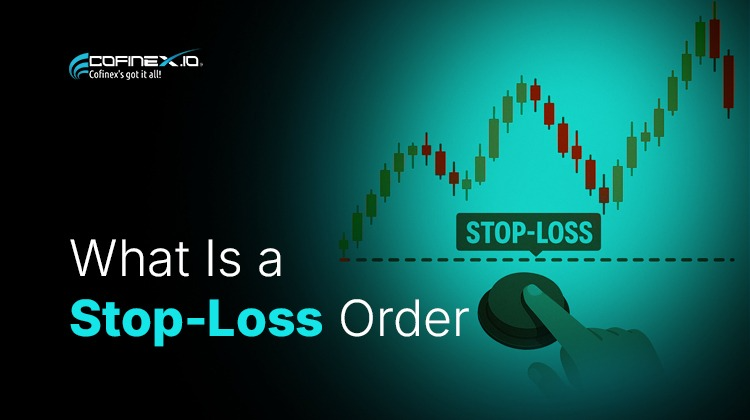
    A stop-loss order helps traders manage risk by triggering an order when the market reaches a specified price. However, it does not guarantee that the trade will close at exactly that price.

    In this lesson, we will explain how stop-loss orders work, explore a simple example, and discuss the mistakes beginners should avoid.

    What Is a Stop-Loss Order?

    A stop-loss order is a trading instruction designed to help limit potential losses on a position.

    A trader sets a stop price. If the market reaches that price, the exchange activates the order according to its rules.

    For example, imagine you buy Bitcoin at ₹10,00,000 per unit for illustration purposes. You decide that you want to exit the trade if the price falls to ₹9,50,000.

    You can set a stop-loss at ₹9,50,000.

    If the relevant price reaches that level, the order is triggered. Depending on the order type and market conditions, the final selling price may be different from the stop price.

    In simple terms, a stop-loss helps you plan an exit before a trade moves further against you.

    How Does a Stop-Loss Order Work?

    A typical stop-loss process has three main steps.

    1. Enter a trade: You buy or sell a cryptocurrency.
    2. Set a stop price: You choose the price at which you want the exit process to begin.
    3. Order triggers: If the market reaches the trigger level, the exchange activates the specified order.

    The exact process depends on the exchange and the order type you select.

    For example, some platforms offer stop-market orders, while others also offer stop-limit orders. These options work differently, so beginners should understand the available settings before placing an order.

    A Simple Stop-Loss Example

    Imagine you buy a cryptocurrency at ₹1,000 per coin.

    You set a stop price at ₹950 because you want to limit the loss if the price moves downward.

    Illustrative trade setup

    Entry price

    ₹1,000

    Stop price

    ₹950

    Planned price difference: ₹50 per coin

    A 5% decline from the entry price, before fees and slippage.

    If the order executes at ₹950, the price difference is ₹50 per coin. However, the actual loss may be larger if the order executes below ₹950.

    Likewise, if the market price rises instead, the stop-loss may never trigger.

    This example assumes a long position where you buy first and plan to sell later.

    What Are the Different Types of Stop-Loss Orders?

    Two common types are stop-market and stop-limit orders.

    1. Stop-Market Order

    A stop-market order triggers a market order when the stop price is reached.

    Once triggered, the order generally seeks execution at the best available market prices.

    Advantage: It prioritizes execution after the trigger.

    Limitation: The final execution price is not guaranteed. In a fast-moving market, the trade may execute below the stop price for a sell order.

    2. Stop-Limit Order

    A stop-limit order uses two prices:

    • Stop price: Activates the order.
    • Limit price: Sets the minimum acceptable selling price for a sell limit order.

    For example, you set a stop price of ₹950 and a limit price of ₹945.

    When the stop price is reached, the exchange places a limit order at the specified price. However, the order may remain unfilled if buyers are not available at an acceptable price.

    Advantage: It provides more control over the minimum selling price.

    Limitation: It does not guarantee execution.

    The choice depends on whether your priority is execution or price control, along with the exchange’s available order features.

    Stop-Market vs Stop-Limit

    FeatureStop-MarketStop-Limit
    Trigger priceYesYes
    Execution type after triggerMarket orderLimit order
    Price guaranteeNoLimit price constrains execution
    Execution guaranteeNot absoluteNo
    Main concernSlippageOrder may remain unfilled

    Remember that exchanges can use different names and trigger rules. Always check the order details on your trading platform.

    How Do You Choose a Stop-Loss Price?

    There is no single stop-loss level that works for every trade.

    Instead, traders may consider several factors.

    Market volatility: A highly volatile asset can move sharply within a short period.

    Trading strategy: A short-term trade may use different exit rules from a longer-term position.

    Price levels: Some traders study support levels or other technical indicators when planning an exit.

    Risk tolerance: The potential loss should fit the trader’s overall risk plan.

    However, setting a stop-loss too close to the entry price can cause an exit during ordinary market fluctuations. Setting it too far away can expose the trader to a larger loss.

    Therefore, traders should plan the stop level alongside their position size, rather than choosing a price randomly.

    Can a Stop-Loss Order Guarantee That You Won’t Lose More?

    No. A stop-loss is a risk-management tool, not a guarantee against losses.

    Several situations can affect the final result:

    • Slippage: The order executes at a different price from the expected level.
    • Price gaps or rapid moves: The market moves past the stop price before execution.
    • Low liquidity: There may not be enough buyers or sellers near the desired price.
    • Stop-limit non-execution: The market does not reach the limit price needed to fill the order.
    • Platform-specific rules: Trigger prices and order handling can vary between exchanges.

    For this reason, traders should understand both the benefits and the limitations of stop-loss orders.

    Common Stop-Loss Mistakes Beginners Make

    Setting a Stop Price Without a Plan

    A stop-loss should fit the trading strategy and the amount of risk the trader is prepared to accept.

    Assuming the Stop Price Is the Final Price

    A trigger price and an execution price are not always the same.

    Ignoring Position Size

    Even with a stop-loss, a large position can create a substantial loss.

    Using Stop-Limit Orders Without Understanding Them

    A stop-limit order may not execute when the market moves quickly.

    Moving the Stop-Loss Out of Fear

    Repeatedly moving a stop farther away can undermine the original risk plan.

    Forgetting Fees

    Trading fees and slippage can increase the final cost of a trade.

    How Does a Stop-Loss Fit Into Risk Management?

    A stop-loss works best as part of a broader trading plan.

    Before entering a trade, a trader can decide:

    1. The planned entry price.
    2. The price level where the trade idea no longer makes sense.
    3. The position size.
    4. The potential loss if the exit executes.
    5. The potential reward relative to that risk.

    For example, if a trader plans a ₹50 price risk per coin, the number of coins they buy will influence the total potential loss.

    This is why position sizing and stop-loss planning should work together.

    Even so, the actual loss can differ from the estimate because execution is not always guaranteed at the stop price.

    FAQs

    Is a stop-loss order necessary for every crypto trade?

    Not every strategy uses a stop-loss order, but traders should have a clear plan for managing risk and exiting a position.

    Can a stop-loss trigger during a sudden price drop?

    Yes. If the relevant trigger condition is met, the order may activate. However, the final execution depends on the order type and market conditions.

    What is the difference between a stop-loss and a limit order?

    A stop-loss is designed to trigger an exit when a specified condition is met. A limit order sets a price at which a trader is willing to buy or sell. A stop-limit order combines a trigger with a limit price.

    Can I use a stop-loss when trading crypto futures?

    Many crypto futures platforms offer stop-loss features. However, futures involve additional risks, including leverage and liquidation. Traders should understand the platform’s rules before using them.

    Does a stop-loss guarantee that I will lose only the amount I planned?

    No. Slippage and rapid market movements can result in a larger loss than expected. A stop-limit order may also fail to execute.

    Disclaimer

    This article is for educational purposes only and does not provide financial or investment advice. Cryptocurrency trading involves significant risk, and losses can exceed initial estimates. Always understand your exchange’s order rules before placing a trade.

  • What is Risk Management in Crypto?

    Introduction

    Cryptocurrency can offer opportunities, but it also comes with significant risks. Prices can move quickly, markets can become volatile, and individual crypto assets can lose value.

    Because of this, knowing how to manage risk is just as important as understanding how crypto works.

    Crypto risk management is not about predicting every market move or avoiding losses completely. Instead, it is about making decisions that help you control how much you are willing to risk.

    For beginners, a good risk management approach can help prevent one investment or trade from having an unnecessarily large impact on the overall portfolio.

    What Is Risk Management in Crypto?

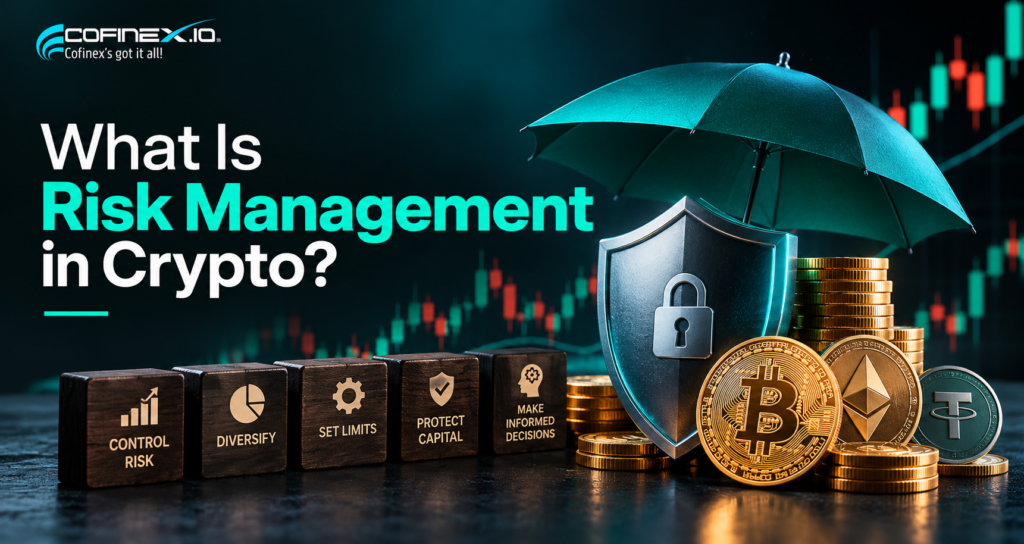
    Crypto risk management means identifying, understanding, and managing the risks involved in cryptocurrency investing and trading.

    These risks can come from different sources, including:

    • Market volatility
    • Large price movements
    • Concentration in one asset
    • Poor investment decisions
    • Leverage
    • Security problems
    • Project-related risks
    • Emotional trading

    The goal is not to remove every risk. Instead, the goal is to understand those risks and decide how much exposure you are comfortable taking.

    Why Is Risk Management Important?

    Crypto markets can move sharply within short periods.

    For example, imagine an investor puts their entire portfolio into one cryptocurrency. If that asset falls significantly, the investor’s entire portfolio is exposed to that decline.

    However, someone who spreads their exposure across different assets may reduce their dependence on one investment.

    This is one reason portfolio diversification can be part of a broader risk management strategy.

    Still, diversification does not guarantee protection. Different crypto assets can fall together when the broader market declines.

    Understand Your Risk Tolerance

    Before investing or trading, it is important to understand your risk tolerance.

    Risk tolerance refers to how much potential loss you are financially and emotionally prepared to accept.

    For example, one person may be comfortable with large price fluctuations. Another person may find the same movements difficult to handle.

    Your risk tolerance can depend on:

    • Financial situation
    • Investment goals
    • Time horizon
    • Existing investments
    • Experience with volatile markets

    Therefore, an investment strategy that works for one person may not be suitable for another.

    Avoid Investing More Than You Can Afford to Lose

    One of the basic principles of crypto risk management is to avoid putting money at risk that you cannot afford to lose.

    Cryptocurrency prices can be unpredictable. Even projects that appear strong can face unexpected challenges.

    For this reason, crypto investments should not come at the expense of essential expenses, emergency savings, or other important financial obligations.

    A simple rule for beginners is:

    Only take risks that fit your financial situation.

    How Does Diversification Help?

    Diversification means spreading investments across different assets rather than relying on one investment.

    For example, instead of holding only one cryptocurrency, an investor may hold different assets based on their goals and risk tolerance.

    Diversification can help reduce concentration risk.

    However, owning many cryptocurrencies does not automatically create a well-diversified portfolio. Several crypto assets may respond similarly to major market events.

    So, the goal should not simply be to own more assets. Instead, understand what you own and why you own it.

    What Is Position Sizing?

    Position sizing refers to deciding how much of your portfolio or available capital to put into a particular investment or trade.

    For example, suppose someone has ₹1,00,000 available for investment.

    Putting the entire amount into one highly volatile asset creates much greater exposure than allocating only a smaller portion to that asset.

    Position sizing can therefore help control the impact of an individual investment.

    There is no universal percentage that works for everyone. The appropriate amount depends on factors such as risk tolerance, investment goals, and the asset itself.

    Understand Crypto Volatility

    Volatility describes how much and how quickly an asset’s price changes.

    Cryptocurrency markets can experience significant price movements. Therefore, investors should be prepared for the possibility of both rapid gains and sharp declines.

    For beginners, it is important to avoid making decisions based only on short-term price movements.

    Instead, consider:

    • Why are you investing?
    • How long do you plan to hold?
    • How much loss can you tolerate?
    • Has the risk of the investment changed?

    This approach can help reduce emotional decisions.

    What About Stop-Loss Orders?

    A stop-loss order is a trading tool that can help traders limit potential losses by triggering an order when the market reaches a specified price.

    For example, a trader may decide that they do not want to continue holding a position if the price falls to a certain level.

    However, stop-loss orders are not a perfect safety mechanism.

    In a fast-moving or low-liquidity market, the final execution price may differ from the expected level. Therefore, beginners should understand how their exchange handles stop orders before using them.

    Stop-loss orders are mainly relevant to trading, rather than being a requirement for every long-term investment.

    Be Careful With Leverage

    Leverage allows traders to control a larger position using a smaller amount of capital.

    While leverage can increase potential returns, it can also increase potential losses.

    For example, a small price movement against a leveraged position can have a much larger effect on the trader’s available capital.

    As a result, beginners should understand leverage thoroughly before using it.

    If you do not understand how liquidation, margin, and leveraged positions work, avoiding leverage while learning may reduce unnecessary risk.

    Security Is Also Part of Risk Management

    Risk management is not only about price movements.

    Crypto holders also need to consider security risks.

    For example:

    • Protect your private keys.
    • Keep your recovery phrase private.
    • Use strong passwords.
    • Enable two-factor authentication where available.
    • Be careful with suspicious links and messages.
    • Verify wallet addresses before sending funds.

    Even if an investment performs well, poor security practices can still result in a loss.

    Common Risk Management Mistakes

    Investing Based on Emotions

    Fear and excitement can influence decisions. Buying because prices are rising rapidly or selling because of panic can lead to poor choices.

    Putting Everything Into One Asset

    This creates high concentration risk.

    Using Too Much Leverage

    Leverage can magnify losses as well as gains.

    Ignoring Volatility

    Crypto prices can move much faster than beginners expect.

    Following Someone Else’s Strategy

    Another person’s risk tolerance and financial situation may be completely different from yours.

    Chasing Quick Profits

    Trying to make fast returns can encourage unnecessary risk-taking.

    Forgetting Security

    Investment risk is not the only risk. Wallet and account security matter too.

    A Simple Risk Management Example

    Imagine you have ₹1,00,000 that you have decided to allocate toward investments.

    Instead of putting the entire amount into one highly volatile cryptocurrency, you may choose to spread your exposure based on your financial goals and risk tolerance.

    You could also decide in advance:

    • How much you are comfortable allocating to crypto
    • How much exposure you want to one asset
    • Whether you will use leverage
    • How long you plan to hold
    • What conditions would make you reconsider the investment

    The exact allocation is a personal decision. There is no single formula that works for every investor.

    The important part is planning the risk before making the investment, rather than reacting after a large price movement occurs.

    FAQs

    Is crypto risk management only for traders?

    No. Both investors and traders can benefit from risk management. However, the tools they use may differ.

    Does diversification eliminate crypto risk?

    No. Diversification can reduce concentration risk, but several crypto assets can still decline at the same time.

    Is leverage a risk management strategy?

    No. Leverage increases exposure and can magnify both gains and losses. It should be understood as a higher-risk trading tool.

    Can a stop-loss guarantee that I will lose only a fixed amount?

    No. In fast-moving or low-liquidity markets, execution can occur at a different price from the stop level.

    What is the most important part of risk management?

    There is no single rule for everyone. Understanding your financial situation, risk tolerance, investment goals, and exposure is a good starting point.

    Disclaimer

    This article is for educational purposes only and does not provide financial or investment advice. Cryptocurrency investments and trading involve significant risks, including the possible loss of capital. Always conduct your own research and consider your financial circumstances before making investment decisions.

  • What Is Portfolio Diversification?

    What Is Portfolio Diversification?

    Putting all your money into one cryptocurrency can expose your portfolio to the risks of that single asset.For example, if you hold only Bitcoin and its price falls, your entire crypto portfolio is affected. However, if your investments are spread across different assets, the impact of one asset’s movement may be different.This idea is called portfolio diversification.

    Diversification does not remove investment risk or guarantee profits. Instead, it is a way to spread exposure across different assets and reduce dependence on a single investment.

    In this lesson, we will understand how portfolio diversification works, why it matters in crypto, and what beginners should consider before building a diversified portfolio.

    What is Portfolio Diversification?

    Portfolio diversification means spreading your investments across different assets instead of putting everything into one asset.

    The basic idea is simple:

    Don’t depend on a single investment for your entire portfolio.

    For example, instead of investing your entire portfolio in one cryptocurrency, an investor may choose to hold different types of assets.

    A diversified portfolio could include:

    • Bitcoin
    • Ethereum
    • Stablecoins
    • Other digital assets
    • Traditional investments such as stocks or gold

    The exact combination depends on an individual’s goals, risk tolerance, and investment strategy.

    Why is Portfolio Diversification Important?

    Different assets can behave differently under the same market conditions.

    For example, one cryptocurrency may fall while another moves less sharply. Similarly, traditional assets may behave differently from crypto during certain market conditions.

    As a result, spreading investments can reduce the impact of one asset performing poorly.

    However, diversification does not mean that your portfolio cannot lose value.

    If the overall crypto market falls sharply, several crypto assets may decline at the same time.

    Therefore, diversification should be viewed as a risk-management approach, not a guarantee against losses.

    How does Portfolio Diversification Work in Crypto?

    Crypto investors can diversify in several ways.

    1. Diversifying Across Different Cryptocurrencies

    Instead of holding only one cryptocurrency, an investor may spread exposure across different assets.

    For example:

    • Bitcoin
    • Ethereum
    • Other established crypto assets

    Each asset has its own technology, use case, market conditions, and risks.

    However, many cryptocurrencies can still move in the same direction during major market events.

    2. Diversifying Across Different Asset Types

    Diversification does not have to happen only within crypto.

    An investor may hold different asset classes, such as:

    • Cryptocurrency
    • Stocks
    • Bonds
    • Gold
    • Cash or cash equivalents

    These assets have different characteristics and risks.

    Therefore, combining different asset classes can provide broader diversification than holding several cryptocurrencies alone.

    3. Diversifying Across Different Use Cases

    Within crypto, projects can have different purposes.

    For example, some assets may focus on:

    • Payments
    • Smart contracts
    • Decentralized applications
    • Stable value
    • Infrastructure
    • Other digital services

    However, having different use cases does not automatically make a portfolio well diversified.

    The assets can still be affected by similar market conditions.

    A Simple Diversification Example

    Imagine someone has a portfolio worth ₹1,00,000.

    Instead of putting the entire amount into one cryptocurrency, they decide to spread it across different assets.

    For example:

    AssetExample Allocation
    Bitcoin40%
    Ethereum25%
    Other crypto assets15%
    Stablecoins/cash allocation20%

    This is only an example, not a recommended allocation.

    The important point is that the investor is not relying entirely on one asset.

    A different investor may choose a completely different allocation based on their goals and risk tolerance.

    Portfolio Diversification does ot Mean Buying Everything

    A common beginner mistake is thinking that owning many cryptocurrencies automatically creates a diversified portfolio.

    It does not.

    Suppose someone owns 20 different crypto tokens. If most of those tokens are highly correlated and depend on similar market conditions, the portfolio may still carry significant risk.

    Therefore, quality and variety matter more than simply increasing the number of assets.

    Before adding an asset, consider:

    • What is its purpose?
    • What risks does it have?
    • How does it differ from your existing holdings?
    • How much exposure do you already have to similar assets?

    What Is Over-Diversification?

    Over-diversification happens when an investor spreads their money across too many investments without a clear reason.

    For example, holding dozens of small crypto tokens can make it difficult to track:

    • Project developments
    • Token supply
    • Market conditions
    • Risk levels
    • Portfolio performance

    As a result, adding more assets does not always improve a portfolio.

    A smaller number of carefully researched investments may be easier to understand and manage.

    Diversification and Risk Management

    Diversification is only one part of risk management.

    You should also consider:

    Risk Tolerance

    Risk tolerance refers to how much potential loss you are comfortable accepting.

    A person who cannot tolerate large price swings may need a different approach from someone who is comfortable with higher volatility.

    Investment Goals

    Your goals also matter.

    For example, someone investing for a long-term objective may approach their portfolio differently from someone trading over a short period.

    Time Horizon

    Your investment time horizon can influence how you think about risk.

    Short-term market movements can be very different from long-term performance.

    Therefore, diversification should fit your overall investment plan rather than follow a fixed formula.

    Common Diversification Mistakes

    Putting Everything Into One Asset

    This creates significant exposure to the performance of one investment.

    Buying Too Many Tokens

    More assets do not automatically mean lower risk.

    Ignoring Correlation

    Several assets can move together during market stress.

    Copying Someone Else’s Portfolio

    Another investor’s portfolio may not match your financial goals or risk tolerance.

    Treating Diversification as a Guarantee

    Diversification can help manage risk, but it cannot prevent losses.

    How Can Beginners Approach Diversification?

    There is no single portfolio that works for everyone.

    However, beginners can start by asking a few simple questions:

    First, what is my investment goal?

    Next, how much risk can I comfortably take?

    Then, how much exposure do I already have to crypto?

    After that, are my investments genuinely different from each other?

    Finally, can I understand and monitor the assets I own?

    These questions can help you make more informed decisions instead of simply following market trends.

    FAQs

    Is diversification important in crypto?

    It can be useful because cryptocurrency prices can be volatile. Spreading exposure may reduce dependence on one asset, although it does not eliminate market risk.

    How many cryptocurrencies should I own?

    There is no universal number. The right approach depends on your goals, risk tolerance, and ability to research and monitor each asset.

    Does diversification guarantee profit?

    No. A diversified portfolio can still lose value, especially during a broad market decline.

    Is holding Bitcoin and Ethereum diversified?

    It provides exposure to two different crypto assets, but it should not automatically be considered a fully diversified portfolio. Both can still be affected by broader crypto market conditions.

    Can I diversify outside cryptocurrency?

    Yes. Diversification can include different asset classes, such as stocks, bonds, gold, and cash, depending on your investment strategy.

    Disclaimer

    This article is for educational purposes only and does not provide financial or investment advice. Cryptocurrency investments involve risk, and you should conduct your own research and consider your financial situation before making investment decisions.

  • What is Tokenomics?

    What is Tokenomics?

    Introduction

    When you look at a crypto project, the token price is only one part of the picture. You also need to understand how many tokens exist, who holds them, how they are distributed, and what the token is used for.

    This is where tokenomics becomes important.

    Tokenomics refers to the economic design of a cryptocurrency or token. It helps explain how a token is created, distributed, used, and supplied over time.

    For beginners, learning tokenomics can make it easier to understand a crypto project before making an investment decision. However, good tokenomics does not guarantee that a token will increase in value.

    In this lesson, we will break down tokenomics in simple terms.

    What Is Tokenomics?

    Tokenomics combines “token” and “economics.”

    In simple terms, tokenomics describes the economic structure of a crypto token. It covers factors such as:

    • Token supply
    • Circulating supply
    • Token distribution
    • Token utility
    • Token vesting
    • Token unlocks
    • Token emissions

    Together, these factors help explain how a token works within its ecosystem.

    For example, imagine a project creates 1 billion tokens. Only 200 million may initially circulate, while the remaining tokens could be allocated to the team, investors, ecosystem development, or future rewards.

    Therefore, looking only at the current token price may not give you the full picture.

    Why Does Tokenomics Matter?

    Tokenomics can help you understand the supply and demand structure of a crypto project.

    For example, a token may have a low price because its supply is very large. Another token may have a higher price with a much smaller supply.

    So, token price alone does not tell you how valuable a project is.

    Tokenomics can also help you identify potential supply changes. If a large number of tokens are scheduled to enter circulation, the available supply could increase.

    However, the actual effect depends on several factors, including demand, market conditions, and how those tokens are used or sold.

    What Is Token Supply?

    Token supply refers to the number of tokens that exist or can exist under a project’s rules.

    You may come across three important terms.

    1. Circulating Supply

    Circulating supply refers to the tokens currently available in the market and generally considered to be in circulation.

    This number can change over time.

    For example, if a project releases previously locked tokens, its circulating supply may increase.

    2. Total Supply

    Total supply generally refers to the number of tokens that currently exist, excluding tokens that have been permanently destroyed or burned.

    The exact calculation can vary depending on the project and the data source.

    3. Maximum Supply

    Maximum supply refers to the highest number of tokens that can exist under the project’s design, when a maximum has been defined.

    Not every token has a fixed maximum supply.

    What Is Token Distribution?

    Token distribution explains who receives the tokens and how many they receive.

    A project may divide its tokens among different groups, such as:

    • Team and founders
    • Early investors
    • Community
    • Ecosystem development
    • Marketing
    • Treasury
    • Staking or rewards

    For example, imagine a project has 100 million tokens.

    AllocationPercentage
    Community40%
    Ecosystem25%
    Team15%
    Investors10%
    Treasury10%

    This gives you a basic idea of where the tokens are intended to go.

    However, distribution percentages alone are not enough. You should also check when these tokens become available.

    What Is Token Utility?

    Token utility describes what a token can be used for within its ecosystem.

    Depending on the project, a token may be used for:

    • Paying fees
    • Accessing certain features
    • Governance
    • Staking
    • Rewards
    • Discounts
    • Using applications within an ecosystem

    However, not every token has strong or meaningful utility.

    Therefore, beginners should ask a simple question:

    “Why does this ecosystem need the token?”

    A clear answer can help you understand the token’s role.

    What Are Token Vesting and Unlocks?

    Token vesting controls when allocated tokens become available.

    For example, a project may allocate tokens to its team but prevent them from accessing all those tokens immediately.

    Instead, the tokens could unlock gradually over several months or years.

    A token unlock happens when previously locked tokens become available according to the project’s schedule.

    This matters because a large unlock can increase the number of tokens available in the market.

    However, an unlock does not automatically mean that the price will fall. The effect depends on what happens to those tokens and how market demand changes.

    What Are Token Emissions?

    Token emissions refer to the process of introducing new tokens into circulation over time.

    For example, a project may distribute new tokens as staking rewards or ecosystem incentives.

    If new tokens enter circulation faster than demand grows, the increased supply may affect the token’s economics.

    On the other hand, strong demand can change the overall effect.

    Therefore, it is useful to look at both supply and demand, rather than focusing on supply alone.

    A Simple Tokenomics Example

    Imagine a project has:

    • Maximum supply: 1 billion tokens
    • Circulating supply: 200 million tokens
    • Current price: $2

    Its market capitalization would be:

    $2 × 200 million = $400 million

    Now imagine another 200 million tokens are scheduled to enter circulation over time.

    The circulating supply could eventually reach 400 million tokens.

    If demand and price remained unchanged, the increased supply would change the project’s market capitalization.

    This is why beginners should look beyond the token’s current price.

    How Can Beginners Read Tokenomics?

    You do not need advanced financial knowledge to start.

    When researching a project, check these areas:

    First, check the supply.
    Look at the circulating, total, and maximum supply.

    Next, check the distribution.
    Find out how tokens are divided among the team, investors, community, treasury, and ecosystem.

    Then, check the unlock schedule.
    Look for upcoming token releases and understand who receives them.

    After that, check the utility.
    Understand what the token actually does.

    Finally, consider demand.
    Ask whether people have a reason to use or hold the token.

    Together, these points give you a clearer picture of a project’s token structure.

    Common Tokenomics Mistakes Beginners Make

    Looking Only at Token Price

    A token priced at $0.10 is not automatically cheaper than one priced at $100.

    Supply matters too.

    Ignoring Circulating Supply

    A project may have a large maximum supply while only a small portion currently circulates.

    Future supply changes can therefore matter.

    Ignoring Unlocks

    Large upcoming unlocks can change the amount of tokens available in the market.

    Assuming Utility Guarantees Value

    Having a use case does not guarantee demand or price growth.

    Treating Tokenomics as a Guarantee

    Tokenomics is only one part of evaluating a crypto project. Market conditions, adoption, competition, technology, regulation, and many other factors can also affect a token.

    FAQs

    Is tokenomics the same as token price?

    No. Token price is only one part of a token’s market value. Tokenomics also considers supply, distribution, utility, unlocks, and other economic factors.

    What is the most important part of tokenomics?

    There is no single factor that is always the most important. Beginners should look at supply, distribution, utility, and unlock schedules together.

    Can tokenomics affect crypto prices?

    Yes, changes in token supply and demand can affect market prices. However, the impact depends on the broader market and project conditions.

    Why is circulating supply important?

    Circulating supply helps you understand how many tokens are currently available in the market. It is also used when calculating market capitalization.

    Does a limited token supply guarantee a higher price?

    No. Limited supply alone does not create demand. A token still needs sufficient demand and meaningful use for its market value to potentially grow.

    Disclaimer

    This article is for educational purposes only and does not provide financial or investment advice. Cryptocurrency markets are volatile, and you should conduct your own research before making any financial decision.

  • What is a Crypto Transaction Fee?

    What is a Crypto Transaction Fee?

    Crypto transaction fee explained with blockchain network and digital asset transfer

    Introduction

    When you send cryptocurrency from one wallet to another, you may notice an additional cost before confirming the transaction.This cost is commonly called a crypto transaction fee.

    In simple terms, a transaction fee is a charge associated with processing a transaction on a blockchain or through a crypto platform.

    However, not every fee works in the same way. A blockchain network may charge a network fee, while a crypto exchange may charge a separate withdrawal or trading fee.

    Therefore, understanding the type of fee you are paying can help you understand the total cost of a crypto transaction.

    What is a crypto transaction fee?

    A crypto transaction fee is a cost associated with processing a cryptocurrency transaction.

    For example, suppose you want to send ETH from one wallet to another.

    The transaction needs to be processed and recorded by the Ethereum network. As a result, the transaction may require a network fee.

    The exact fee depends on the blockchain and the type of transaction.

    In addition, exchanges and other crypto platforms may charge their own fees for certain services.

    So, the term crypto transaction fee can refer to different costs depending on where and how you make the transaction.

    Why do crypto transactions have fees?

    Blockchain networks need computers or participants to process transactions and maintain the network.

    Transaction fees help support this process.

    For example, Bitcoin uses miners to process transactions and add new blocks to its blockchain. Ethereum uses validators to help process transactions and maintain the network.

    Therefore, fees can form part of the economic system that supports a blockchain.

    However, the exact fee mechanism differs between networks.

    For this reason, you should always check how a particular blockchain handles transaction fees before using it.

    How are crypto transaction fees calculated?

    There is no single formula that applies to every cryptocurrency.

    Different blockchains use different fee systems.

    For example, some networks calculate fees based on factors such as:

    • Network activity
    • Transaction size
    • Required computational work
    • Current demand for block space
    • The blockchain’s fee mechanism

    As network activity increases, users may compete for limited block space.

    Consequently, fees can increase during periods of high demand.

    On the other hand, fees may become lower when network activity decreases.

    Network Fees vs Exchange Fees

    These two fees are often confused, but they are not necessarily the same.

    Network Fee

    A network fee is associated with processing a transaction on a blockchain.

    For example, sending crypto from one self-custody wallet to another may require a network fee.

    Exchange Fee

    A crypto exchange may charge fees for services such as trading, deposits, or withdrawals.

    These charges are set by the platform and can vary between exchanges and services.

    Therefore, always check the fee details before confirming a transaction.

    A fee shown by an exchange may include more than the underlying blockchain network cost.

    Why do network fees change?

    Crypto transaction fees can change over time.

    One important reason is network demand.

    When many users want to process transactions at the same time, competition for available block space can increase.

    As a result, users may pay higher fees to have transactions processed under certain network conditions.

    When activity falls, fees may decrease.

    For example, a blockchain can experience higher demand during periods of heavy trading or increased use of applications.

    However, the exact reason for changing fees depends on the specific blockchain.

    What is a Gas Fee?

    You may have heard the term gas fee, especially when using Ethereum or other smart-contract platforms.

    A gas fee is the cost associated with the computational work required to process a transaction or execute an operation on a blockchain that uses a gas-based fee system.

    For example, sending a token and interacting with a smart contract can require different amounts of computational work.

    Therefore, the required fee can vary depending on the transaction.

    In simple terms, gas helps measure the computational resources needed to perform an action on certain blockchain networks.

    A simple crypto fee example

    Imagine you want to send 0.1 ETH from your wallet to another wallet.

    Before confirming the transaction, your wallet may show:

    • Amount to send: 0.1 ETH
    • Network fee: 0.001 ETH
    • Total amount deducted: 0.101 ETH

    In this example, the network fee is separate from the amount you want to send.

    However, the exact way fees appear can vary between wallets, networks, and platforms.

    Therefore, always review the final transaction details before confirming.

    Who receives the network fee?

    The answer depends on the blockchain.

    On some networks, transaction fees are distributed to participants who help process and secure the network.

    For example, Bitcoin uses miners, while Ethereum uses validators.

    The way fees are distributed can also depend on the blockchain’s rules.

    As a result, there is no single answer that applies to every cryptocurrency.

    Can you avoid crypto transaction fees?

    In most cases, you should expect some form of cost when using a blockchain network.

    However, the amount can vary.

    For instance, choosing a network with different fee conditions may result in a different cost.

    Some platforms may also offer different withdrawal options or fee structures.

    Even so, you should not choose a network only because its fee appears lower.

    The network must also support the asset and destination you are using.

    Most importantly, check the network carefully before sending crypto.

    What should beginners check before saending Crypto?

    Before confirming a transaction, take a moment to review the details.

    1. Check the Network

    Make sure you are using the correct blockchain network.

    2. Check the Wallet Address

    A wrong address can result in a loss of funds.

    3. Check the Fee

    Review the network or platform fee before confirming.

    4. Check the Amount

    Make sure the amount you want to send is correct.

    5. Check the Final Amount

    Finally, check how much will actually leave your wallet or account.

    By following these steps, you can reduce the chance of making avoidable transaction mistakes.

    FAQs

    What is a crypto transaction fee?

    A crypto transaction fee is a cost associated with processing a cryptocurrency transaction.

    Why do I have to pay a crypto transaction fee?

    The fee helps support the processing of transactions on a blockchain or covers a service provided by a crypto platform, depending on the type of fee.

    Are crypto transaction fees always the same?

    No. Fees can change based on the blockchain, network activity, transaction type, and platform.

    What is a network fee?

    A network fee is a cost associated with processing a transaction on a blockchain.

    What is a gas fee?

    A gas fee is a cost associated with the computational work required for certain blockchain transactions and operations.

    Are network fees and exchange fees the same?

    No. A network fee relates to blockchain processing, while an exchange may charge separate fees for services such as trading or withdrawals.

    Can I reduce crypto transaction fees?

    The available options depend on the blockchain and platform. However, you should always make sure the selected network supports your asset and destination before sending funds.

    Disclaimer

    This lesson is for educational purposes only. It does not provide financial, investment, trading, or legal advice.

    Crypto transactions involve risks. Fees, network conditions, and platform charges can change. Therefore, always check the transaction details and applicable fees before confirming a transaction.

  • What is a Market Order? A Beginner’s Guide to Crypto Trading

    What is a Market Order? A Beginner’s Guide to Crypto Trading

    Introduction

    When you trade cryptocurrency, you need to choose how you want to buy or sell an asset.

    One of the simplest options is a market order.

    A market order tells the exchange that you want to buy or sell an asset immediately at the best available prices in the market.

    Unlike a limit order, you do not set a specific price for the trade. Instead, the exchange matches your order with available orders in the market.

    As a result, market orders can be useful when getting an immediate execution is more important than choosing an exact price.

    However, the final price may differ from the price you see when placing the order. Therefore, beginners should understand how market orders work before using them.

    What is a Market Order?

    A market order is an instruction to buy or sell an asset at the best available prices when the order reaches the market.

    For example, suppose BTC is trading around 100,000 USDT.

    You want to buy BTC immediately. Instead of entering a specific price, you place a market buy order.

    The exchange then matches your order with available sell orders.

    Therefore, your trade can execute quickly, but the exact execution price is not guaranteed.

    The final price depends on the available orders in the market at that moment.

    How does a Market Order work?

    The process is relatively simple.

    First, you choose the cryptocurrency and trading pair you want to trade.

    Next, you select the market order option.

    Then, you enter the amount you want to buy or sell.

    After that, you submit the order.

    The exchange looks at the available orders on the other side of the market. For a buy order, it matches your order with available sell orders. For a sell order, it matches your order with available buy orders.

    Finally, the exchange completes the trade as matching orders become available.

    Because the market can change quickly, the execution price can vary during this process.

    A Simple Market Order Example

    Imagine the BTC/USDT market currently has these sell orders:

    PriceAvailable BTC
    100,000 USDT0.50 BTC
    100,100 USDT0.30 BTC
    100,200 USDT0.40 BTC

    Now suppose you place a market order to buy 0.70 BTC.

    The first 0.50 BTC may be available at 100,000 USDT.

    However, only 0.20 BTC remains to complete your order. The exchange may therefore match the remaining amount at the next available price of 100,100 USDT.

    As a result, your entire order may not execute at one single price.

    This is one reason why understanding the order book is useful before placing a market order.

    Market Order vs Limit Order

    Market orders and limit orders work differently.

    Market OrderLimit Order
    Aims for immediate executionExecutes only at the specified price or a better price
    Does not set an exact execution priceLets you set the price
    Uses available orders in the marketWaits for matching orders
    Final price can varyPrice is controlled by the order limit
    Can be useful when speed mattersCan be useful when price control matters

    In short, the order focuses on execution, while a limit order focuses on price control.

    However, neither order type guarantees a particular trading outcome.

    What is Slippage?

    Slippage is the difference between the expected price of a trade and the actual execution price.

    For example, you may see BTC at 100,000 USDT and place a market buy order.

    However, if there are not enough sellers at that price, part of your order may execute at higher prices.

    Therefore, your average execution price could be above 100,000 USDT.

    Slippage can become more noticeable when:

    • The market is moving quickly
    • The trading pair has lower liquidity
    • The order is relatively large
    • There are fewer orders near the current price

    For this reason, checking the available market depth can help you understand the conditions before placing a larger order.

    Why Can the Final Price Be Different?

    A market order does not lock in the price shown on your screen.

    Instead, it uses the available orders when the exchange processes the trade.

    Crypto markets can change within seconds. At the same time, traders can place or cancel orders.

    As a result, the available prices may change before your order is fully executed.

    This means the displayed price and the final execution price can sometimes be different.

    Benefits of Market Orders

    Quick Execution

    A market order aims to execute immediately using available orders.

    Therefore, it can be useful when you want to enter or exit a position without waiting for a specific price.

    Simple to Use

    Market orders are straightforward for beginners.

    You only need to select the asset, choose the market order option, and enter the amount.

    Useful in Active Markets

    When a trading pair has strong liquidity, many orders may be available near the current price.

    As a result, market orders may experience less price movement during execution than they might in a market with limited liquidity.

    Risks of Market Orders

    The Price Is Not Fixed

    The biggest point to remember is that a market order does not guarantee an exact execution price.

    Instead, the final price depends on available orders.

    Slippage Can Occur

    If the market has limited liquidity or moves quickly, your order may execute across several price levels.

    Consequently, your average execution price can differ from the price you expected.

    Large Orders Can Affect Execution

    A large order may use several available price levels.

    Therefore, larger trades require more attention to market depth and liquidity.

    When Should Beginners Be Careful?

    Before placing a market order, consider the current market conditions.

    First, check the trading pair and make sure you have selected the correct asset.

    Next, look at the available buy and sell orders.

    Then, consider the size of your order compared with the available market depth.

    Finally, review the amount and trading details before confirming the transaction.

    These simple checks can help reduce avoidable mistakes.

    Common Beginner Mistakes

    Assuming the Displayed Price Is Guaranteed

    The price shown on the trading screen can change quickly.

    Therefore, do not assume that your entire market order will execute at that exact price.

    Ignoring Liquidity

    A trading pair with limited liquidity may have fewer available orders.

    As a result, larger orders can experience greater price differences during execution.

    Placing the Wrong Order

    Always check whether you selected a buy or sell order before confirming the trade.

    Ignoring Order Size

    A small order and a large order can interact with the market differently.

    For this reason, beginners should understand the available market depth before placing larger orders.

    FAQs

    What is a market order in crypto?

    It is an instruction to buy or sell a cryptocurrency at the best available prices when the order is processed.

    Does a market order guarantee a price?

    No. It aims for execution rather than a specific price.

    Can a market order have slippage?

    Yes. Slippage can occur when the available prices change or when there are not enough orders at the expected price.

    Is a market order executed immediately?

    It is designed for immediate execution, but the actual execution process depends on available orders and market conditions.

    What is the difference between a market order and a limit order?

    It prioritizes execution at available prices. A limit order lets you specify the price at which you are willing to buy or sell.

    Can a large market order affect the execution price?

    Yes. A large order may consume available orders at several price levels. As a result, its average execution price can differ from the initial displayed price.

    Disclaimer

    This lesson is for educational purposes only. It does not provide financial, investment, trading, or legal advice.

    Crypto markets can be volatile, and trading involves risk. Therefore, always understand an order type and its potential risks before placing a trade.