Introduction
When you transfer cryptocurrency from one exchange to another, you may be asked to provide additional information about the sender or recipient. You might wonder why an exchange needs these details when blockchain transactions already record wallet addresses.
This requirement is connected to something called the Crypto Travel Rule.
The Travel Rule is a regulatory standard designed to make cryptocurrency transfers more transparent. It requires certain crypto service providers to collect, hold, and securely share information about the people involved in qualifying transactions.
But what information is shared? Does it apply to every crypto transfer? And why does it matter to ordinary users?
Let’s understand it step by step.
What is the Crypto Travel Rule?
The Crypto Travel Rule is an anti-money laundering (AML) and counter-terrorist financing (CTF) requirement based on the Financial Action Task Force (FATF) standards.
It is associated with FATF Recommendation 16, which deals with transparency in financial transfers.
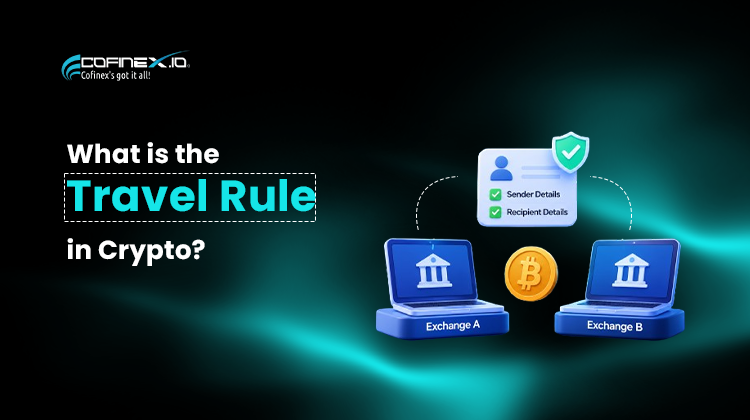
Under this rule, Virtual Asset Service Providers (VASPs), such as crypto exchanges and certain other service providers, must collect and securely transmit specified information about the sender and recipient when applicable.
The two main parties are:
- Originator: The person or entity sending the cryptocurrency.
- Beneficiary: The person or entity receiving the cryptocurrency.
The purpose is to help authorities and regulated service providers identify the parties involved in transactions and detect suspicious financial activity.
In simple terms, the Travel Rule helps ensure that relevant sender and recipient information travels alongside qualifying crypto transfers.
Why was the Travel Rule introduced?
Traditional financial institutions already follow requirements to include information about senders and recipients in certain money transfers.
However, cryptocurrency introduced a different system. Digital assets can move between wallets and platforms across different countries, sometimes without the same information-sharing processes used in traditional banking.
This can create challenges when authorities investigate financial crimes.
The Travel Rule aims to address these challenges by improving transparency and helping prevent:
- Money laundering: Using cryptocurrency transfers to hide the origin of illegally obtained funds.
- Terrorist financing: Moving funds to support terrorist activities.
- Fraud and financial crime: Making it easier to investigate suspicious transactions.
- Regulatory gaps: Reducing opportunities to exploit differences in financial supervision between countries.
The rule does not mean that every cryptocurrency transaction is suspicious. Instead, it establishes information-sharing requirements for relevant service providers.
What information does the Travel Rule require?
The exact information depends on the jurisdiction, transaction type, and applicable regulations.
However, the information commonly includes details about both parties.
| Originator Information | Beneficiary Information |
|---|---|
| Sender’s name | Recipient’s name |
| Wallet address or account reference | Wallet address or account reference |
| Other identifying details, where required | Other identifying details, where required |
Depending on local requirements, additional information may include residential details, identification numbers, or other verification information.
Crypto service providers must handle this information securely and follow applicable data protection and record-keeping requirements.
How does the Crypto Travel Rule work?
Let’s understand the process through a simple example.
Imagine that Rahul wants to transfer USDT from Exchange A to his friend’s account on Exchange B.
Here is how the process may work:
Step 1: Rahul initiates the transfer.
He enters the recipient’s wallet address and selects the amount of USDT he wants to send.
Step 2: Exchange A requests information.
The exchange may ask Rahul to provide the recipient’s name and other required details.
Step 3: The sending exchange checks the information.
Exchange A collects the required originator and beneficiary information and carries out applicable compliance checks.
Step 4: Information is securely shared.
Where the Travel Rule applies, Exchange A securely transmits the required information to Exchange B before or alongside the transfer, according to the applicable rules.
Step 5: Exchange B receives the transfer.
The receiving exchange handles the transaction and associated information according to its compliance requirements.
This process helps the two service providers maintain relevant information about the transfer.
Note: This is a simplified example. The actual process and information requested can differ between exchanges and countries.
Does the Travel Rule apply to every crypto transaction?
No. Its application depends on the type of transfer and the regulations in the relevant jurisdiction.
Here are some common situations:
1. Transfers Between Two Crypto Exchanges
When cryptocurrency moves between two regulated or otherwise obligated service providers, the Travel Rule generally requires relevant sender and recipient information to be collected and shared.
For example, transferring Bitcoin from one exchange account to another may involve these requirements.
2. Transfers to a Personal Wallet
A personal or self-hosted wallet is a wallet controlled directly by the user rather than a third-party service provider.
When you withdraw cryptocurrency from an exchange to your own wallet, the exchange may ask you to identify the wallet as self-hosted or provide additional information.
Some jurisdictions also require checks to establish ownership or control of the wallet.
The exact requirements vary. A self-hosted wallet does not automatically follow the same information-sharing process as another regulated exchange.
3. Transfers Between Personal Wallets
A direct transfer between two self-hosted wallets does not involve two exchanges exchanging Travel Rule information.
However, if a regulated service provider is involved, it may still have customer information collection, monitoring, and other compliance obligations under local rules.
Therefore, it is important to distinguish between a blockchain transfer and a transfer handled by an obligated service provider.
What is the difference between the Travel Rule and KYC?
Beginners often confuse these two terms because both involve identity information.
However, they serve different purposes.
| Feature | KYC | Travel Rule |
|---|---|---|
| Full form | Know Your Customer | Common name for requirements under FATF Recommendation 16 |
| Main purpose | Verify a customer’s identity | Share relevant sender and recipient information for qualifying transfers |
| When it applies | During onboarding and other required verification checks | When applicable transfers take place |
| Information involved | Customer identity and verification details | Originator and beneficiary details |
| Main focus | Knowing who the customer is | Maintaining transparency across transfers |
In simple terms, KYC helps an exchange understand who its customer is, while the Travel Rule helps relevant service providers exchange information about the parties involved in a transfer.
Both support financial crime prevention.
How Does the Travel Rule Affect Crypto Users in India?
India has brought Virtual Digital Asset Service Providers within its anti-money laundering framework under the Prevention of Money-laundering Act (PMLA).
The Financial Intelligence Unit–India (FIU-IND) issues AML and CFT guidelines for reporting entities providing services related to virtual digital assets.
Its guidelines include requirements concerning information associated with virtual digital asset transfers.
As a result, users of crypto platforms in India may be asked to provide additional details when depositing or withdrawing digital assets.
For example, an exchange may request:
- The recipient’s name when withdrawing cryptocurrency.
- The sender’s details when receiving a deposit.
- Information about whether a destination wallet belongs to an exchange or is self-hosted.
- Additional verification details where required.
These checks help service providers meet their compliance obligations.
The exact information requested may vary by platform and transaction. Users should follow the instructions provided by their exchange and avoid sharing sensitive wallet credentials.
What should beginners remember before making a crypto transfer?
The Travel Rule may introduce additional steps when you send or receive cryptocurrency. Keep these points in mind:
1. Verify recipient details. Always double-check the recipient’s name, wallet address, and selected network before transferring assets.
2. Provide accurate information. If an exchange asks for sender or recipient details, make sure the information is correct.
3. Understand wallet ownership. Know whether you are sending assets to another exchange account or a self-hosted wallet.
4. Never share your seed phrase or private key. Legitimate compliance checks do not require you to reveal these wallet credentials.
5. Allow time for verification. Additional compliance checks may delay a deposit or withdrawal.
6. Use trusted platforms. Choose service providers that explain their compliance procedures and protect customer information.
Common misconceptions about the Travel Rule
Let’s clear up a few common misunderstandings.
- The Travel Rule tracks physical travel: No. It refers to the movement of financial information alongside certain transfers.
- Every crypto transfer requires the same information: No. Requirements depend on local regulations and the type of transfer.
- The Travel Rule replaces KYC: No. It works alongside customer verification and other AML requirements.
- Exchanges can see your private key: No. The rule concerns transaction-related identity information, not access to your wallet’s private credentials.
- The Travel Rule makes crypto transactions completely anonymous: No. It is designed to improve transparency, not provide anonymity.
Frequently Asked Questions (FAQs)
1. What does the Travel Rule mean in cryptocurrency?
The Crypto Travel Rule requires certain crypto service providers to collect and securely share information about the sender and recipient of qualifying cryptocurrency transfers.
2. Is the Travel Rule mandatory for crypto exchanges?
Countries implement FATF standards through their own laws and regulations. Where applicable, crypto service providers must follow the relevant requirements.
3. Does the Travel Rule apply to USDT transfers?
It can apply to USDT and other virtual asset transfers when the transaction falls within the applicable regulatory requirements. The rule is not limited to Bitcoin.
4. Can I transfer crypto to my personal wallet under the Travel Rule?
Yes, but an exchange may ask for additional information or verification when you withdraw assets to a self-hosted wallet. The exact process depends on local regulations and the platform.
5. What happens if I do not provide the requested information?
An exchange may delay, hold, or decline a transaction if required information is missing or cannot be verified. The exact response depends on its policies and applicable regulations.
6. Does the Travel Rule mean that crypto is no longer private?
No. The rule requires relevant service providers to collect and share specified transaction-related information. It does not mean that every blockchain transaction publicly displays the user’s personal identity.
Disclaimer: This article is for educational purposes only and does not constitute legal, financial, or investment advice. Crypto regulations vary by jurisdiction and may change. Always check the latest requirements applicable to your location and service provider.