Tag: investment basics

  • What are Tokenized Stocks? Ownership, Rights, and Risks

    What are Tokenized Stocks? Ownership, Rights, and Risks

    Introduction

    Imagine being able to access a digital token linked to the value of a company’s stock. Instead of interacting only with traditional financial systems, you use a blockchain-based platform to access a tokenized investment product.

    This is the basic idea behind tokenized stocks.

    Tokenized stocks connect traditional stock-market exposure with blockchain technology. However, a blockchain token does not automatically give you direct ownership of the underlying company’s shares.

    Different products use different legal structures. Some may represent an interest in a financial asset, while others may provide price exposure through a separate arrangement.

    Therefore, before considering a tokenized stock, you should understand what the token represents, which rights it provides, and how the issuer structures the product.

    What Are Tokenized Stocks?

    Tokenized stocks are blockchain-based tokens designed to represent or provide exposure to shares of a company.

    Depending on the product, a token may represent a claim connected to an underlying share, an interest in a structured financial product, or price exposure through another arrangement.

    The term tokenized stock does not describe one universal legal structure. As a result, two products linked to the same company may provide different rights to their holders.

    For example, imagine two digital tokens linked to the stock price of Company ABC.

    • Product A represents a legally defined interest in shares held through a specified custody arrangement.
    • Product B provides price exposure through a contract with a platform or issuer.

    Both products may track the company’s stock price. However, their legal rights, counterparty risks, and protections can differ significantly.

    This is why you should examine the product’s official documentation instead of relying on its name alone.

    How Do Tokenized Stocks Work?

    Tokenized stock products generally combine financial arrangements with blockchain technology.

    Here is a simplified explanation of how the process may work.

    1. A Product Establishes Its Legal Structure

    First, the issuer defines what the token represents.

    For example, the product may connect tokens to underlying shares, provide a contractual claim, or use another financial structure. The specific arrangement determines the rights of token holders.

    2. The Issuer Creates the Tokens

    The issuer or its service provider creates tokens on a supported blockchain.

    Smart contracts may help manage token issuance, transfers, and other functions according to the product’s rules.

    However, a smart contract does not independently establish legal ownership of company shares. The applicable agreements and laws determine those rights.

    3. Investors Obtain the Tokens

    Eligible investors may acquire tokens through a supported platform or distribution channel.

    Depending on the product, investors may need to complete identity verification and meet residency, financial, or other eligibility requirements.

    Therefore, blockchain access does not automatically make every tokenized stock available to everyone.

    4. The Product Tracks or Represents Stock Exposure

    The token may reflect the value of an underlying share or another financial arrangement.

    However, tracking accuracy, fees, trading availability, and redemption conditions depend on the product.

    As a result, the token’s market price may differ from the underlying stock price.

    Do Tokenized Stocks Give You Direct Ownership?

    Not necessarily.

    This is one of the most important concepts to understand before exploring tokenized stocks.

    When you buy a traditional share, your ownership rights depend on the share, the applicable law, and the way the investment is held and recorded.

    A tokenized product may work differently. Holding a token does not automatically make you a shareholder in the underlying company.

    Depending on the legal structure, you may receive some rights associated with an underlying asset, a contractual claim against an issuer, or only exposure to price movements.

    What Rights Might Token Holders Have?

    The rights depend on the product’s legal documents. They may include some of the following:

    Economic exposure: The token may reflect changes in the underlying stock price, subject to the product’s structure and terms.

    Dividend-related payments: Some products may pass through dividend-related amounts or make equivalent payments. Others may not provide these benefits.

    Voting rights: Token holders may not have voting rights in the underlying company. If the product offers such rights, the official documents should explain how they work.

    Redemption or transfer rights: Some products may allow holders to redeem or transfer tokens under specified conditions. Others may impose restrictions or depend on particular service providers.

    Legal claims: The agreements determine whether holders have a claim against the issuer, an interest in underlying assets, or another form of entitlement.

    Consequently, never assume that a token provides every right associated with a traditional share.

    Tokenized Stocks vs Traditional Stocks

    Although both products may provide exposure to a company’s stock, they can differ in important ways.

    FeatureTraditional stocksTokenized stock products
    OwnershipShareholders hold rights associated with their sharesRights depend on the token’s legal structure
    RecordkeepingUses established securities-market systemsUses blockchain records alongside relevant legal and financial systems
    Voting rightsDepend on the share class and applicable rulesMay be absent or limited, depending on the product
    DividendsEligible shareholders may receive dividendsPayments depend on the product’s terms
    Trading accessDepends on the exchange, broker, and market rulesDepends on the platform, blockchain, issuer, and eligibility rules
    RisksMarket, custody, and other investment risksMay include market risks plus additional issuer, platform, blockchain, or legal risks

    These are general distinctions. Actual features depend on the specific product and jurisdiction.

    What Are the Potential Benefits of Tokenized Stocks?

    Tokenization may offer several potential benefits, depending on how a product operates.

    1. Blockchain-Based Transfers

    Some tokenized products allow transfers through supported blockchain networks. This can provide a digital method for recording and processing eligible transactions.

    However, issuers and platforms may restrict transfers to approved wallets or eligible participants.

    2. Integration With Digital Financial Systems

    A tokenized product may connect with blockchain-based applications and services where the issuer permits such use.

    Nevertheless, not every token can be used in decentralised finance applications. Product terms and technical restrictions may prevent certain activities.

    3. New Ways to Access Financial Exposure

    Tokenized products may create additional ways to obtain exposure to traditional financial assets.

    However, availability depends on local regulations, platform rules, and investor eligibility. Tokenization does not guarantee lower costs or broader access.

    What Risks Should You Understand?

    Tokenized stocks can involve risks beyond changes in the underlying stock price.

    Issuer risk: If the issuer fails to meet its obligations, token holders may face financial losses or difficulties enforcing their claims.

    Custody risk: If a product relies on a custodian to hold underlying shares, the custody arrangement and applicable protections matter.

    Platform risk: A platform may experience operational problems, restrict withdrawals, or stop providing services.

    Blockchain risk: Network disruptions, smart-contract vulnerabilities, or wallet errors may affect token transfers.

    Liquidity risk: You may not always find a buyer or be able to sell or redeem a token when you want.

    Legal risk: The rights associated with a token may depend on contractual terms and laws that vary across jurisdictions.

    Price-tracking risk: A token may not follow the underlying stock price exactly because of fees, market conditions, or the product’s design.

    Therefore, review both the investment exposure and the legal structure before considering a tokenized stock.

    How to Evaluate a Tokenized Stock

    Before acquiring a tokenized stock product, ask these questions:

    1. What does the token represent? Confirm whether it represents ownership, a contractual claim, or price exposure.
    2. Who issues the product? Research the issuer and the entities responsible for custody and administration.
    3. Do holders receive shareholder rights? Check voting rights, dividend arrangements, and other entitlements.
    4. How can you sell or redeem it? Understand the transfer restrictions, redemption process, and available markets.
    5. What fees apply? Review issuance, trading, custody, redemption, and other charges.
    6. Which rules apply? Confirm the product’s legal status and whether you qualify to invest in your jurisdiction.
    7. What happens if a provider fails? Understand the arrangements for custody, insolvency, and dispute resolution.

    Most importantly, read the official product documents. A marketing description alone may not explain all the rights and risks.

    Common Beginner Mistakes

    Assuming a token equals a share: A token linked to a stock may not provide direct ownership.

    Expecting automatic voting rights: Voting rights depend on the legal structure and product terms.

    Assuming every token pays dividends: Payment arrangements vary by product.

    Ignoring the issuer: The issuer’s obligations and financial position may affect the risks you face.

    Confusing blockchain transparency with legal protection: A public blockchain may record transactions, but it does not automatically guarantee investor protection or enforce legal claims.

    Assuming all products are available worldwide: Eligibility and regulatory requirements may restrict access.

    FAQs

    What is a tokenized stock in simple words?

    A tokenized stock is a blockchain-based token designed to represent or provide exposure to a company’s shares. Its exact rights depend on the product’s legal structure.

    Do tokenized stocks provide shareholder rights?

    Not automatically. Some products may provide specific rights, while others offer only contractual or price exposure. Check the official documents to understand what you receive.

    Do tokenized stocks pay dividends?

    Some products may distribute dividend-related payments, while others may not. The issuer’s terms determine how these payments work.

    Are tokenized stocks safer than traditional stocks?

    Not necessarily. Tokenized products may involve additional issuer, platform, custody, blockchain, and legal risks. Their safety depends on the specific product and its structure.

    Can tokenized stocks be traded 24/7?

    Some tokenized products may support trading outside traditional stock-market hours. However, availability depends on the platform, liquidity, product rules, and relevant restrictions. Trading outside regular hours does not guarantee continuous liquidity.

    Are tokenized stocks the same as tokenized real estate?

    No. Both fall within the broader real-world asset tokenization category, but they represent different underlying assets and may have different legal structures, rights, and risks.

    Disclaimer

    This article is for educational purposes only and does not provide financial, investment, or legal advice. Tokenized stock products differ in structure, rights, availability, and risk. Always review official documentation and applicable regulations before making an investment decision.

  • What is Inflation? A Beginner’s Guide

    What is Inflation? A Beginner’s Guide

    Introduction

    Have you noticed that groceries, transportation, and everyday essentials sometimes cost more than they did a few years ago? One reason could be inflation.

    Inflation is a sustained rise in the general price level of goods and services over time. As prices increase, the same amount of money buys fewer goods and services. In other words, inflation reduces the purchasing power of money when income or savings do not keep pace.

    For example, if you could buy a basket of groceries for ₹1,000 last year but need ₹1,080 for a similar basket today, the cost has increased by 8%.

    However, individual prices can rise or fall for different reasons. Inflation refers to a broader increase across the economy, rather than a price increase in just one product.

    Let’s explore how inflation works, what causes it, and why it matters for your savings and investments.

    What Is Inflation in Simple Words?

    It means that prices across an economy generally rise over a period of time.

    As a result, money loses some of its purchasing power. You may need more money to buy the same goods and services than you needed before.

    For example, imagine you have ₹500 to spend on everyday essentials. If their prices rise over time, that ₹500 may no longer cover the same shopping list.

    Therefore, inflation affects how far your money can go, even when the amount in your wallet remains unchanged.

    How does Inflation Work?

    It changes the relationship between money and the goods or services you can buy.

    Consider this simple example:

    YearCost of a grocery basket
    Year 1₹1,000
    Year 2₹1,050
    Year 3₹1,100

    In this example, the same grocery basket costs more each year.

    If your income stays the same while prices increase, you may need to reduce your spending or adjust your budget. Similarly, if your savings earn a lower return than the inflation rate, their purchasing power can decline over time.

    However, wages and investment returns can also rise. The impact on each person depends on their income, expenses, savings, and financial circumstances.

    What Causes Inflation?

    It can occur for several reasons. Economists often group its causes into a few broad categories.

    1. Demand-Pull Inflation

    It occurs when demand for goods and services grows faster than the economy can supply them.

    For example, imagine many people want to buy cars at the same time, but manufacturers cannot produce enough cars to meet demand. Sellers may raise prices as buyers compete for limited supply.

    As a result, strong demand can push prices upward.

    2. Cost-Push Inflation

    It occurs when businesses face higher production costs and pass some of those increases on to customers.

    For example, a rise in fuel, electricity, raw material, or transportation costs can make products more expensive to produce and deliver.

    Consequently, businesses may increase prices to cover their higher expenses.

    3. Supply Disruptions

    Supply disruptions can also contribute to inflation.

    For instance, severe weather, transport problems, or shortages of essential materials may reduce the supply of certain products. If demand remains strong, prices may rise.

    However, a price increase in one product does not automatically mean the whole economy is experiencing inflation.

    4. Expectations About Future Prices

    People’s expectations can influence economic behaviour.

    If businesses expect their costs to rise, they may increase prices in advance. Similarly, workers may seek higher wages when they expect living costs to increase.

    These changes can contribute to continued price increases, depending on wider economic conditions.

    How Is Inflation Measured?

    Economists use price indexes to measure changes in the cost of goods and services over time.

    One common measure is the Consumer Price Index (CPI).

    The CPI tracks the prices of a selected basket of consumer goods and services. Depending on the country, this basket may include food, housing-related expenses, transport, healthcare, and other everyday costs.

    Economists then compare the index across different periods to calculate the inflation rate.

    For example, if a price index rises from 100 to 105 over a year, the measured increase is 5%.

    However, the official inflation rate may differ from your personal experience. Your spending habits may differ from those represented by the index.

    How Does Inflation Affect Your Money?

    It can affect your daily life and long-term financial plans in several ways.

    1. Purchasing Power

    When prices rise, the same amount of money buys fewer goods and services.

    For example, if your monthly budget stays unchanged while food and transport costs increase, you may have less money available for other expenses.

    2. Savings

    Money held in a savings account may lose purchasing power when its interest rate falls below inflation.

    Suppose your savings earn 3% interest over a year while inflation runs at 5%. Although your account balance grows, your money’s purchasing power may decline.

    Therefore, consider both the interest you earn and changes in the cost of living when evaluating your savings.

    3. Borrowing Costs

    It can influence interest rates, although the relationship is not automatic.

    Central banks may adjust policy rates in response to inflation and other economic conditions. These decisions can affect borrowing costs for households and businesses.

    As a result, some loans may become more expensive when lenders raise interest rates.

    4. Investments

    It can affect different investments in different ways.

    For example, rising prices and interest rates can influence bond prices, company costs, and stock valuations. The impact depends on the type of investment and wider market conditions.

    Therefore, no single investment automatically protects you from inflation.

    Inflation vs Deflation

    Inflation and deflation describe opposite movements in the general price level.

    FeatureInflationDeflation
    MeaningGeneral price level risesGeneral price level falls
    Purchasing powerGenerally decreases per unit of moneyGenerally increases per unit of money
    Possible causesStrong demand, rising costs, or supply constraintsWeak demand or other economic pressures
    Potential concernMoney may buy less over timeFalling prices may accompany reduced spending and economic activity

    Although lower prices may sound beneficial, widespread and sustained deflation can create economic challenges. For example, consumers may delay purchases if they expect prices to fall further, which can weaken demand.

    How Can You Manage Inflation in Your Financial Planning?

    You cannot control the overall inflation rate, but you can make thoughtful financial decisions.

    Track your spending: Review your expenses regularly to identify where prices have increased.

    Build a budget: Prioritise essential expenses and adjust your spending when necessary.

    Maintain emergency savings: Keep accessible funds for unexpected costs, while considering how inflation affects their purchasing power.

    Understand investment returns: Compare potential returns with inflation, fees, taxes, and risk. Remember that investment returns are not guaranteed.

    Review financial goals: Revisit your savings targets as living costs change.

    Most importantly, choose financial products based on your needs, time horizon, and risk tolerance rather than assuming any asset will always outperform inflation.

    Common Beginner Mistakes

    Confusing one price increase with inflation: It refers to a broad rise in prices, not just an increase in one product.

    Ignoring purchasing power: A higher account balance does not necessarily mean you can buy more.

    Assuming wages always rise with prices: Income may increase, stay unchanged, or fall behind inflation.

    Believing inflation affects everyone equally: Different households spend money on different goods and services, so their personal experience can vary.

    Assuming investments always beat inflation: Every investment carries its own risks, and returns can fall below inflation.

    FAQs

    What is inflation in simple words?

    It means that prices across the economy generally rise over time, so the same amount of money buys fewer goods and services.

    What is the main cause of inflation?

    There is no single cause in every situation. Strong demand, higher production costs, supply disruptions, and expectations about future prices can all contribute.

    Is inflation always bad?

    Not necessarily. Low and stable inflation can accompany a growing economy. However, rapid or unpredictable inflation can make budgeting and financial planning more difficult.

    How does inflation affect savings?

    If your savings earn a lower return than the inflation rate, their purchasing power can decline, even when the account balance increases.

    What is the difference between inflation and deflation?

    It refers to a general rise in prices, while deflation refers to a general fall in prices over time.

    Disclaimer

    This article is for educational purposes only and does not provide financial or investment advice. Inflation rates, economic conditions, and investment returns vary. Consider your individual circumstances when making financial decisions.

  • What are Exchange-Traded Funds (ETFs)? A Beginner’s Guide

    What are Exchange-Traded Funds (ETFs)? A Beginner’s Guide

    Introduction

    Have you ever wanted to invest in several companies without buying each stock separately? Exchange-traded funds, commonly known as ETFs, can offer one way to do that.

    An ETF is an investment fund whose shares trade on a stock exchange. Depending on its strategy, an ETF may hold a collection of stocks, bonds, commodities, or other assets. Some ETFs track a market index, while others focus on a particular industry or investment strategy.

    For example, instead of buying shares in every company in a stock market index, you could invest in an ETF designed to track that index.

    However, ETFs are not risk-free. Their value can rise or fall, and fees vary between funds. Let’s explore how ETFs work, their benefits, and the risks beginners should understand.

    What Is an Exchange-Traded Fund?

    An exchange-traded fund (ETF) is an investment fund that issues shares traded on a stock exchange, much like individual stocks.

    An ETF pools money from investors and uses it according to the fund’s investment objective. Depending on the fund, it may hold multiple assets or follow a specific market benchmark.

    For example, an ETF may track a broad stock market index, focus on technology companies, or provide exposure to gold.

    As a result, one ETF share can give an investor exposure to several underlying investments. However, the exact exposure depends on the fund’s holdings and investment strategy.

    How Do ETFs Work?

    ETFs combine features of investment funds and exchange trading.

    Here is how they generally work:

    1. The fund follows an objective: The ETF aims to track an index, invest in a particular sector, hold certain assets, or follow another stated strategy.
    2. The fund holds investments: Depending on its objective, it may own stocks, bonds, commodities, or other eligible assets.
    3. Investors buy and sell shares: Investors can usually trade ETF shares through a brokerage account during exchange trading hours.
    4. The market determines the trading price: Supply and demand influence the ETF’s market price. This price may differ slightly from the value of its underlying holdings.
    5. The fund charges fees: The ETF may charge an annual expense ratio and investors may also pay brokerage or other transaction costs.

    Therefore, before buying an ETF, review its objective, holdings, costs, and trading arrangements.

    Common Types of ETFs

    ETFs come in several forms. Each type offers different kinds of market exposure.

    1. Index ETFs

    Index ETFs aim to track a particular market index.

    For example, an ETF may follow a broad stock market index. Instead of choosing individual companies, investors can use the fund to gain exposure to the securities included in that index.

    However, the fund’s performance may not match the index exactly because of fees and tracking differences.

    2. Sector ETFs

    Sector ETFs focus on a particular industry, such as technology, healthcare, energy, or financial services.

    These funds can help investors target a specific sector. However, because they concentrate on one area, they may carry greater sector-specific risk than broadly diversified funds.

    3. Bond ETFs

    Bond ETFs invest in bonds or other fixed-income securities.

    Depending on their holdings, these funds may provide exposure to government bonds, corporate bonds, or short-term debt instruments. Nevertheless, bond ETFs can still lose value because of interest-rate changes, credit risk, and market conditions.

    4. Commodity ETFs

    Commodity ETFs aim to provide exposure to commodities such as gold or other raw materials.

    However, different funds use different structures. Some hold physical commodities, while others use futures contracts or other financial instruments. Therefore, check how a fund gains its exposure before investing.

    5. Thematic ETFs

    Thematic ETFs focus on a particular trend or investment theme, such as artificial intelligence, clean energy, or cybersecurity.

    Although these funds can provide targeted exposure, their performance depends on the assets they hold. A popular theme does not guarantee strong investment returns.

    Benefits of ETFs

    ETFs offer several features that may appeal to investors.

    Diversification: A broad ETF can provide exposure to multiple securities through one investment. However, not every ETF is diversified.

    Convenience: Investors can buy and sell ETF shares through a brokerage account during market hours.

    Transparency: Many ETFs publish information about their holdings regularly, allowing investors to review their investments.

    Variety: Investors can choose funds that track indexes, sectors, bonds, commodities, or specific strategies.

    Cost awareness: Some ETFs have relatively low expense ratios. However, costs vary, so investors should compare fees rather than assume every ETF is inexpensive.

    What Are the Risks of ETFs?

    Although ETFs can be useful investment tools, they also carry risks.

    1. Market Risk

    If the assets held by an ETF lose value, the ETF’s price may fall as well. Diversification does not eliminate market risk.

    2. Concentration Risk

    An ETF that focuses on one industry, country, or theme may depend heavily on a small group of investments.

    As a result, a downturn in that area can significantly affect the fund.

    3. Tracking Error

    An ETF that follows an index may not match its performance exactly. Fees, trading costs, and the fund’s investment methods can create differences.

    4. Trading Price Differences

    An ETF’s market price may trade above or below the net asset value (NAV) of its holdings.

    Liquidity and market conditions can affect this difference. Consequently, investors should consider both the fund’s holdings and its trading price.

    5. Fees and Other Costs

    An ETF may charge an annual expense ratio. In addition, investors may pay brokerage fees, bid-ask spreads, or other transaction costs.

    Over time, these expenses can reduce overall returns.

    ETFs vs Individual Stocks vs Mutual Funds

    These investment options differ in how they operate and what they offer.

    FeatureETFsIndividual stocksMutual funds
    What you buyShares in an investment fundShares of a companyUnits or shares in an investment fund
    Investment exposureDepends on the fund; may include multiple assetsUsually one companyDepends on the fund
    TradingUsually trades on an exchange throughout market hoursTrades on an exchange during market hoursOften bought or redeemed through the fund at a calculated NAV
    DiversificationMay offer diversificationDepends on the number of stocks heldDepends on the fund
    CostsExpense ratio and possible trading costsTrading costs may applyExpense ratio and other charges may apply

    The exact features and costs depend on the product and market. Therefore, compare the fund documents before choosing an investment.

    How to Evaluate an ETF Before Investing

    Before investing in an ETF, take time to understand what you are buying.

    1. Check the objective: Find out whether the fund tracks an index, follows a theme, or uses another strategy.
    2. Review its holdings: Check which assets the fund owns and whether they match your goals.
    3. Compare fees: Review the expense ratio and other potential trading costs.
    4. Understand the risks: Consider market risk, concentration, currency exposure, and other risks relevant to the fund.
    5. Check liquidity: Look at trading activity and the bid-ask spread, which can affect your trading costs.
    6. Read the fund documents: Review the prospectus or official fund information to understand the investment approach and restrictions.

    Most importantly, do not choose an ETF solely because it performed well in the past. Past performance does not guarantee future results.

    FAQs

    What does ETF stand for?

    ETF stands for exchange-traded fund. It is an investment fund whose shares trade on a stock exchange.

    Are ETFs good for beginners?

    Some ETFs may suit beginners because they provide convenient access to a range of investments. However, suitability depends on the fund’s risks, costs, and the investor’s goals.

    Are ETFs safer than individual stocks?

    Not necessarily. A broad ETF may reduce company-specific risk through diversification, but it can still lose value when the market falls. A concentrated ETF may also carry substantial risk.

    Can I lose money in an ETF?

    Yes. An ETF’s market price can fall, and you may lose some or all of the money you invest, depending on the fund and the circumstances.

    Do ETFs pay dividends?

    Some ETFs distribute dividends or other income received from their holdings. Others reinvest income, depending on their structure and policies.

    Are ETFs and mutual funds the same?

    No. Both pool investments into a fund, but ETFs generally trade on an exchange throughout market hours. Traditional mutual funds often process purchases and redemptions at a calculated NAV. Product structures vary by market.

    Disclaimer

    This article is for educational purposes only and does not provide financial or investment advice. ETFs carry investment risks, and their fees, holdings, structures, and returns vary. Always review official fund documents and consider your financial goals before investing.

  • What is SIP Investing?

    What is SIP Investing?

    Introduction

    Investing can feel confusing when you are unsure when to start or how much money to invest. Some people wait for the perfect time to enter the market, while others invest a large amount at once.

    However, there is another approach that focuses on consistency rather than timing the market.

    It is called a Systematic Investment Plan (SIP).

    SIP investing allows you to invest a fixed amount at regular intervals, such as weekly, monthly, or quarterly, depending on the investment product and its available options. This approach encourages disciplined investing and reduces the need to identify one perfect entry point.

    In this lesson, we will explain what SIP investing means, how it works, its benefits, and the risks beginners should understand.

    What Is SIP Investing?

    A Systematic Investment Plan, commonly known as a SIP, is a method of investing a fixed amount of money at regular intervals.

    In India, SIPs are commonly associated with mutual funds. Instead of investing a large amount at once, an investor contributes smaller amounts according to a schedule.

    For example, someone may choose to invest ₹1,000 every month in a mutual fund. The investment continues according to the selected schedule until the investor changes or stops the plan.

    The main idea is simple: invest consistently instead of trying to predict the perfect time to invest.

    However, a SIP is an investment method, not a separate asset. The risks and potential returns depend on the investment you choose.

    How Does a SIP Work?

    A SIP follows a regular investment schedule.

    Here is a simple example:

    Suppose you decide to invest ₹2,000 every month in a mutual fund.

    MonthInvestment
    January₹2,000
    February₹2,000
    March₹2,000
    April₹2,000
    May₹2,000
    June₹2,000
    Total invested₹12,000

    After six months, you would have invested ₹12,000.

    The value of your investment may be higher or lower than this amount because the underlying assets can change in price. Your investment may also accumulate different numbers of units at different prices.

    Therefore, the final value depends on market performance and the investment product.

    What Is Rupee-Cost Averaging?

    One benefit often associated with SIP investing is rupee-cost averaging.

    This means that when you invest a fixed amount regularly, you may purchase more units when prices are lower and fewer units when prices are higher.

    For example, imagine you invest ₹1,000 each month in a mutual fund.

    MonthUnit PriceAmount InvestedUnits Purchased
    January₹100₹1,00010
    February₹80₹1,00012.5
    March₹125₹1,0008
    Total—₹3,00030.5

    In this example, you invest ₹3,000 and purchase 30.5 units.

    Your average purchase price is approximately ₹98.36 per unit.

    This happens because each investment buys a different number of units depending on the price at that time.

    However, rupee-cost averaging does not guarantee profits or prevent losses. If the investment’s value declines, your portfolio can still lose money.

    What Are the Benefits of SIP Investing?

    1. Encourages Consistency

    Regular contributions can help you develop an investment habit. Instead of deciding when to invest every time, you follow a schedule.

    2. Reduces the Need to Time the Market

    Predicting market highs and lows is difficult. By investing at regular intervals, you reduce your dependence on choosing one perfect entry point.

    However, this does not mean a SIP always performs better than investing a lump sum.

    3. Supports Gradual Investing

    A SIP allows you to invest smaller amounts over time rather than committing a large amount at once.

    This can make regular investing easier to manage within a budget.

    4. Can Support Long-Term Goals

    Regular investing may help people work toward long-term financial goals, depending on the investment, contribution amount, time horizon, and market performance.

    Still, you should review your investments periodically to ensure they remain suitable for your goals.

    What Are the Risks of SIP Investing?

    Although SIPs encourage consistency, they do not remove investment risk.

    1. Market Risk

    If the underlying investment loses value, your SIP investment can also decline.

    2. No Guaranteed Returns

    A regular investment schedule cannot guarantee a profit. Returns depend on the assets held and their performance.

    3. Investment Selection Risk

    A SIP does not make an unsuitable investment safe. You still need to understand the investment’s objectives, costs, and risk level.

    4. Continuing Without Reviewing

    Your financial goals or circumstances may change over time. Therefore, review your plan periodically rather than assuming that an existing SIP will always remain suitable.

    SIP vs Lump-Sum Investing

    Both approaches involve investing money, but they follow different contribution methods.

    FeatureSIP InvestingLump-Sum Investing
    Investment methodRegular contributionsA larger amount invested at once
    TimingSpread across different datesInvested at one point in time
    BudgetingCan support regular budgetingRequires a larger amount upfront
    Market exposureBuilds over multiple contributionsBegins with the initial investment
    RiskDepends on the investmentDepends on the investment

    Neither method is automatically better in every situation. The right approach depends on your available funds, investment goals, risk tolerance, and market circumstances.

    Is SIP Investing Available in Crypto?

    The term SIP is most commonly associated with mutual fund investing in India. However, some crypto platforms offer recurring-buy features that allow users to purchase a selected cryptocurrency at regular intervals.

    These features can resemble a SIP because they encourage consistent purchases. Nevertheless, a recurring crypto purchase is not necessarily the same as a mutual fund SIP.

    Cryptocurrencies can experience substantial price fluctuations. As a result, regular purchases do not guarantee profits or protect you from losses.

    Before using a recurring-buy feature, check the platform’s fees, supported assets, schedule, and cancellation rules.

    Common SIP Investing Mistakes

    Expecting guaranteed returns: A SIP is a method of investing, not a promise of profit.

    Choosing an investment without research: Understand the product before committing your money.

    Ignoring investment costs: Fees and expenses can affect your final returns.

    Stopping only because of short-term market movements: Decisions should reflect your goals and risk tolerance, rather than panic alone.

    Investing without a financial plan: Make sure your contributions fit your budget and do not interfere with essential expenses or emergency savings.

    FAQs

    Is SIP investing good for beginners?

    A SIP can help beginners develop a regular investment habit. However, suitability depends on the investment product, financial goals, and ability to accept risk.

    Can I lose money through a SIP?

    Yes. If the underlying investment declines in value, your SIP investment can lose money.

    Is SIP better than lump-sum investing?

    Neither approach is always better. The outcome depends on factors such as market performance, timing, the investment product, and the investor’s circumstances.

    Does SIP guarantee returns?

    No. SIPs do not guarantee profits. Returns depend on the performance of the underlying investment.

    Can I use SIP for cryptocurrency?

    Some platforms offer recurring crypto purchases. These can resemble a SIP, but cryptocurrency investments carry significant risks and are different from traditional mutual fund SIPs.

    Disclaimer

    This article is for educational purposes only and does not provide financial or investment advice. All investments involve risks, and returns are not guaranteed. Research the investment product and consider your financial circumstances before investing.

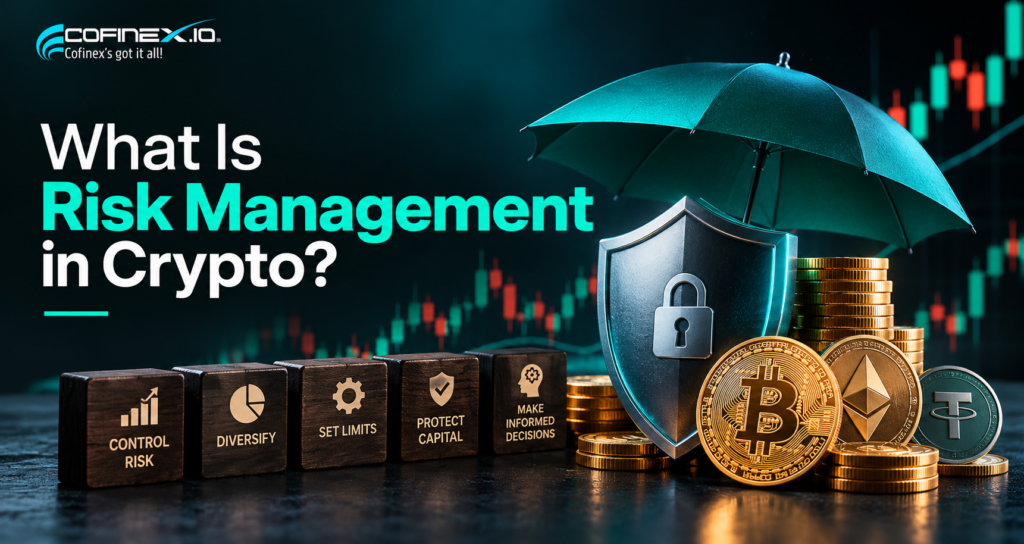
  • What is Risk Management in Crypto?

    Introduction

    Cryptocurrency can offer opportunities, but it also comes with significant risks. Prices can move quickly, markets can become volatile, and individual crypto assets can lose value.

    Because of this, knowing how to manage risk is just as important as understanding how crypto works.

    Crypto risk management is not about predicting every market move or avoiding losses completely. Instead, it is about making decisions that help you control how much you are willing to risk.

    For beginners, a good risk management approach can help prevent one investment or trade from having an unnecessarily large impact on the overall portfolio.

    What Is Risk Management in Crypto?

    Crypto risk management means identifying, understanding, and managing the risks involved in cryptocurrency investing and trading.

    These risks can come from different sources, including:

    • Market volatility
    • Large price movements
    • Concentration in one asset
    • Poor investment decisions
    • Leverage
    • Security problems
    • Project-related risks
    • Emotional trading

    The goal is not to remove every risk. Instead, the goal is to understand those risks and decide how much exposure you are comfortable taking.

    Why Is Risk Management Important?

    Crypto markets can move sharply within short periods.

    For example, imagine an investor puts their entire portfolio into one cryptocurrency. If that asset falls significantly, the investor’s entire portfolio is exposed to that decline.

    However, someone who spreads their exposure across different assets may reduce their dependence on one investment.

    This is one reason portfolio diversification can be part of a broader risk management strategy.

    Still, diversification does not guarantee protection. Different crypto assets can fall together when the broader market declines.

    Understand Your Risk Tolerance

    Before investing or trading, it is important to understand your risk tolerance.

    Risk tolerance refers to how much potential loss you are financially and emotionally prepared to accept.

    For example, one person may be comfortable with large price fluctuations. Another person may find the same movements difficult to handle.

    Your risk tolerance can depend on:

    • Financial situation
    • Investment goals
    • Time horizon
    • Existing investments
    • Experience with volatile markets

    Therefore, an investment strategy that works for one person may not be suitable for another.

    Avoid Investing More Than You Can Afford to Lose

    One of the basic principles of crypto risk management is to avoid putting money at risk that you cannot afford to lose.

    Cryptocurrency prices can be unpredictable. Even projects that appear strong can face unexpected challenges.

    For this reason, crypto investments should not come at the expense of essential expenses, emergency savings, or other important financial obligations.

    A simple rule for beginners is:

    Only take risks that fit your financial situation.

    How Does Diversification Help?

    Diversification means spreading investments across different assets rather than relying on one investment.

    For example, instead of holding only one cryptocurrency, an investor may hold different assets based on their goals and risk tolerance.

    Diversification can help reduce concentration risk.

    However, owning many cryptocurrencies does not automatically create a well-diversified portfolio. Several crypto assets may respond similarly to major market events.

    So, the goal should not simply be to own more assets. Instead, understand what you own and why you own it.

    What Is Position Sizing?

    Position sizing refers to deciding how much of your portfolio or available capital to put into a particular investment or trade.

    For example, suppose someone has ₹1,00,000 available for investment.

    Putting the entire amount into one highly volatile asset creates much greater exposure than allocating only a smaller portion to that asset.

    Position sizing can therefore help control the impact of an individual investment.

    There is no universal percentage that works for everyone. The appropriate amount depends on factors such as risk tolerance, investment goals, and the asset itself.

    Understand Crypto Volatility

    Volatility describes how much and how quickly an asset’s price changes.

    Cryptocurrency markets can experience significant price movements. Therefore, investors should be prepared for the possibility of both rapid gains and sharp declines.

    For beginners, it is important to avoid making decisions based only on short-term price movements.

    Instead, consider:

    • Why are you investing?
    • How long do you plan to hold?
    • How much loss can you tolerate?
    • Has the risk of the investment changed?

    This approach can help reduce emotional decisions.

    What About Stop-Loss Orders?

    A stop-loss order is a trading tool that can help traders limit potential losses by triggering an order when the market reaches a specified price.

    For example, a trader may decide that they do not want to continue holding a position if the price falls to a certain level.

    However, stop-loss orders are not a perfect safety mechanism.

    In a fast-moving or low-liquidity market, the final execution price may differ from the expected level. Therefore, beginners should understand how their exchange handles stop orders before using them.

    Stop-loss orders are mainly relevant to trading, rather than being a requirement for every long-term investment.

    Be Careful With Leverage

    Leverage allows traders to control a larger position using a smaller amount of capital.

    While leverage can increase potential returns, it can also increase potential losses.

    For example, a small price movement against a leveraged position can have a much larger effect on the trader’s available capital.

    As a result, beginners should understand leverage thoroughly before using it.

    If you do not understand how liquidation, margin, and leveraged positions work, avoiding leverage while learning may reduce unnecessary risk.

    Security Is Also Part of Risk Management

    Risk management is not only about price movements.

    Crypto holders also need to consider security risks.

    For example:

    • Protect your private keys.
    • Keep your recovery phrase private.
    • Use strong passwords.
    • Enable two-factor authentication where available.
    • Be careful with suspicious links and messages.
    • Verify wallet addresses before sending funds.

    Even if an investment performs well, poor security practices can still result in a loss.

    Common Risk Management Mistakes

    Investing Based on Emotions

    Fear and excitement can influence decisions. Buying because prices are rising rapidly or selling because of panic can lead to poor choices.

    Putting Everything Into One Asset

    This creates high concentration risk.

    Using Too Much Leverage

    Leverage can magnify losses as well as gains.

    Ignoring Volatility

    Crypto prices can move much faster than beginners expect.

    Following Someone Else’s Strategy

    Another person’s risk tolerance and financial situation may be completely different from yours.

    Chasing Quick Profits

    Trying to make fast returns can encourage unnecessary risk-taking.

    Forgetting Security

    Investment risk is not the only risk. Wallet and account security matter too.

    A Simple Risk Management Example

    Imagine you have ₹1,00,000 that you have decided to allocate toward investments.

    Instead of putting the entire amount into one highly volatile cryptocurrency, you may choose to spread your exposure based on your financial goals and risk tolerance.

    You could also decide in advance:

    • How much you are comfortable allocating to crypto
    • How much exposure you want to one asset
    • Whether you will use leverage
    • How long you plan to hold
    • What conditions would make you reconsider the investment

    The exact allocation is a personal decision. There is no single formula that works for every investor.

    The important part is planning the risk before making the investment, rather than reacting after a large price movement occurs.

    FAQs

    Is crypto risk management only for traders?

    No. Both investors and traders can benefit from risk management. However, the tools they use may differ.

    Does diversification eliminate crypto risk?

    No. Diversification can reduce concentration risk, but several crypto assets can still decline at the same time.

    Is leverage a risk management strategy?

    No. Leverage increases exposure and can magnify both gains and losses. It should be understood as a higher-risk trading tool.

    Can a stop-loss guarantee that I will lose only a fixed amount?

    No. In fast-moving or low-liquidity markets, execution can occur at a different price from the stop level.

    What is the most important part of risk management?

    There is no single rule for everyone. Understanding your financial situation, risk tolerance, investment goals, and exposure is a good starting point.

    Disclaimer

    This article is for educational purposes only and does not provide financial or investment advice. Cryptocurrency investments and trading involve significant risks, including the possible loss of capital. Always conduct your own research and consider your financial circumstances before making investment decisions.

  • What Is Portfolio Diversification?

    What Is Portfolio Diversification?

    Putting all your money into one cryptocurrency can expose your portfolio to the risks of that single asset.For example, if you hold only Bitcoin and its price falls, your entire crypto portfolio is affected. However, if your investments are spread across different assets, the impact of one asset’s movement may be different.This idea is called portfolio diversification.

    Diversification does not remove investment risk or guarantee profits. Instead, it is a way to spread exposure across different assets and reduce dependence on a single investment.

    In this lesson, we will understand how portfolio diversification works, why it matters in crypto, and what beginners should consider before building a diversified portfolio.

    What is Portfolio Diversification?

    Portfolio diversification means spreading your investments across different assets instead of putting everything into one asset.

    The basic idea is simple:

    Don’t depend on a single investment for your entire portfolio.

    For example, instead of investing your entire portfolio in one cryptocurrency, an investor may choose to hold different types of assets.

    A diversified portfolio could include:

    • Bitcoin
    • Ethereum
    • Stablecoins
    • Other digital assets
    • Traditional investments such as stocks or gold

    The exact combination depends on an individual’s goals, risk tolerance, and investment strategy.

    Why is Portfolio Diversification Important?

    Different assets can behave differently under the same market conditions.

    For example, one cryptocurrency may fall while another moves less sharply. Similarly, traditional assets may behave differently from crypto during certain market conditions.

    As a result, spreading investments can reduce the impact of one asset performing poorly.

    However, diversification does not mean that your portfolio cannot lose value.

    If the overall crypto market falls sharply, several crypto assets may decline at the same time.

    Therefore, diversification should be viewed as a risk-management approach, not a guarantee against losses.

    How does Portfolio Diversification Work in Crypto?

    Crypto investors can diversify in several ways.

    1. Diversifying Across Different Cryptocurrencies

    Instead of holding only one cryptocurrency, an investor may spread exposure across different assets.

    For example:

    • Bitcoin
    • Ethereum
    • Other established crypto assets

    Each asset has its own technology, use case, market conditions, and risks.

    However, many cryptocurrencies can still move in the same direction during major market events.

    2. Diversifying Across Different Asset Types

    Diversification does not have to happen only within crypto.

    An investor may hold different asset classes, such as:

    • Cryptocurrency
    • Stocks
    • Bonds
    • Gold
    • Cash or cash equivalents

    These assets have different characteristics and risks.

    Therefore, combining different asset classes can provide broader diversification than holding several cryptocurrencies alone.

    3. Diversifying Across Different Use Cases

    Within crypto, projects can have different purposes.

    For example, some assets may focus on:

    • Payments
    • Smart contracts
    • Decentralized applications
    • Stable value
    • Infrastructure
    • Other digital services

    However, having different use cases does not automatically make a portfolio well diversified.

    The assets can still be affected by similar market conditions.

    A Simple Diversification Example

    Imagine someone has a portfolio worth ₹1,00,000.

    Instead of putting the entire amount into one cryptocurrency, they decide to spread it across different assets.

    For example:

    AssetExample Allocation
    Bitcoin40%
    Ethereum25%
    Other crypto assets15%
    Stablecoins/cash allocation20%

    This is only an example, not a recommended allocation.

    The important point is that the investor is not relying entirely on one asset.

    A different investor may choose a completely different allocation based on their goals and risk tolerance.

    Portfolio Diversification does ot Mean Buying Everything

    A common beginner mistake is thinking that owning many cryptocurrencies automatically creates a diversified portfolio.

    It does not.

    Suppose someone owns 20 different crypto tokens. If most of those tokens are highly correlated and depend on similar market conditions, the portfolio may still carry significant risk.

    Therefore, quality and variety matter more than simply increasing the number of assets.

    Before adding an asset, consider:

    • What is its purpose?
    • What risks does it have?
    • How does it differ from your existing holdings?
    • How much exposure do you already have to similar assets?

    What Is Over-Diversification?

    Over-diversification happens when an investor spreads their money across too many investments without a clear reason.

    For example, holding dozens of small crypto tokens can make it difficult to track:

    • Project developments
    • Token supply
    • Market conditions
    • Risk levels
    • Portfolio performance

    As a result, adding more assets does not always improve a portfolio.

    A smaller number of carefully researched investments may be easier to understand and manage.

    Diversification and Risk Management

    Diversification is only one part of risk management.

    You should also consider:

    Risk Tolerance

    Risk tolerance refers to how much potential loss you are comfortable accepting.

    A person who cannot tolerate large price swings may need a different approach from someone who is comfortable with higher volatility.

    Investment Goals

    Your goals also matter.

    For example, someone investing for a long-term objective may approach their portfolio differently from someone trading over a short period.

    Time Horizon

    Your investment time horizon can influence how you think about risk.

    Short-term market movements can be very different from long-term performance.

    Therefore, diversification should fit your overall investment plan rather than follow a fixed formula.

    Common Diversification Mistakes

    Putting Everything Into One Asset

    This creates significant exposure to the performance of one investment.

    Buying Too Many Tokens

    More assets do not automatically mean lower risk.

    Ignoring Correlation

    Several assets can move together during market stress.

    Copying Someone Else’s Portfolio

    Another investor’s portfolio may not match your financial goals or risk tolerance.

    Treating Diversification as a Guarantee

    Diversification can help manage risk, but it cannot prevent losses.

    How Can Beginners Approach Diversification?

    There is no single portfolio that works for everyone.

    However, beginners can start by asking a few simple questions:

    First, what is my investment goal?

    Next, how much risk can I comfortably take?

    Then, how much exposure do I already have to crypto?

    After that, are my investments genuinely different from each other?

    Finally, can I understand and monitor the assets I own?

    These questions can help you make more informed decisions instead of simply following market trends.

    FAQs

    Is diversification important in crypto?

    It can be useful because cryptocurrency prices can be volatile. Spreading exposure may reduce dependence on one asset, although it does not eliminate market risk.

    How many cryptocurrencies should I own?

    There is no universal number. The right approach depends on your goals, risk tolerance, and ability to research and monitor each asset.

    Does diversification guarantee profit?

    No. A diversified portfolio can still lose value, especially during a broad market decline.

    Is holding Bitcoin and Ethereum diversified?

    It provides exposure to two different crypto assets, but it should not automatically be considered a fully diversified portfolio. Both can still be affected by broader crypto market conditions.

    Can I diversify outside cryptocurrency?

    Yes. Diversification can include different asset classes, such as stocks, bonds, gold, and cash, depending on your investment strategy.

    Disclaimer

    This article is for educational purposes only and does not provide financial or investment advice. Cryptocurrency investments involve risk, and you should conduct your own research and consider your financial situation before making investment decisions.

  • Bitcoin vs Mutual Funds – Which One to Invest in India

    Bitcoin vs Mutual Funds – Which One to Invest in India

    Introduction

    Many people who are new to investing ask the same question: Should I invest in Bitcoin or mutual funds?

    It’s a common question because both have become popular investment options over the years. However, they work in very different ways and suit different financial goals.

    Some people choose Bitcoin because they want to explore cryptocurrency and blockchain technology. Others prefer mutual funds because professional fund managers make investment decisions on their behalf.

    So, does that mean one investment is always better than the other?

    Not necessarily.

    The right choice depends on your financial goals, investment timeline, and how much risk you’re comfortable taking. That’s why understanding both investment options is more important than simply following market trends.

    In this lesson, you’ll learn how Bitcoin and mutual funds work, discover their key differences, and understand what beginners should consider before making any investment decisions.

    What is Bitcoin?

    Bitcoin is the world’s first cryptocurrency. It was introduced in 2009 by an anonymous person or group using the name Satoshi Nakamoto.

    Unlike traditional currencies such as the Indian Rupee (INR), Bitcoin exists only in digital form. Instead of relying on a bank or government, it runs on blockchain technology. This technology records every transaction across a decentralized network of computers, helping keep the network transparent and secure.

    Because no single organization controls Bitcoin, people can send and receive it directly without depending on traditional financial institutions.

    People use Bitcoin for different reasons. Some buy Bitcoin because they believe it may increase in value over time. Others use it to diversify their investment portfolios or transfer value across the world.

    If you’re just starting your cryptocurrency journey, we recommend reading our What Is Bitcoin? lesson before exploring more advanced topics.

    What is a Mutual Fund?

    A mutual fund is an investment product that combines money from many investors into one professionally managed portfolio.

    Instead of selecting individual investments yourself, you invest your money in the fund. Professional fund managers then invest that money according to the fund’s investment objective.

    Depending on the fund, they may invest in stocks, bonds, money market instruments, or a combination of different assets.

    As a result, one investment gives you exposure to several assets at the same time. This approach is known as diversification, and it helps spread investment risk across different investments.

    Many beginners choose mutual funds because professionals manage the portfolio for them. However, mutual funds still carry risk, and their value can rise or fall depending on market conditions.

    Bitcoin vs Mutual Funds: What’s the difference?

    Although Bitcoin and mutual funds are both investment options, they serve different purposes.

    BitcoinMutual Funds
    Digital cryptocurrencyProfessionally managed investment fund
    Runs on blockchain technologyInvests in stocks, bonds, or other financial assets
    Trades 24 hours a day, 7 days a weekUsually follows stock market trading hours
    Prices can change significantly within a short periodPrices generally fluctuate less because the fund holds multiple investments
    Stored in a Bitcoin Wallet or another compatible crypto walletHeld through an investment account

    Neither investment is automatically better than the other. Instead, each offers different opportunities and risks.

    Why do people invest in Bitcoin and Mutual Funds?

    People choose different investments based on their financial goals, experience, and willingness to accept risk. Therefore, understanding the potential benefits of each option can help you make more informed decisions.

    Why Do People Invest in Bitcoin?

    Bitcoin has become one of the most well-known cryptocurrencies in the world for several reasons.

    First, it operates on a decentralized blockchain network instead of relying on a central authority.

    In addition, the cryptocurrency market operates 24 hours a day, allowing people to buy or sell Bitcoin at almost any time.

    Many investors also include Bitcoin in their portfolios to diversify their investments.

    Furthermore, Bitcoin allows people to send and receive digital value across the world without depending on traditional banking systems.

    If you’re interested in cryptocurrency, you can Buy Bitcoin through a trusted Crypto Exchange or Crypto Trading Platform. You can also continue learning about Buy Ethereum, USDT Exchange, and Blockchain Technology through the Cofinex Academy.

    Why Do People Invest in Mutual Funds?

    Mutual funds remain popular because they offer a simple way to start investing.

    First, professional fund managers make investment decisions on behalf of investors.

    Next, one mutual fund provides exposure to multiple assets instead of just one investment.

    As a result, diversification may reduce the impact of poor performance from a single asset.

    In addition, many mutual funds allow people to begin investing with relatively small amounts.

    Although these benefits are attractive, every investment still carries risk. That’s why understanding the risks is just as important as understanding the potential rewards.

    What Should You Remember Before Investing?

    Every investment decision should begin with learning.

    Instead of following social media trends or investing because someone else recommends an asset, take time to understand how it works.

    The more knowledge you build today, the more confident you’ll become when making financial decisions in the future.

    That’s also why the Cofinex Academy offers beginner-friendly lessons on Bitcoin, Ethereum, Blockchain Technology, USDT, and Crypto Trading. Learning these topics first will help you build a stronger foundation before investing.

    Understanding the Risks

    Every investment involves some level of risk. Therefore, it’s important to understand the risks before investing your money.

    Risks of Bitcoin

    Bitcoin is known for its price volatility. Its value can increase or decrease significantly within a short period. Because of this, investors should be prepared for market fluctuations.

    Security is another important factor. Although the Bitcoin network is highly secure, users must protect their own digital assets. Using a secure Bitcoin Wallet, enabling two-factor authentication (2FA), and keeping recovery phrases private can help reduce security risks.

    In addition, cryptocurrency regulations continue to evolve. Before you Buy Bitcoin, always understand the latest rules that apply in your country.

    Risks of Mutual Funds

    Mutual funds are generally less volatile than cryptocurrencies, but they are not risk-free.

    Their value depends on the performance of the assets they hold. If financial markets decline, the value of a mutual fund may also decrease.

    Similarly, professional fund managers cannot guarantee profits. Every investment carries some level of market risk, regardless of who manages it.

    Understanding these risks can help you make more informed investment decisions.

    Which investment might suit you?

    Many beginners ask, “Which investment is better?”

    The answer depends on your financial goals, investment horizon, and risk tolerance.

    For example, some investors prefer mutual funds because professionals manage the portfolio and diversification helps spread investment risk.

    On the other hand, some people choose Bitcoin because they want exposure to blockchain technology and digital assets.

    Some investors include both traditional investments and cryptocurrencies in their portfolios. However, every financial decision should be based on your personal goals rather than market trends or social media opinions.

    Before investing, take time to understand how each investment works. The more knowledge you gain, the more confident you’ll become when making financial decisions.

    Final Thoughts

    Bitcoin and mutual funds are different investment options, and each serves a different purpose.

    Bitcoin introduced a new way to own and transfer digital assets through blockchain technology. In contrast, mutual funds provide access to professionally managed investment portfolios that may include stocks, bonds, or other financial assets.

    Instead of choosing an investment because it’s popular, focus on understanding how it works. Every investor has different financial goals, so there isn’t a single investment that’s right for everyone.

    The more you learn today, the better prepared you’ll be to make informed financial decisions in the future.

    Frequently Asked Questions

    Is Bitcoin better than mutual funds?

    Neither investment is automatically better. The right choice depends on your financial goals, investment timeline, and willingness to accept risk.

    Can I invest in both Bitcoin and mutual funds?

    Yes. Some investors choose to diversify by investing in different asset classes. However, every investment decision should match your personal financial goals.

    Can I Buy Bitcoin through Cofinex?

    Yes. You can Buy Bitcoin through Spot Trading on Cofinex and securely store it in your Bitcoin Wallet.

    Can I Buy Ethereum on Cofinex?

    Yes. Cofinex also allows users to Buy Ethereum and trade other supported cryptocurrencies through its secure Crypto Trading Platform.

    Where can I learn more about cryptocurrency?

    The Cofinex Academy offers beginner-friendly lessons on Bitcoin, Ethereum, USDT, Blockchain Technology, Crypto Wallets, and Spot Trading to help you build a strong foundation.

    Disclaimer

    This lesson is for educational purposes only and should not be considered financial, investment, or legal advice. Cryptocurrency and mutual fund investments involve risk. Always do your own research before making investment decisions.