Tag: Market Liquidity

  • Why the Fed Decision Matters for Crypto Markets?

    Why the Fed Decision Matters for Crypto Markets?

    The U.S. Federal Reserve’s interest-rate decisions can influence financial markets around the world, including cryptocurrency. When the Fed announces a policy decision, traders often reassess their expectations for borrowing costs, inflation, the U.S. dollar, and future market conditions.

    On October 28, 2026, investors are watching the Fed’s latest policy decision closely. Markets largely expect the central bank to keep interest rates unchanged, but its comments about future policy could influence how investors respond. Persistent inflation has also raised questions about whether the Fed may tighten policy later in the year. Source: Reuters and Investopedia.

    But why does a decision made by a U.S. central bank matter to Bitcoin and other cryptocurrencies?

    Let’s explore the connection.

    What Does the Federal Reserve Do?

    The Federal Reserve, commonly called the Fed, is the central bank of the United States. One of its main responsibilities is to guide monetary policy to support stable prices and maximum employment.

    The Fed influences short-term interest rates through its monetary policy decisions. These decisions affect borrowing costs, savings returns, financial conditions, and investor expectations.

    When the Fed raises rates, borrowing generally becomes more expensive. When it cuts rates, borrowing costs may ease over time. If it keeps rates unchanged, the market may still react to its explanation and outlook.

    For crypto traders, the important point is that markets respond to both the policy decision and what investors expect to happen next.

    1. Interest Rates Can Change Investors’ Appetite for Risk

    Interest rates influence how investors compare different assets.

    When interest rates remain high, assets such as U.S. Treasury securities may offer more attractive yields. Some investors may then become less willing to take risks in volatile markets.

    Cryptocurrencies such as Bitcoin can face pressure when investors reduce their exposure to riskier assets.

    On the other hand, expectations of lower rates can sometimes support risk appetite by easing financial conditions.

    However, this relationship is not guaranteed. Bitcoin can rise during periods of high interest rates or fall after a rate cut, depending on what investors expected and how other market factors develop.

    2. The U.S. Dollar Can Influence Crypto Prices

    The Fed’s decisions can also influence the value of the U.S. dollar.

    When investors expect tighter monetary policy, U.S. yields may rise and support demand for dollar-denominated assets. A stronger dollar can sometimes create pressure on Bitcoin and other assets that investors price in dollars.

    However, the dollar does not always move in the same direction as interest rates. Global economic conditions, geopolitical developments, and investor demand also affect currency markets.

    That is why crypto traders often monitor the U.S. Dollar Index alongside Treasury yields and Bitcoin’s price.

    3. Liquidity Matters for the Crypto Market

    Market liquidity describes how easily investors can buy or sell assets without significantly changing their prices.

    Monetary policy can influence broader financial conditions and the availability or cost of credit. These changes may affect how much risk investors are willing to take.

    When financial conditions become tighter, some investors may reduce their exposure to speculative assets. When conditions ease, risk appetite may improve.

    However, the Fed does not directly control liquidity on every crypto exchange. Exchange activity, stablecoin flows, institutional demand, and derivatives positioning also play important roles.

    4. Why Bitcoin Can React Before the Fed Announces Its Decision

    Financial markets rarely wait until an official announcement to respond.

    Traders study inflation reports, employment figures, speeches by policymakers, and other economic data to estimate what the Fed might do.

    As expectations change, investors may adjust their positions before the announcement.

    For example, if traders increasingly expect interest rates to remain high for longer, they may reduce exposure to riskier assets in advance. If the announcement matches expectations, the market reaction could remain limited.

    This also explains the familiar phrase “buy the rumour, sell the news.” Traders sometimes buy in anticipation of an event and take profits once it happens.

    The pattern does not occur every time, but it highlights why the actual decision alone cannot explain every price movement.

    5. What Should Crypto Traders Watch After the Decision?

    The rate announcement is only one part of the picture. Traders can also monitor several indicators to understand the market’s response.

    The Fed’s Policy Statement

    Look for changes in the Fed’s language about inflation, economic growth, employment, and future policy.

    U.S. Treasury Yields

    Changes in Treasury yields can show how investors interpret the outlook for interest rates and inflation.

    The U.S. Dollar Index

    Dollar movements can offer additional context about global financial conditions and investor sentiment.

    Bitcoin ETF Flows

    Spot Bitcoin ETF inflows and outflows can help traders assess demand through those investment products.

    Bitcoin’s Price and Trading Volume

    Observe how Bitcoin responds after the announcement. A price move accompanied by stronger trading activity may provide useful context, although volume alone cannot confirm a lasting trend.

    Together, these indicators can help traders assess whether the Fed’s message has changed market expectations.

    Could the Fed Decision Make Bitcoin Rise or Fall?

    There is no guaranteed outcome.

    A less restrictive policy outlook could support risk appetite, while a more restrictive outlook could put pressure on speculative assets. But Bitcoin may react differently depending on what the market has already priced in.

    Consider three possible scenarios:

    • The Fed signals a softer outlook: Investors may expect easier financial conditions, potentially supporting demand for risk assets.
    • The Fed signals a tougher outlook: Investors may anticipate higher borrowing costs for longer, potentially increasing selling pressure.
    • The Fed meets expectations: Bitcoin may show a limited reaction or move according to other market developments.

    These scenarios illustrate possible responses, not predictions. Bitcoin’s price also depends on crypto-specific demand, ETF activity, liquidity, leverage, and other developments.

    Final Thoughts

    The Federal Reserve’s decisions matter to crypto because monetary policy can influence borrowing costs, the U.S. dollar, financial conditions, and investors’ appetite for risk.

    However, interest rates do not determine Bitcoin’s price on their own. Traders need to consider the Fed’s message alongside ETF flows, liquidity, trading activity, and broader market sentiment.

    Rather than reacting to a headline alone, take time to understand what changed, what investors expected, and how the market responded.

    At Cofinex, we believe understanding the factors behind market movements is an important part of building crypto market knowledge.

    Follow Cofinex

    Telegram: https://t.me/cofinexofficial

    X (Twitter): https://x.com/CofinexExchange

    Facebook: https://www.facebook.com/

    Instagram: https://www.instagram.com/cofinexexchange/

    LinkedIn: https://in.linkedin.com/company/cofinexexchange

    WhatsApp Channel: https://whatsapp.com/channel/0029VbBSQtJ2P59lfbaRXJ2k
    YouTube: https://www.youtube.com/@cofinexexchange

  • What is the Bid-Ask Spread in Crypto Trading?

    What is the Bid-Ask Spread in Crypto Trading?

    Introduction

    When you buy or sell cryptocurrency, the price you see on a trading platform may differ depending on whether you want to buy or sell. This difference relates to an important trading concept called the bid-ask spread.

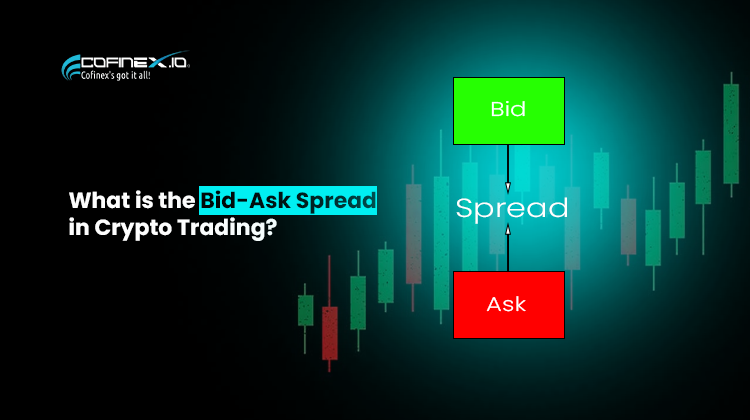
    The bid is the highest price a buyer currently offers to pay for an asset. In contrast, the ask is the lowest price a seller currently accepts.

    The difference between these two prices is the bid-ask spread. It helps traders understand market liquidity and one of the costs involved in trading.

    Let’s explore how the bid-ask spread works, why it matters, and how you can interpret it as a beginner.

    What Is the Bid-Ask Spread?

    The bid-ask spread is the difference between the highest displayed buying price and the lowest displayed selling price for an asset.

    • Bid price: The highest price a buyer currently offers.
    • Ask price: The lowest price a seller currently requests.
    • Bid-ask spread: The difference between the ask price and the bid price.

    For example, suppose a crypto trading pair displays the following prices:

    • Bid price: ₹99,900
    • Ask price: ₹100,000

    The spread is ₹100.

    This means the lowest displayed selling price is ₹100 higher than the highest displayed buying price.

    However, these prices can change as traders place, modify, or cancel orders.

    How Do You Calculate the Bid-Ask Spread?

    You can calculate the bid-ask spread using a simple formula:

    Bid-ask spread = Ask price − Bid price

    For example, imagine the BTC/INR market shows these prices:

    DetailPrice
    Highest bid₹90,00,000
    Lowest ask₹90,10,000
    Bid-ask spread₹10,000

    To calculate the spread, subtract the bid price from the ask price.

    ₹90,10,000 − ₹90,00,000 = ₹10,000

    Therefore, the bid-ask spread is ₹10,000 per BTC at those displayed prices.

    What Is the Spread Percentage?

    Traders can also express the spread as a percentage to compare markets with different prices.

    A common calculation uses the midpoint between the bid and ask:

    Spread percentage = (Spread ÷ Midpoint) × 100

    In the example above, the midpoint is ₹90,05,000.

    The spread percentage is approximately 0.0111%.

    This percentage helps you compare the spread relative to the asset’s price. However, it does not include other trading costs, such as exchange fees or slippage.

    Why Does the Bid-Ask Spread Matter?

    The bid-ask spread matters because it can affect the price at which you buy or sell an asset.

    1. It Affects Trading Costs

    Suppose you buy an asset at the lowest ask price and immediately sell it at the highest bid price. If the displayed prices remain unchanged, you would receive less than you paid.

    The difference reflects the spread’s immediate impact, excluding trading fees and other costs.

    Therefore, traders should consider the spread when estimating the cost of entering and exiting a position.

    2. It Provides Clues About Liquidity

    A narrow spread often indicates that buyers and sellers are competing closely on price. This situation commonly occurs in markets with strong liquidity.

    On the other hand, a wide spread may indicate limited liquidity, greater uncertainty, or less competition between buyers and sellers.

    However, the spread alone cannot tell you everything about a market’s liquidity. You should also consider order-book depth and available quantities.

    3. It Matters for Frequent Traders

    Frequent traders may pay more attention to the bid-ask spread because they enter and exit positions more often.

    Even a small spread can affect their overall trading costs when they execute many trades.

    Consequently, comparing spreads across trading pairs may help traders understand the costs associated with different markets.

    What Causes the Bid-Ask Spread to Change?

    The bid-ask spread does not remain fixed. Several factors can influence it.

    1. Market Liquidity

    When a market has many active buyers and sellers, their orders may sit closer together. As a result, the spread may become narrower.

    In less liquid markets, buyers and sellers may place orders farther apart, creating a wider spread.

    2. Market Volatility

    During rapid price movements, traders may change or cancel orders quickly.

    Consequently, the gap between the highest bid and lowest ask may widen or fluctuate as market participants respond to changing conditions.

    3. Trading Volume and Activity

    Higher trading activity can attract more competing orders. However, high trading volume does not always guarantee a narrow spread.

    For this reason, traders should examine the actual bid and ask prices rather than relying on volume alone.

    4. Order Size and Market Depth

    The best bid and ask show prices for available quantities, not unlimited amounts.

    A large order may consume several price levels in the order book. Therefore, the final execution price may differ from the best displayed price, even when the initial spread looks narrow.

    Bid-Ask Spread vs Slippage

    Although the bid-ask spread and slippage both affect trading costs, they describe different things.

    FeatureBid-Ask SpreadSlippage
    MeaningDifference between the best displayed ask and bidDifference between the expected and actual execution price
    Main causeGap between buyers’ and sellers’ pricesPrice movement and available liquidity during execution
    When it mattersWhen evaluating displayed market pricesWhen evaluating the actual result of an order
    Can it change?Yes, as the order book changesYes, depending on market conditions and execution

    For example, the spread may be narrow when you place an order. However, if the market moves quickly or your order consumes multiple price levels, you may still experience slippage.

    Therefore, understanding both concepts gives you a clearer picture of trading costs.

    How Can Beginners Check the Bid-Ask Spread?

    Before placing a trade, you can review a few details on your trading platform.

    1. Find the order book: Look for the list of current buy and sell orders.
    2. Identify the highest bid: This is the highest displayed buying price.
    3. Identify the lowest ask: This is the lowest displayed selling price.
    4. Calculate the difference: Subtract the bid from the ask.
    5. Compare the spread: Check how the spread changes over time or across trading pairs.

    Additionally, review the quantities available at each price level. A narrow spread may not be enough to accommodate a large order.

    Common Beginner Mistakes

    Confusing the bid with the ask: The bid represents the highest displayed buying price, while the ask represents the lowest displayed selling price.

    Assuming a narrow spread means zero costs: Trading fees and slippage can still affect your final result.

    Ignoring order-book depth: The displayed best prices may apply to only a small quantity.

    Assuming high volume always means a narrow spread: Actual market conditions determine the spread.

    Forgetting that prices change: The bid and ask can move quickly, particularly during volatile markets.

    FAQs

    What is the bid-ask spread in simple words?

    It is the difference between the highest displayed buying price and the lowest displayed selling price for an asset.

    Is a lower bid-ask spread better?

    A lower spread generally reduces the gap between the best displayed buying and selling prices. However, you should also consider order-book depth, trading fees, and potential slippage.

    What does a wide bid-ask spread mean?

    A wide spread may indicate limited liquidity, greater uncertainty, or less competition between buyers and sellers. However, the spread can widen for several reasons.

    Do I pay the bid-ask spread as a separate fee?

    Usually, the spread is not a separate fee charged by the exchange. Instead, it represents the difference between displayed buying and selling prices. However, it can affect the price you receive when trading.

    Is the bid-ask spread the same as slippage?

    No. The spread measures the gap between the best displayed bid and ask. Slippage measures the difference between an expected price and the actual execution price.

    Disclaimer

    This article is for educational purposes only and does not provide financial or investment advice. Cryptocurrency markets can change rapidly, and spreads, liquidity, fees, and execution prices vary by platform and market conditions.