Tag: Crypto Security

  • What is Bitcoin self-custody and why does it matter?

    What is Bitcoin self-custody and why does it matter?

    When you buy Bitcoin, where do you keep it? Do you leave it on a cryptocurrency exchange, or do you move it to a wallet that you control?

    This question introduces an important concept in cryptocurrency: self-custody.

    Bitcoin self-custody means taking direct control of your Bitcoin through your own private keys instead of depending on an exchange or another service provider to manage them.

    It gives you greater control over your digital assets. However, it also makes you responsible for protecting your wallet and recovery information.

    So, what exactly is Bitcoin self-custody? How does it work, and why does it matter?

    Let’s understand the basics.

    What is Bitcoin self-custody?

    Bitcoin self-custody means holding and managing your Bitcoin without giving another organisation control of your private keys.

    In simple terms, you control the keys that allow you to authorise Bitcoin transactions.

    When you use a self-custody wallet, you manage your wallet’s private keys and take responsibility for keeping them secure.

    For example, imagine you purchase Bitcoin through a cryptocurrency exchange. You can either keep it in your exchange account or transfer it to a self-custody wallet.

    If you transfer it to a self-custody wallet and control the private keys, you take responsibility for accessing and managing those Bitcoin holdings.

    However, remember that Bitcoin does not physically sit inside your wallet. The Bitcoin blockchain records ownership-related information, while your wallet manages the keys needed to access and spend your funds.

    How does Bitcoin self-custody work?

    To understand self-custody, you first need to understand three important terms: public keys, private keys and wallet addresses.

    1. Public key

    A public key is a cryptographic key derived from a private key. It helps generate wallet addresses and supports the verification of digital signatures.

    You can think of it as information that helps others send Bitcoin to you.

    2. Private key

    A private key is a secret cryptographic key that allows you to authorise transactions involving your Bitcoin.

    In simple terms, it gives you control over spending your funds.

    Anyone who gains access to your private key may be able to spend the associated Bitcoin. Therefore, you must protect it carefully.

    3. Wallet address

    A Bitcoin wallet address is a destination that others can use to send Bitcoin to you.

    You can share your receiving address when someone wants to make a payment. However, you should never share your private key or recovery phrase.

    Together, these elements allow a self-custody wallet to help you receive, manage and send Bitcoin.

    What is the difference between self-custody and exchange custody?

    Not every cryptocurrency wallet gives you direct control over your private keys.

    When you keep Bitcoin on a centralised exchange, the exchange generally manages the private keys associated with its custodial wallet infrastructure.

    In contrast, a self-custody wallet allows you to manage your own private keys.

    Here is a simple comparison:

    FeatureExchange custodySelf-custody
    Private key managementManaged by the service providerManaged by you
    AccessThrough your exchange accountThrough your wallet
    RecoveryMay involve the platform’s account recovery processDepends on your backup and recovery arrangements
    ResponsibilityShared with the service providerPrimarily yours
    Control over fundsDepends on the platform’s terms and operationsYou authorise transactions using your keys
    Main riskPlatform, operational and account-related risksKey loss, theft and user mistakes

    Neither arrangement removes every risk.

    For example, exchange custody may offer account recovery support, but you depend on the platform to provide access to your assets.

    On the other hand, self-custody gives you greater direct control, but losing your recovery information can create serious problems.

    What are the different types of self-custody wallets?

    You can manage your Bitcoin through different types of self-custody wallets.

    The main difference between them is how they store and protect private keys.

    1. Hot wallets

    Hot wallets are software wallets that connect to the internet.

    You can install them on a smartphone or computer and use them to send and receive Bitcoin.

    Advantages:

    • Easy to access.
    • Convenient for regular transactions.
    • Often simple for beginners to use.

    Risks:

    • Internet-connected devices may face malware and phishing attacks.
    • Weak passwords or compromised devices can expose wallet access.
    • Users must protect their recovery information.

    2. Cold wallets

    Cold wallets keep private keys offline or use an offline signing process.

    Hardware wallets are a common example. They store private keys in a dedicated device and allow users to approve transactions without exposing the keys directly to an internet-connected computer.

    Advantages:

    • Reduces exposure to many online threats.
    • Useful for long-term storage.
    • Gives users direct control over their keys.

    Risks:

    • Devices can be lost, damaged or stolen.
    • Users must protect their recovery phrases.
    • Setup and transaction processes may require additional care.

    The right wallet depends on how frequently you use Bitcoin, your security needs and your ability to manage backups.

    Why does Bitcoin self-custody matter?

    Self-custody is important because it changes who controls access to your Bitcoin.

    Here are some reasons why people choose it.

    1. Greater control over your Bitcoin

    With self-custody, you manage the private keys instead of depending entirely on an exchange.

    As a result, you can authorise transactions directly through your wallet.

    2. Reduced dependence on third parties

    When you use exchange custody, you depend on the platform’s systems, policies and operational availability.

    However, self-custody reduces that dependence because you control your own wallet keys.

    3. Greater control over access

    A self-custody wallet allows you to manage your Bitcoin independently of an exchange account.

    For example, you do not need to rely on an exchange login to access Bitcoin held in your own wallet.

    However, you still need a compatible wallet and access to the Bitcoin network to make transactions.

    4. Better understanding of Bitcoin ownership

    Self-custody helps users understand an important principle of Bitcoin: control of the private keys determines who can authorise spending.

    It also encourages better security habits, such as protecting recovery phrases and checking transaction details.

    What are the risks of Bitcoin self-custody?

    Although self-custody offers greater control, it also brings additional responsibility.

    Before choosing this approach, understand the following risks.

    1. Losing your private keys

    If you lose your private keys and have no usable backup, you may permanently lose access to your Bitcoin.

    Unlike a traditional bank account, there is generally no central authority that can reset your Bitcoin private key.

    2. Losing your recovery phrase

    Many wallets provide a recovery phrase, often consisting of 12 or 24 words.

    This phrase can help restore access to your wallet, depending on the wallet’s recovery standard.

    However, anyone who obtains the phrase may be able to access the associated funds.

    Therefore, never share it with anyone or store it carelessly online.

    3. Phishing attacks

    Scammers may create fake wallet websites, applications or support accounts to trick users into revealing their recovery phrases.

    Always download wallet software from trusted sources. Additionally, never enter your recovery phrase into an unfamiliar website.

    4. Device damage or theft

    A lost, damaged or stolen device can prevent you from accessing your wallet.

    However, a properly protected recovery phrase may allow you to restore access using a compatible wallet.

    This is why secure backups matter.

    5. Sending Bitcoin to the wrong address

    Bitcoin transactions generally cannot be reversed once the network confirms them.

    Therefore, always verify the recipient’s address and the selected network before sending funds.

    How can you keep a self-custody wallet secure?

    You do not need advanced technical knowledge to follow basic wallet security practices.

    Start with these important steps:

    1. Protect your recovery phrase: Write it down and keep it in a secure offline location.
    2. Never share private keys: Legitimate wallet support teams should not ask you to reveal your recovery phrase.
    3. Use trusted wallet software: Download applications only from official or verified sources.
    4. Enable device security: Use strong passwords, screen locks and other available security features.
    5. Verify transaction details: Check the recipient address and amount before approving a transaction.
    6. Keep backups: Store recovery information safely so you can restore your wallet if your device fails.
    7. Beware of fake support: Scammers may impersonate wallet providers and offer fraudulent recovery services.

    Most importantly, remember that your recovery phrase is the backup to your wallet. Protecting it is just as important as protecting your device.

    Is self-custody suitable for beginners?

    Self-custody can suit beginners who want direct control over their Bitcoin and are comfortable managing their own security.

    However, it requires careful attention.

    If you are new to cryptocurrency, start by learning how wallet addresses, private keys and recovery phrases work. Then, understand the wallet’s backup and recovery process before transferring a significant amount.

    You should also remember that self-custody is not automatically safer for everyone. The right approach depends on your knowledge, security habits and ability to protect your keys.

    Frequently asked questions (FAQs)

    1. What does self-custody mean in cryptocurrency?

    Self-custody means managing your own cryptocurrency private keys instead of depending on an exchange or another service provider to manage them.

    2. Is a Bitcoin exchange account a self-custody wallet?

    Generally, no. When you keep Bitcoin on a centralised exchange, the platform usually controls the private keys associated with its custodial wallets.

    3. Can I recover Bitcoin if I lose my wallet?

    You may be able to restore access if you have a valid recovery phrase or another supported backup. However, if you lose your private keys and have no usable recovery method, you may permanently lose access to your Bitcoin.

    4. Is a hardware wallet better than a mobile wallet?

    A hardware wallet can reduce exposure to online threats because it keeps private keys offline or uses an offline signing process. However, a secure mobile wallet may be convenient for regular transactions. The right choice depends on your needs and security practices.

    5. Should beginners use self-custody?

    Beginners can use self-custody after learning how private keys, recovery phrases and wallet security work. However, they should start carefully and understand the risks before transferring significant funds.

    6. Can someone steal Bitcoin using my recovery phrase?

    Yes. Anyone who obtains your recovery phrase may be able to restore your wallet and access its funds. Therefore, keep it private and secure.

    Disclaimer: This article is for educational purposes only and does not provide financial or investment advice. Cryptocurrency transactions involve risks, and losing private keys or recovery phrases may result in permanent loss of access to funds. Always follow secure wallet practices.
  • What is Proof of Reserves in Crypto?

    What is Proof of Reserves in Crypto?

    When you deposit cryptocurrency into an exchange, how do you know whether the platform actually holds the assets it claims to hold?

    This is an important question because users trust exchanges to safeguard their digital assets and process withdrawals when requested.

    One concept that helps address this concern is Proof of Reserves (PoR).

    Proof of Reserves is a method that allows cryptocurrency exchanges and custodial platforms to demonstrate that they hold certain digital assets on behalf of their customers.

    It aims to improve transparency and give users more information about a platform’s financial position. However, it is equally important to understand what Proof of Reserves can and cannot prove.

    In this lesson, let’s explore how it works, why it matters, and what users should check before trusting a Proof of Reserves report.

    What is Proof of Reserves in Crypto?

    Proof of Reserves (PoR) is a verification approach used by cryptocurrency exchanges and custodial platforms to demonstrate that they hold specified cryptocurrency assets.

    In simple terms, it helps users check whether a platform has the assets it claims to hold.

    For example, imagine a crypto exchange reports that it holds 1,000 BTC in reserves for its customers. A Proof of Reserves report may provide evidence that the exchange controls the reported Bitcoin holdings.

    However, showing wallet balances alone is not enough to establish complete financial health. A reliable assessment should also consider customer liabilities, or the amount the platform owes its users.

    This is why some Proof of Reserves approaches combine asset verification with a review of customer balances and liabilities.

    How does Proof of Reserves work?

    The exact process depends on the exchange and the verification method it uses. However, a typical Proof of Reserves process involves several steps.

    Step 1: Identify the Exchange’s Reserve Assets

    First, the platform identifies the cryptocurrency assets it claims to hold.

    These may include Bitcoin, Ethereum, stablecoins, and other supported digital assets.

    Step 2: Verify Wallet Holdings

    Next, the platform provides information about its reserve wallets.

    An independent verifier may check blockchain records and use cryptographic signatures or other evidence to establish that the platform controls the reported wallet addresses.

    However, seeing funds in a wallet does not automatically prove that the platform owns those funds without restrictions or that they are available to meet customer withdrawals.

    Step 3: Calculate Customer Liabilities

    The platform also needs to establish how much it owes its customers.

    For example, if customers collectively hold 500 BTC in their exchange accounts, the platform has a corresponding customer liability of 500 BTC, subject to the report’s scope and accounting methodology.

    Step 4: Compare Assets and Liabilities

    The verifier compares the reported reserve assets with the customer liabilities.

    A simplified example:

    DetailAmount
    Verified BTC reserves1,000 BTC
    Customer BTC liabilities800 BTC
    Reserve coverage125%

    In this example, the reported BTC reserves exceed the reported BTC liabilities.

    The simplified reserve coverage calculation is:

    Reserve Coverage = Verified Reserves ÷ Customer Liabilities × 100

    Therefore:

    1,000 ÷ 800 × 100 = 125%

    This means the reported Bitcoin reserves cover 125% of the included Bitcoin liabilities.

    However, this calculation does not automatically establish that the exchange is solvent across all its assets and liabilities.

    What is a Merkle Tree in Proof of Reserves?

    You may come across the term Merkle Tree when reading about Proof of Reserves.

    A Merkle Tree is a cryptographic structure that helps organise and verify large amounts of data efficiently.

    In some Proof of Reserves systems, exchanges use Merkle Trees to represent customer account balances without publicly revealing every user’s complete account information.

    Here’s how it works in simple terms:

    1. The exchange collects the relevant customer balance records.
    2. Each record is converted into a cryptographic hash.
    3. These hashes are combined in pairs to create additional hashes.
    4. The process continues until a single final hash, called the Merkle Root, is produced.
    5. Users may receive a Merkle Proof that helps them verify whether their balance was included in the reported dataset.

    The Merkle Root acts as a digital fingerprint of the underlying dataset.

    If the included data changes, the resulting root will generally change as well.

    As a result, this structure can help users verify that their reported balance was included in the snapshot without requiring the exchange to publish every customer’s private account details.

    However, a Merkle Tree does not independently prove that the exchange holds sufficient assets. It verifies aspects of the data structure, not the complete financial position of the platform.

    Why does Proof of Reserves matter?

    Proof of Reserves plays an important role in improving transparency in the cryptocurrency industry.

    Here are some reasons why it matters.

    1. Improves Transparency

    Proof of Reserves can provide users with evidence about the assets held by a cryptocurrency exchange.

    Instead of relying entirely on the platform’s claims, users can examine reserve information and supporting verification details.

    2. Helps Users Assess Reserve Coverage

    When a report includes both assets and customer liabilities, users can compare the two.

    For example, they can check whether the reported reserves cover the included customer balances.

    3. Encourages Accountability

    Regular and independently verified reserve reporting can encourage exchanges to maintain better transparency practices.

    Additionally, it gives users more information when evaluating a custodial platform.

    4. Supports User Confidence

    Clear reserve information can help users understand how a platform manages customer assets.

    However, Proof of Reserves should be considered one part of a broader assessment rather than a guarantee of safety.

    What are the limitations of Proof of Reserves?

    Although Proof of Reserves is useful, it does not provide a complete picture of an exchange’s financial health.

    Before relying on a report, understand these limitations.

    1. It Does Not Always Prove Complete Solvency

    An exchange may demonstrate that it holds certain assets without providing a complete picture of everything it owes.

    For example, it may have customer deposits but also have loans, operational debts, legal obligations, or other liabilities.

    Therefore, a reserve report that excludes important liabilities cannot establish complete solvency.

    2. It May Represent Only a Snapshot

    Some reports show assets and liabilities at a particular point in time.

    However, an exchange’s financial position can change after that date.

    Consequently, a single snapshot does not guarantee that the same reserves remain available later.

    3. It Does Not Guarantee Withdrawal Availability

    A report may show that a platform controls certain wallet assets.

    However, it does not automatically prove that all assets are immediately available for customer withdrawals or free from restrictions and third-party claims.

    4. Verification Methods Can Differ

    Different exchanges may use different reporting methods, accounting approaches, and verification procedures.

    Therefore, two Proof of Reserves reports may not provide the same level of assurance.

    5. It Is Not the Same as a Full Financial Audit

    A Proof of Reserves report may focus on specific cryptocurrency assets and customer liabilities.

    A full financial audit generally examines a broader range of financial information, subject to its scope and applicable standards.

    For this reason, Proof of Reserves should not automatically be treated as a complete financial audit.

    Proof of Reserves vs Proof of Liabilities

    Both concepts are important when evaluating an exchange’s reserve position.

    FeatureProof of ReservesProof of Liabilities
    Main purposeDemonstrates reported assets heldDemonstrates amounts owed to customers
    FocusExchange assetsCustomer balances and obligations
    VerificationWallet ownership and asset evidenceAccount balance records and cryptographic verification
    ImportanceHelps establish what the platform holdsHelps establish what the platform owes

    Ideally, both should be considered together.

    After all, knowing how much an exchange holds is only part of the picture. Users also need to understand how much the platform owes.

    What should users check in a Proof of Reserves report?

    If an exchange publishes a Proof of Reserves report, do not look only at the headline reserve figure.

    Instead, consider these points:

    1. Report Date: Check when the reserve information was collected.
    2. Assets Included: Identify which cryptocurrencies are covered.
    3. Customer Liabilities: Check whether customer balances are included.
    4. Independent Verification: Find out who performed the verification and what procedures they followed.
    5. Wallet Evidence: Check whether the report provides verifiable information about reserve addresses and control.
    6. Methodology: Understand how assets, liabilities, and exclusions were calculated.
    7. Frequency: Check whether the platform publishes reports regularly.

    Additionally, look for clear explanations of borrowed funds, restricted assets, and liabilities that may fall outside the report.

    Frequently Asked Questions (FAQs)

    1. What does Proof of Reserves mean in crypto?

    Proof of Reserves is a verification approach that helps cryptocurrency platforms demonstrate the digital assets they hold. Some methods also include customer liability verification to provide a clearer picture of reserve coverage.

    2. Why do crypto exchanges publish Proof of Reserves?

    Exchanges publish these reports to improve transparency and provide users with information about their reported assets and, where included, customer liabilities.

    3. What is a Merkle Tree in Proof of Reserves?

    A Merkle Tree is a cryptographic structure that organises data into a single final hash. It can help users verify whether their account balance was included in a reported dataset.

    4. Does Proof of Reserves guarantee that an exchange is safe?

    No. It does not guarantee complete solvency, operational security, or future withdrawal availability. Users should consider other financial and security information as well.

    5. Is Proof of Reserves the same as an audit?

    No. Proof of Reserves generally focuses on specified assets and, in some cases, customer liabilities. A full financial audit covers a broader range of financial information.

    Disclaimer: This article is for educational purposes only and does not constitute financial or investment advice. Always review the scope, methodology, and verification details of a Proof of Reserves report before relying on it.

  • What is a Multisignature Crypto Wallet?

    What is a Multisignature Crypto Wallet?

    Imagine you and two business partners manage a shared cryptocurrency wallet. Would you want just one person to control all the funds, or would you prefer multiple people to approve transactions before the money moves?

    This is where a multisignature crypto wallet, commonly called a multisig wallet, becomes useful.

    Unlike a traditional wallet that may allow one private key to authorise transactions, a multisig wallet requires multiple authorised signatures before certain transactions can be approved.

    This approach adds an extra layer of control over digital assets. It is particularly useful for businesses, organisations, investment groups, and people managing shared crypto funds.

    In this lesson, let’s understand what a multisig wallet is, how it works, its benefits, and the risks beginners should know.

    What is a Multisignature Crypto Wallet?

    A multisignature crypto wallet is a cryptocurrency wallet that requires approval from multiple authorised signers before a transaction can be executed.

    The word “multisignature” means multiple signatures.

    Instead of allowing one person to approve every transaction independently, a multisig wallet follows predefined approval rules.

    For example, a wallet may require two out of three authorised signers to approve a transaction.

    This is known as a 2-of-3 multisignature setup.

    The wallet can hold cryptocurrency like other wallets. However, its transaction approval process involves more than one authorised key or signer.

    How does a Multisig Wallet work?

    A multisig wallet operates using a predefined signature requirement.

    Let’s understand this with a simple example.

    Suppose three people manage a shared crypto wallet:

    • Person A
    • Person B
    • Person C

    They create a 2-of-3 multisig wallet. This means any two of the three authorised signers must approve a transaction before it can be executed.

    Here’s how it works:

    1. Wallet Setup: The three participants establish the wallet and its approval rules.
    2. Transaction Creation: Person A creates a transaction to transfer cryptocurrency.
    3. First Approval: Person A signs the transaction using their authorised key.
    4. Second Approval: Person B reviews and signs the same transaction.
    5. Transaction Execution: Since the wallet has received two required signatures, the transaction can be executed.

    However, if only Person A approves the transaction, it cannot meet the 2-of-3 requirement.

    This process helps prevent one individual from independently controlling shared funds.

    Understanding M-of-N Multisignature

    One important concept in multisig wallets is the M-of-N approval system.

    Here:

    • M represents the minimum number of required signatures.
    • N represents the total number of authorised signers.

    For example:

    Wallet SetupRequired ApprovalsTotal Signers
    2-of-222
    2-of-323
    3-of-535
    4-of-646

    Let’s understand these setups.

    2-of-2: Both authorised participants must approve every transaction. Neither can act independently.

    2-of-3: Any two of the three participants can approve a transaction. This provides flexibility if one signer becomes unavailable.

    3-of-5: At least three out of five authorised participants must approve a transaction. This can be useful for organisations with multiple decision-makers.

    The right setup depends on the number of participants, security requirements, and how the wallet will be managed.

    What are the benefits of a Multisig Wallet?

    Multisig wallets offer several advantages, especially when multiple people manage cryptocurrency.

    1. Better Security

    A multisig wallet does not rely on a single authorised signer for every transaction.

    Therefore, compromising one signer’s key may not be enough to move the funds, provided the attacker cannot obtain the required number of additional approvals.

    2. Shared Control

    Multisig wallets allow multiple people to participate in managing shared cryptocurrency funds.

    For example, a company may require approval from two authorised team members before transferring funds from its treasury.

    3. Reduced Single-Person Risk

    If one participant loses access to their key, the remaining authorised signers may still be able to approve transactions, depending on the wallet’s threshold.

    As a result, certain multisig configurations can reduce the risk of losing access because of one person’s mistake or unavailability.

    4. Better Transaction Accountability

    When multiple people must approve a transfer, organisations can establish clearer internal approval procedures.

    This can help teams review transactions and maintain better control over shared funds.

    5. Useful for Businesses and Organisations

    Businesses, crypto projects, DAOs, and investment groups may use multisig wallets to manage treasury funds.

    For instance, a project may require multiple team members to approve payments rather than allowing one individual to control the entire treasury.

    What are the risks and limitations of Multisig Wallets?

    Although multisig wallets offer additional control, they are not completely risk-free.

    Before using one, understand these limitations.

    1. More Complex Setup

    Setting up a multisig wallet generally requires more planning than using a basic single-signature wallet.

    Participants must understand the approval threshold, key management process, and transaction procedure.

    2. Signer Unavailability

    Suppose a wallet uses a 3-of-5 setup. If three signers lose access to their keys or become unavailable, the remaining participants cannot meet the required approval threshold.

    Therefore, signer availability is an important part of wallet planning.

    3. Private Key Security

    Each authorised signer must protect their own private key or signing device.

    If enough keys are compromised to meet the approval threshold, an attacker may be able to authorise unauthorised transactions.

    4. Coordination Challenges

    Multiple people must coordinate before a transaction can be completed.

    Consequently, urgent payments may take longer, particularly when signers are in different locations or have different schedules.

    5. Smart Contract and Implementation Risks

    Some multisig wallets use smart contracts to enforce transaction approval rules.

    However, vulnerabilities in the smart contract, wallet software, or implementation can create security risks.

    A multisig arrangement does not automatically guarantee that the wallet is safe.

    Multisig Wallet vs Traditional Crypto Wallet

    Both wallet types allow users to manage digital assets. However, their transaction approval processes are different.

    FeatureTraditional Single-Signature WalletMultisig Wallet
    Transaction approvalUsually one authorised keyMultiple required signatures
    ControlOne signerMultiple authorised signers
    SetupGenerally simplerRequires more planning
    Shared managementLimitedDesigned to support shared control
    Key managementOne primary signing keyMultiple signing keys
    Common useIndividual crypto storageShared funds and organisational treasuries

    Remember that multisig is an authorisation mechanism, not a completely separate type of cryptocurrency.

    When should you use a Multisig Wallet?

    A multisig wallet may be useful in situations where shared control and additional transaction approval are important.

    For example:

    • Businesses: To require multiple approvals for company crypto transfers.
    • DAOs: To manage community or project treasury funds.
    • Investment Groups: To establish shared control over pooled digital assets.
    • Crypto Projects: To manage project funds and administrative transactions.
    • Personal Security: To distribute control across multiple independently protected signing devices.

    However, individual users who manage small amounts of cryptocurrency may find a traditional wallet easier to operate.

    The choice should depend on your security needs, technical understanding, and ability to manage multiple signers.

    Frequently Asked Questions (FAQs)

    1. What does multisig mean in crypto?

    Multisig means multiple signatures. It is a wallet authorisation system that requires approval from a predefined number of authorised signers before a transaction can be executed.

    2. What is a 2-of-3 multisig wallet?

    A 2-of-3 multisig wallet has three authorised signers, but only two signatures are required to approve a transaction.

    3. Is a multisig wallet safer than a normal crypto wallet?

    It can provide stronger protection against the compromise of a single signing key. However, its overall security depends on key management, wallet implementation, and the approval threshold.

    4. Can one person control a multisig wallet?

    A single person may control multiple signing keys in some setups. However, the wallet still requires the predefined number of signatures. For meaningful shared control, different signers should manage their keys independently.

    5. What happens if a multisig wallet owner loses their private key?

    It depends on the wallet’s approval configuration. If enough other signers remain available to meet the required threshold, transactions may still be possible. Otherwise, access to the funds could be lost.

    Disclaimer: This article is for educational purposes only and does not constitute financial or investment advice. Always research wallet security features and understand key management procedures before storing digital assets.

  • What is Address Poisoning in Crypto?

    What is Address Poisoning in Crypto?

    Imagine you want to send cryptocurrency to a wallet address you have used before. You open your transaction history, copy an address that looks familiar, and send your funds.

    However, there is a problem. The address you copied belongs to a scammer.

    This type of fraud is known as address poisoning. It is a crypto scam that tricks users into sending digital assets to the wrong wallet by creating a misleading transaction history.

    Unlike some scams that involve fake investment promises or phishing websites, address poisoning often targets users who already know how to send cryptocurrency.

    In this lesson, let’s understand what address poisoning is, how it works, how to identify suspicious wallet addresses, and how to protect your funds.

    What is Address Poisoning in Crypto?

    Address poisoning is a cryptocurrency scam in which an attacker creates a wallet address that looks very similar to an address a victim has previously used.

    The attacker then sends a small or zero-value transaction to the victim’s wallet, hoping that the unfamiliar address will appear in their recent transaction history.

    Later, when the victim wants to make another transfer, they may accidentally copy the attacker’s address instead of the genuine one.

    As a result, the cryptocurrency goes to the scammer’s wallet.

    This technique is also called address poisoning because the attacker tries to contaminate the victim’s transaction history with a misleading wallet address.

    How does Address Poisoning work?

    Address poisoning generally follows a few steps.

    Step 1: The Scammer Finds a Target Address

    First, the attacker identifies a publicly visible wallet address that has been involved in previous transactions.

    Blockchain transactions are publicly viewable on many networks. Therefore, attackers can examine transaction histories to identify frequently used wallet addresses.

    Step 2: The Scammer Creates a Similar Address

    Next, the attacker generates a wallet address that resembles the victim’s genuine contact or a previously used destination address.

    For example:

    Genuine address:
    0xA123...7890

    Fake address:
    0xA128...7890

    These are illustrative shortened addresses, not real wallet addresses.

    Although they may look similar at first glance, they are completely different addresses.

    Attackers may copy the first and last characters because users often check only these visible portions.

    Step 3: A Suspicious Transaction Appears

    The scammer sends a small amount of cryptocurrency or uses a zero-value transaction technique to make the fake address appear in the victim’s transaction history.

    This is commonly called a dust transaction or a zero-value transfer, depending on the method used.

    Consequently, the victim may see the unfamiliar address among their recent transactions.

    Step 4: The Victim Copies the Wrong Address

    Later, the victim wants to send cryptocurrency to the original recipient.

    Instead of checking the genuine address carefully, they copy the similar-looking address from their transaction history.

    Unfortunately, they may copy the attacker’s address without noticing the difference.

    Step 5: The Funds Reach the Scammer

    Finally, the victim confirms the transaction.

    If the transaction is successfully processed, the funds are transferred to the attacker’s wallet.

    Because blockchain transactions are generally irreversible, recovering the cryptocurrency can be extremely difficult.

    What does an Address Poisoning attack look like?

    Let’s understand this with a simple example.

    Suppose you regularly send USDT to a particular wallet.

    DetailGenuine AddressPoisoned Address
    Beginning0xA1230xA128
    Ending78907890
    PurposeYour intended recipientAttacker’s wallet
    AppearanceOriginal addressDesigned to look similar

    At a glance, both addresses may appear almost identical.

    However, even a small difference means they point to different wallet destinations.

    The important lesson: Never assume an address is correct just because its first and last characters look familiar.

    Why do scammers use Address Poisoning?

    Address poisoning works by exploiting common user habits rather than directly breaking blockchain security.

    Here are some reasons attackers use this method.

    1. People Often Copy Recent Addresses

    Many users copy wallet addresses from their recent transaction history instead of retrieving them from a trusted source.

    Therefore, attackers try to place their fake addresses where users are likely to find them.

    2. Wallet Addresses Are Difficult to Remember

    Crypto wallet addresses are usually long combinations of letters and numbers.

    As a result, users may check only a few starting and ending characters rather than comparing the complete address.

    3. Blockchain Transactions Are Public

    On public blockchains, transaction information is generally accessible to anyone.

    Consequently, attackers can study wallet activity and identify addresses that users frequently interact with.

    4. Small Transactions Can Create Confusion

    Some attackers use tiny transfers or zero-value transactions to make their addresses appear in transaction histories.

    Although the transaction may involve little or no value, the goal is to influence a future transfer.

    Address Poisoning vs Phishing: What’s the difference?

    Both are crypto security threats, but they use different techniques.

    FeatureAddress PoisoningPhishing
    Main techniqueCreates a similar-looking wallet addressUses fake websites, messages, or applications
    Main targetUser’s transaction habitsLogin credentials, wallet access, or sensitive information
    Common trickMakes a fake address appear in transaction historyTricks users into clicking links or sharing information
    Possible resultFunds sent to the wrong walletStolen credentials, wallet access, or unauthorised transactions

    In short, address poisoning targets the address selection process, whereas phishing usually targets user trust and sensitive information.

    How to protect yourself from Address Poisoning?

    You cannot prevent someone from sending a suspicious transaction to a publicly visible wallet address. However, you can reduce the chances of falling for the scam.

    1. Verify the Entire Wallet Address

    Always compare the complete destination address before confirming a transaction.

    Do not rely only on the first and last few characters.

    2. Avoid Copying Addresses From Transaction History

    Instead, retrieve the recipient’s address from a trusted source, such as a verified contact or the recipient’s official wallet details.

    3. Use a Trusted Address Book

    If your wallet supports saved addresses or verified contacts, use these features to reduce the risk of copying an incorrect address.

    However, check saved details carefully before relying on them.

    4. Send a Small Test Transaction

    When transferring a large amount to a new or unfamiliar address, consider sending a small test transaction first.

    Once you confirm that the recipient has received it, you can proceed with the remaining amount.

    Remember that a test transaction does not eliminate every risk, and it may involve additional fees.

    5. Check the Network

    Make sure the recipient address and selected blockchain network are compatible.

    An address that looks familiar does not automatically mean the transfer is being made through the correct network.

    6. Never Rush a Transaction

    Scammers benefit when users act without checking details.

    Therefore, take a moment to review the recipient address, network, and transaction amount before signing or confirming.

    What should you do if you fall victim to Address Poisoning?

    If you accidentally send cryptocurrency to a scammer’s wallet, take these steps immediately.

    1. Stop further transfers: Do not send additional funds to the suspicious address.
    2. Save transaction details: Record the transaction hash, recipient address, amount, and timestamp.
    3. Contact your exchange or wallet provider: Report the incident through official support channels.
    4. Report the fraud: In India, you can report cyber financial fraud through the National Cyber Crime Reporting Portal or call 1930.
    5. Beware of recovery scams: Fraudsters may contact you claiming they can recover your crypto for an advance payment. Do not trust guaranteed recovery promises.

    Unfortunately, confirmed blockchain transactions are generally irreversible. However, reporting the incident quickly may help the relevant service providers or authorities investigate it.

    Frequently Asked Questions (FAQs)

    1. What is address poisoning in simple words?

    Address poisoning is a scam where attackers create wallet addresses that look similar to genuine addresses. They try to make users copy the fake address and accidentally send cryptocurrency to them.

    2. Can address poisoning empty my crypto wallet automatically?

    Not usually. Address poisoning generally tricks users into sending funds to a fraudulent address. However, never interact with suspicious links or approve unfamiliar wallet transactions, as these may introduce additional risks.

    3. What is a dust transaction?

    A dust transaction involves sending a very small amount of cryptocurrency to a wallet. Scammers may use such transactions to make their addresses appear in a victim’s transaction history.

    4. Are all small crypto transactions suspicious?

    No. Small transactions can have legitimate purposes. However, if you receive an unexpected transfer from an unfamiliar address, avoid copying that address for future payments.

    5. Can I recover crypto sent to a poisoned address?

    Recovery is difficult because blockchain transactions are generally irreversible. Contact your exchange or wallet provider and report the incident to the appropriate authorities as soon as possible.

    Disclaimer: This article is for educational purposes only and does not constitute financial or investment advice. Always verify wallet addresses and transaction details before transferring digital assets.

  • Crypto Scam Red Flags: 6 Warning Signs to Know

    Crypto Scam Red Flags: 6 Warning Signs to Know

    Cryptocurrency offers new ways to invest, trade, and manage digital assets. However, scammers also use the growing popularity of crypto to trick people into losing their money.

    From fake investment platforms to phishing messages, crypto scams can appear in many forms. Some promise quick profits, while others pretend to be trusted exchanges, influencers, or customer support teams.

    The good news is that many scams show warning signs before you become a victim.

    In this lesson, we will explore six crypto scam red flags that every beginner should recognise and learn how to protect their digital assets.

    1. Guaranteed Returns and Unrealistic Profits

    One of the biggest warning signs is a promise of guaranteed profits.

    You may come across messages such as:

    • “Double your Bitcoin in 24 hours.”
    • “Earn 10% daily with zero risk.”
    • “Guaranteed returns on every crypto investment.”
    • “Invest today and become a millionaire next month.”

    These claims are designed to create excitement and encourage quick decisions.

    However, cryptocurrency markets are volatile. No legitimate investment can guarantee unusually high returns without risk.

    What should you do?

    Be cautious of anyone promising fixed or guaranteed crypto profits. Research the project independently and never invest simply because someone promises exceptional returns.

    2. Pressure to Invest Immediately

    Scammers often create urgency to stop people from thinking carefully.

    You might see statements such as:

    • “Only 10 minutes left to join.”
    • “Last chance to double your investment.”
    • “This opportunity will disappear tonight.”
    • “Send funds now before the price increases.”

    This tactic is commonly known as FOMO, or Fear of Missing Out.

    Scammers use urgency to make people act emotionally instead of checking the facts.

    What should you do?

    Take your time. A genuine investment opportunity should not require you to ignore basic security checks or make rushed payments.

    3. Fake Websites, Apps, and Social Media Accounts

    Some scammers create websites and applications that look almost identical to genuine crypto exchanges or wallet services.

    They may also create fake social media profiles using a company’s logo, name, and branding.

    Their goal is to make you believe you are interacting with an official platform.

    For example, a fake account may send you a message claiming that your exchange account needs verification. It may include a link to a website designed to steal your login details.

    What should you do?

    • Visit websites by typing the official address yourself.
    • Check the website URL carefully.
    • Download apps only from trusted sources.
    • Verify social media accounts through official company websites.
    • Never enter your login details on links received from unknown accounts.

    4. Requests for Your Password, OTP, or Seed Phrase

    Your account credentials and wallet recovery details are private. No genuine support representative should ask you to reveal your password, OTP, private key, or seed phrase through a message or call.

    Scammers may pretend to be customer support agents and claim they need these details to:

    • Verify your account.
    • Unlock a withdrawal.
    • Fix a wallet problem.
    • Protect your funds from suspicious activity.

    These are common social engineering tactics.

    What should you do?

    Never share your password, OTP, private key, or seed phrase with anyone. Use official support channels and enable two-factor authentication wherever available.

    Remember: Anyone who gains access to your wallet’s recovery phrase may be able to control its funds.

    5. Suspicious Giveaways and Fake Airdrops

    Crypto giveaways and airdrops can attract attention, especially when they appear to come from popular projects or well-known personalities.

    However, scammers often use fake reward campaigns to collect money or sensitive information.

    You may see messages such as:

    • “Send 0.1 BTC and receive 1 BTC.”
    • “Connect your wallet to claim free tokens.”
    • “Pay a small fee to unlock your reward.”
    • “Limited airdrop available. Claim immediately.”

    A fake giveaway may ask you to send crypto first or connect your wallet to a malicious website.

    Even connecting a wallet can be risky if you approve a harmful transaction or grant an unsafe token allowance.

    What should you do?

    • Verify giveaways through official project channels.
    • Never send cryptocurrency to receive a promised reward.
    • Check wallet connection requests carefully.
    • Review transaction details and token approvals before signing.
    • Avoid unknown airdrop links.

    6. Unknown Investment Groups and Fake Trading Experts

    Scammers sometimes build trust through Telegram, WhatsApp, Discord, and other online communities.

    They may pretend to be experienced traders, investment advisors, or representatives of crypto projects.

    Initially, they may share market updates or small trading tips. Later, they encourage members to deposit funds into a private platform or follow a paid trading signal.

    Some groups also display fake profits and fabricated testimonials to make their offers look genuine.

    What should you do?

    Do not trust someone only because they appear knowledgeable or have many followers. Verify their identity, research the platform independently, and be careful of anyone asking you to transfer funds to a personal wallet or unknown account.

    How to protect yourself from crypto scams?

    Recognising warning signs is the first step. You should also follow basic security practices.

    1. Enable two-factor authentication: Add an extra layer of protection to your exchange accounts.
    2. Use strong, unique passwords: Avoid using the same password across multiple platforms.
    3. Verify website addresses: Always check that you are using the official website or application.
    4. Protect your recovery phrase: Never share your seed phrase or private keys.
    5. Research before investing: Check project information, team details, documentation, and independent sources.
    6. Avoid rushed decisions: Take time to understand any investment or transaction before proceeding.
    7. Review wallet permissions: Check token approvals and revoke unnecessary permissions using trusted tools.

    What should you do if you suspect a crypto scam?

    If you think you have interacted with a scam, act quickly.

    • Stop sending money or sharing information.
    • Disconnect from suspicious websites and avoid signing further transactions.
    • If you connected your wallet, review and revoke suspicious token approvals where possible.
    • If your wallet recovery phrase has been exposed, move remaining assets to a newly created secure wallet, if possible, using a clean and trusted device.
    • Change compromised passwords and secure your email and exchange accounts.
    • Contact the official exchange or wallet support team.
    • Save transaction IDs, wallet addresses, messages, screenshots, and website links as evidence.
    • Report the incident to the appropriate authorities.

    In India, you can report cyber financial fraud through the National Cyber Crime Reporting Portal or call the cybercrime helpline at 1930.

    Frequently Asked Questions (FAQs)

    1. What is the most common warning sign of a crypto scam?

    Promises of guaranteed profits, pressure to invest quickly, and requests for private wallet information are important warning signs.

    2. Can someone steal my crypto through a fake website?

    Yes. A fake website may steal your login details, recovery phrase, or trick you into signing a malicious wallet transaction.

    3. Should I share my OTP with crypto exchange support?

    No. Never share your OTP, password, private key, or seed phrase with anyone claiming to be customer support.

    4. Are all crypto giveaways fake?

    No. Some legitimate projects run giveaways and airdrops. However, always verify them through official channels and avoid campaigns that ask you to send crypto first or approve suspicious transactions.

    5. What should I do if I send crypto to a scammer?

    Contact your exchange or wallet provider immediately, preserve transaction details and evidence, and report the incident to the relevant authorities. Blockchain transactions are generally irreversible, so recovery is not guaranteed.

    Disclaimer: This article is for educational purposes only. It does not constitute financial or investment advice. Always verify information independently and follow appropriate security practices when using cryptocurrency platforms.

  • Crypto Bridges: Benefits and Risks

    Crypto Bridges: Benefits and Risks

    Imagine you hold Ethereum on one blockchain network but want to use a decentralised application on another network. How can you move your assets between them?

    This is where crypto bridges become useful.

    Different blockchain networks operate independently and may not communicate directly with one another. A crypto bridge helps connect these networks, allowing users to transfer assets or information between them.

    However, bridges also introduce security risks. Understanding how they work can help you make better decisions before moving your crypto.

    Let’s explore what crypto bridges are, their benefits, and the risks beginners should know.

    What is a Crypto Bridge?

    A crypto bridge is a technology that connects two different blockchain networks and enables the transfer of digital assets or information between them.

    For example, Ethereum and another blockchain may use different technical standards and operate independently. A bridge can help users move assets from one network to another.

    This process is commonly called cross-chain transfer.

    Crypto bridges are useful because they allow users to access applications, services, and opportunities across different blockchain ecosystems without being limited to a single network.

    How does a Crypto Bridge work?

    The exact process depends on the bridge design. However, many bridges use one of two common approaches:

    1. Lock and Mint

    In this model:

    • A user sends an asset to a smart contract on the source blockchain.
    • The bridge locks the original asset.
    • It issues a corresponding token on the destination blockchain.
    • The user can then use that token on the destination network.

    When the user wants to return, the corresponding token may be burned or destroyed, allowing the original asset to be released.

    2. Burn and Mint

    Some bridges use a burn-and-mint model.

    • The original token is burned on the source network.
    • A corresponding amount is minted on the destination network.
    • When the user transfers it back, the destination token is burned and the original token is minted again.

    Not every bridge uses these models. Some rely on liquidity pools, validators, or other mechanisms to facilitate cross-chain transfers.

    Why are Crypto Bridges important?

    Blockchain networks offer different features, applications, and transaction environments. However, their separation can limit how users access assets and services across ecosystems.

    Crypto bridges help reduce this limitation.

    Here are some reasons they matter.

    1. Connect Different Blockchain Networks

    Bridges allow users to move assets between supported blockchain networks.

    For example, a user may transfer supported assets from Ethereum to an Ethereum-compatible Layer 2 network.

    2. Access More DeFi Applications

    Different blockchain networks host different decentralised finance (DeFi) platforms.

    A bridge can help users move assets to another ecosystem and access its supported lending, borrowing, trading, or liquidity services.

    3. Improve Flexibility

    Users do not have to remain restricted to one blockchain ecosystem. They can explore different networks based on their needs, supported applications, and transaction costs.

    4. Help Users Access Different Networks

    Some networks may offer lower transaction costs or faster processing for particular activities.

    Bridges can help users move supported assets to these networks. However, actual fees and performance depend on the destination network and bridge.

    What are the risks of using Crypto Bridges?

    Although bridges improve blockchain connectivity, they can introduce additional security and operational risks.

    Before using one, understand these important concerns.

    1. Smart Contract Vulnerabilities

    Many bridges depend on smart contracts to lock, release, burn, or mint assets.

    If these contracts contain security vulnerabilities, attackers may exploit them and steal funds.

    A smart contract audit can help identify weaknesses, but it does not guarantee complete security.

    2. Bridge Hacks

    Crypto bridges have been targets of major security incidents.

    An attacker may exploit weaknesses in the bridge’s smart contracts, validator system, verification process, or administrative controls.

    Because bridges often manage or control access to valuable assets, a successful attack can lead to significant losses.

    3. Centralisation Risks

    Some bridges depend on a limited group of validators, operators, or administrators to approve transactions.

    If these participants are compromised, act maliciously, or become unavailable, users may face delays or lose access to their funds.

    Therefore, understanding who controls a bridge is important.

    4. Liquidity Risks

    Some bridges use liquidity pools to facilitate transfers.

    If a pool does not have enough available liquidity, users may experience delays, higher costs, or difficulty completing withdrawals.

    5. Wrapped Token Risks

    Some bridges create wrapped versions of assets on another blockchain.

    A wrapped token represents or is backed by an asset held elsewhere. Its value and redemption depend on the bridge’s mechanism and ability to release the underlying asset.

    If the bridge fails or loses its backing, the wrapped token may lose its expected value or become difficult to redeem.

    6. Wrong Network Transfers

    One of the most common mistakes beginners make is selecting the wrong network.

    For example, sending an asset through a network that the receiving wallet or platform does not support may cause delays or make recovery difficult.

    Always verify the destination network and token compatibility before confirming a transfer.

    How to use Crypto Bridges more safely?

    You cannot eliminate every risk, but you can take precautions before using a bridge.

    1. Research the Bridge

    Check its official website, documentation, operating model, and security history.

    2. Check Security Audits

    Look for independent security audits. Remember that an audit does not guarantee that a bridge is safe.

    3. Verify the Network

    Confirm that the source and destination networks are correct and supported.

    4. Check Fees and Liquidity

    Review bridge fees, network gas fees, estimated processing time, and available liquidity where relevant.

    5. Start With a Small Amount

    If you are using a bridge for the first time, consider testing the process with a small amount before transferring more.

    6. Use Official Links

    Avoid links shared through suspicious messages, advertisements, or unknown social media accounts. Fake bridge websites can imitate legitimate platforms to steal funds.

    Crypto Bridge vs Blockchain Exchange: What is the difference?

    A crypto bridge and a cryptocurrency exchange serve different purposes.

    FeatureCrypto BridgeCrypto Exchange
    Main purposeConnects blockchain networksAllows users to buy, sell, or trade crypto
    Primary functionCross-chain asset or data transfersCryptocurrency trading
    Network interactionTransfers assets between supported networksMay support deposits and withdrawals on multiple networks
    Example useMoving an asset from Ethereum to ArbitrumTrading BTC/USDT

    A bridge is designed to connect blockchain ecosystems, while an exchange provides a platform for trading digital assets.

    Frequently Asked Questions (FAQs)

    1. What is a crypto bridge in simple words?

    A crypto bridge is a tool that helps transfer supported digital assets or information between different blockchain networks.

    2. Are crypto bridges safe?

    Not all bridges carry the same level of risk. Their security depends on factors such as smart contract design, verification systems, decentralisation, audits, and operational controls.

    3. Why do people use crypto bridges?

    People use bridges to move assets between blockchain networks, access DeFi applications, and explore services available in different ecosystems.

    4. What is a wrapped token?

    A wrapped token is a token issued on one blockchain to represent an asset associated with another blockchain. Its backing and redemption depend on the mechanism used by the bridge or issuer.

    5. Can I lose my crypto while using a bridge?

    Yes. Smart contract exploits, bridge failures, malicious websites, incorrect network selection, and other operational issues can result in losses.

    Disclaimer: This article is for educational purposes only and does not constitute financial or investment advice. Always research a bridge and understand its security risks before transferring digital assets.

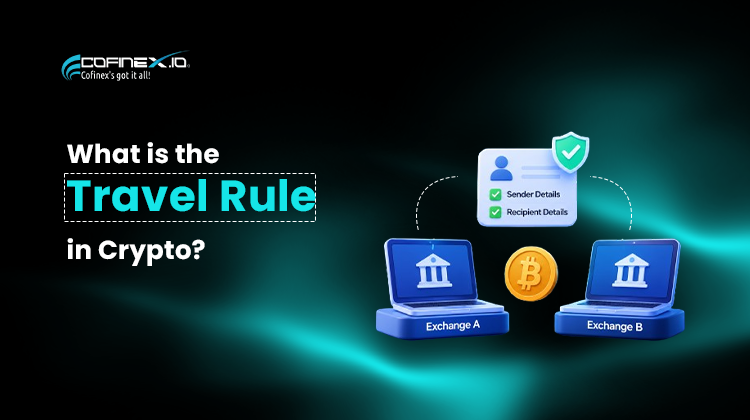
  • What is the Travel Rule in Crypto?

    What is the Travel Rule in Crypto?

    Introduction

    When you transfer cryptocurrency from one exchange to another, you may be asked to provide additional information about the sender or recipient. You might wonder why an exchange needs these details when blockchain transactions already record wallet addresses.

    This requirement is connected to something called the Crypto Travel Rule.

    The Travel Rule is a regulatory standard designed to make cryptocurrency transfers more transparent. It requires certain crypto service providers to collect, hold, and securely share information about the people involved in qualifying transactions.

    But what information is shared? Does it apply to every crypto transfer? And why does it matter to ordinary users?

    Let’s understand it step by step.

    What is the Crypto Travel Rule?

    The Crypto Travel Rule is an anti-money laundering (AML) and counter-terrorist financing (CTF) requirement based on the Financial Action Task Force (FATF) standards.

    It is associated with FATF Recommendation 16, which deals with transparency in financial transfers.

    Under this rule, Virtual Asset Service Providers (VASPs), such as crypto exchanges and certain other service providers, must collect and securely transmit specified information about the sender and recipient when applicable.

    The two main parties are:

    • Originator: The person or entity sending the cryptocurrency.
    • Beneficiary: The person or entity receiving the cryptocurrency.

    The purpose is to help authorities and regulated service providers identify the parties involved in transactions and detect suspicious financial activity.

    In simple terms, the Travel Rule helps ensure that relevant sender and recipient information travels alongside qualifying crypto transfers.

    Why was the Travel Rule introduced?

    Traditional financial institutions already follow requirements to include information about senders and recipients in certain money transfers.

    However, cryptocurrency introduced a different system. Digital assets can move between wallets and platforms across different countries, sometimes without the same information-sharing processes used in traditional banking.

    This can create challenges when authorities investigate financial crimes.

    The Travel Rule aims to address these challenges by improving transparency and helping prevent:

    1. Money laundering: Using cryptocurrency transfers to hide the origin of illegally obtained funds.
    2. Terrorist financing: Moving funds to support terrorist activities.
    3. Fraud and financial crime: Making it easier to investigate suspicious transactions.
    4. Regulatory gaps: Reducing opportunities to exploit differences in financial supervision between countries.

    The rule does not mean that every cryptocurrency transaction is suspicious. Instead, it establishes information-sharing requirements for relevant service providers.

    What information does the Travel Rule require?

    The exact information depends on the jurisdiction, transaction type, and applicable regulations.

    However, the information commonly includes details about both parties.

    Originator InformationBeneficiary Information
    Sender’s nameRecipient’s name
    Wallet address or account referenceWallet address or account reference
    Other identifying details, where requiredOther identifying details, where required

    Depending on local requirements, additional information may include residential details, identification numbers, or other verification information.

    Crypto service providers must handle this information securely and follow applicable data protection and record-keeping requirements.

    How does the Crypto Travel Rule work?

    Let’s understand the process through a simple example.

    Imagine that Rahul wants to transfer USDT from Exchange A to his friend’s account on Exchange B.

    Here is how the process may work:

    Step 1: Rahul initiates the transfer.

    He enters the recipient’s wallet address and selects the amount of USDT he wants to send.

    Step 2: Exchange A requests information.

    The exchange may ask Rahul to provide the recipient’s name and other required details.

    Step 3: The sending exchange checks the information.

    Exchange A collects the required originator and beneficiary information and carries out applicable compliance checks.

    Step 4: Information is securely shared.

    Where the Travel Rule applies, Exchange A securely transmits the required information to Exchange B before or alongside the transfer, according to the applicable rules.

    Step 5: Exchange B receives the transfer.

    The receiving exchange handles the transaction and associated information according to its compliance requirements.

    This process helps the two service providers maintain relevant information about the transfer.

    Note: This is a simplified example. The actual process and information requested can differ between exchanges and countries.

    Does the Travel Rule apply to every crypto transaction?

    No. Its application depends on the type of transfer and the regulations in the relevant jurisdiction.

    Here are some common situations:

    1. Transfers Between Two Crypto Exchanges

    When cryptocurrency moves between two regulated or otherwise obligated service providers, the Travel Rule generally requires relevant sender and recipient information to be collected and shared.

    For example, transferring Bitcoin from one exchange account to another may involve these requirements.

    2. Transfers to a Personal Wallet

    A personal or self-hosted wallet is a wallet controlled directly by the user rather than a third-party service provider.

    When you withdraw cryptocurrency from an exchange to your own wallet, the exchange may ask you to identify the wallet as self-hosted or provide additional information.

    Some jurisdictions also require checks to establish ownership or control of the wallet.

    The exact requirements vary. A self-hosted wallet does not automatically follow the same information-sharing process as another regulated exchange.

    3. Transfers Between Personal Wallets

    A direct transfer between two self-hosted wallets does not involve two exchanges exchanging Travel Rule information.

    However, if a regulated service provider is involved, it may still have customer information collection, monitoring, and other compliance obligations under local rules.

    Therefore, it is important to distinguish between a blockchain transfer and a transfer handled by an obligated service provider.

    What is the difference between the Travel Rule and KYC?

    Beginners often confuse these two terms because both involve identity information.

    However, they serve different purposes.

    FeatureKYCTravel Rule
    Full formKnow Your CustomerCommon name for requirements under FATF Recommendation 16
    Main purposeVerify a customer’s identityShare relevant sender and recipient information for qualifying transfers
    When it appliesDuring onboarding and other required verification checksWhen applicable transfers take place
    Information involvedCustomer identity and verification detailsOriginator and beneficiary details
    Main focusKnowing who the customer isMaintaining transparency across transfers

    In simple terms, KYC helps an exchange understand who its customer is, while the Travel Rule helps relevant service providers exchange information about the parties involved in a transfer.

    Both support financial crime prevention.

    How Does the Travel Rule Affect Crypto Users in India?

    India has brought Virtual Digital Asset Service Providers within its anti-money laundering framework under the Prevention of Money-laundering Act (PMLA).

    The Financial Intelligence Unit–India (FIU-IND) issues AML and CFT guidelines for reporting entities providing services related to virtual digital assets.

    Its guidelines include requirements concerning information associated with virtual digital asset transfers.

    As a result, users of crypto platforms in India may be asked to provide additional details when depositing or withdrawing digital assets.

    For example, an exchange may request:

    • The recipient’s name when withdrawing cryptocurrency.
    • The sender’s details when receiving a deposit.
    • Information about whether a destination wallet belongs to an exchange or is self-hosted.
    • Additional verification details where required.

    These checks help service providers meet their compliance obligations.

    The exact information requested may vary by platform and transaction. Users should follow the instructions provided by their exchange and avoid sharing sensitive wallet credentials.

    What should beginners remember before making a crypto transfer?

    The Travel Rule may introduce additional steps when you send or receive cryptocurrency. Keep these points in mind:

    1. Verify recipient details. Always double-check the recipient’s name, wallet address, and selected network before transferring assets.

    2. Provide accurate information. If an exchange asks for sender or recipient details, make sure the information is correct.

    3. Understand wallet ownership. Know whether you are sending assets to another exchange account or a self-hosted wallet.

    4. Never share your seed phrase or private key. Legitimate compliance checks do not require you to reveal these wallet credentials.

    5. Allow time for verification. Additional compliance checks may delay a deposit or withdrawal.

    6. Use trusted platforms. Choose service providers that explain their compliance procedures and protect customer information.

    Common misconceptions about the Travel Rule

    Let’s clear up a few common misunderstandings.

    • The Travel Rule tracks physical travel: No. It refers to the movement of financial information alongside certain transfers.
    • Every crypto transfer requires the same information: No. Requirements depend on local regulations and the type of transfer.
    • The Travel Rule replaces KYC: No. It works alongside customer verification and other AML requirements.
    • Exchanges can see your private key: No. The rule concerns transaction-related identity information, not access to your wallet’s private credentials.
    • The Travel Rule makes crypto transactions completely anonymous: No. It is designed to improve transparency, not provide anonymity.

    Frequently Asked Questions (FAQs)

    1. What does the Travel Rule mean in cryptocurrency?

    The Crypto Travel Rule requires certain crypto service providers to collect and securely share information about the sender and recipient of qualifying cryptocurrency transfers.

    2. Is the Travel Rule mandatory for crypto exchanges?

    Countries implement FATF standards through their own laws and regulations. Where applicable, crypto service providers must follow the relevant requirements.

    3. Does the Travel Rule apply to USDT transfers?

    It can apply to USDT and other virtual asset transfers when the transaction falls within the applicable regulatory requirements. The rule is not limited to Bitcoin.

    4. Can I transfer crypto to my personal wallet under the Travel Rule?

    Yes, but an exchange may ask for additional information or verification when you withdraw assets to a self-hosted wallet. The exact process depends on local regulations and the platform.

    5. What happens if I do not provide the requested information?

    An exchange may delay, hold, or decline a transaction if required information is missing or cannot be verified. The exact response depends on its policies and applicable regulations.

    6. Does the Travel Rule mean that crypto is no longer private?

    No. The rule requires relevant service providers to collect and share specified transaction-related information. It does not mean that every blockchain transaction publicly displays the user’s personal identity.

    Disclaimer: This article is for educational purposes only and does not constitute legal, financial, or investment advice. Crypto regulations vary by jurisdiction and may change. Always check the latest requirements applicable to your location and service provider.

  • What is a Blockchain Bridge? A Beginner’s Guide

    What is a Blockchain Bridge? A Beginner’s Guide

    Introduction

    The crypto world has many blockchain networks, including Bitcoin, Ethereum, Solana, and Polygon. Each network has its own technology, rules, applications, and digital assets.

    However, these networks do not always communicate directly with one another. As a result, moving assets or information between different blockchains can become challenging.

    This is where a blockchain bridge becomes useful.

    A blockchain bridge connects two or more blockchain networks and allows them to transfer assets or share information. In simple terms, it helps different blockchain ecosystems interact with each other.

    But how does a blockchain bridge work? Why do people use it, and what risks should they understand before using one?

    Let’s explore.

    What is a Blockchain Bridge?

    A blockchain bridge is a technology that connects two separate blockchain networks. It allows users to move digital assets or transfer information from one blockchain to another.

    For example, imagine you hold ETH on the Ethereum network but want to use an application on another compatible blockchain. A bridge may allow you to transfer an equivalent representation of your ETH to that network.

    Therefore, you can access applications and services across different blockchain ecosystems without being limited to just one network.

    A blockchain bridge may support:

    • Transferring digital assets between networks.
    • Moving tokens to networks with different transaction costs.
    • Connecting decentralised applications across ecosystems.
    • Sharing selected information between blockchains.

    However, not every bridge supports every blockchain or token. Always check network compatibility before making a transfer.

    How does a Blockchain Bridge work?

    Blockchain bridges use different mechanisms to transfer assets between networks. One common method involves locking assets on the source blockchain and creating an equivalent representation on the destination blockchain.

    Let’s understand this with an example.

    Imagine you have 1 ETH on Ethereum and want to use a compatible application on another blockchain.

    The process may work like this:

    Step 1: Connect Your Wallet

    First, connect your crypto wallet to a supported blockchain bridge. Then, select the source network and destination network.

    Step 2: Select the Asset and Amount

    Next, choose the cryptocurrency you want to transfer. For example, you may select 1 ETH.

    Step 3: Initiate the Transfer

    After reviewing the details, confirm the transaction. The bridge processes the request using its specific mechanism.

    Step 4: Lock or Secure the Original Asset

    In a lock-and-mint bridge, the original ETH is locked in a smart contract or another custody arrangement on the source network.

    Step 5: Create a Representation on the Destination Network

    Once the bridge verifies the required conditions, it creates or releases an equivalent representation of the asset on the destination blockchain.

    As a result, you can use that representation on supported applications on the destination network.

    Important: Not all bridges work through locking and minting. Some use liquidity pools, custodians, or other transfer mechanisms. Therefore, the exact process depends on the bridge.

    Types of Blockchain Bridges

    Blockchain bridges can be classified in different ways. One important distinction is how they manage assets and transfers.

    1. Trusted or Centralised Bridges

    Trusted bridges rely on a central operator, custodian, or group of authorised entities to manage or verify transfers.

    For example, a custodian may hold assets on one network and arrange for corresponding assets to become available on another.

    These bridges can offer a straightforward user experience. However, users must trust the operator to manage assets and process transfers correctly.

    2. Trust-Minimised or Decentralised Bridges

    Trust-minimised bridges use smart contracts, cryptographic proofs, validators, or other mechanisms to reduce reliance on a single central operator.

    Instead of depending entirely on one company, these systems use technical processes to verify cross-chain activity.

    However, decentralised does not automatically mean risk-free. Smart contract vulnerabilities, validator failures, and design weaknesses can still create problems.

    3. Lock-and-Mint Bridges

    These bridges lock the original asset on one blockchain and mint an equivalent token on another.

    For example, ETH may be locked on the source network while a wrapped representation becomes available on the destination network.

    When users return the asset, the representation may be burned or removed, and the original asset may be released.

    4. Liquidity-Based Bridges

    Liquidity-based bridges use pools of available assets to complete transfers between networks.

    For example, a bridge may have liquidity pools on two supported blockchains. It can use these pools to deliver the destination asset without following the same lock-and-mint process.

    However, available liquidity can affect how much users receive and whether a transfer can be completed efficiently.

    Why are Blockchain Bridges important?

    Blockchain bridges help reduce the separation between different blockchain ecosystems. Here are some reasons why they matter.

    1. Access to Different Blockchain Networks

    Different blockchains support different applications and services. Therefore, bridges allow users to access opportunities across multiple networks.

    2. More Flexibility for Crypto Users

    Users may want to move assets to another network because of transaction costs, application availability, or personal preferences.

    For example, someone may move an asset to a compatible network where a particular decentralised application operates.

    3. Supporting DeFi Applications

    Decentralised finance applications operate across several blockchain networks. Bridges can help users move assets between these ecosystems to access lending, borrowing, trading, and other services.

    However, users should check whether the destination application supports the bridged asset.

    4. Improving Blockchain Interoperability

    Interoperability refers to the ability of different blockchain networks to communicate and work together.

    Bridges support this goal by allowing assets or selected information to move between otherwise separate networks.

    As a result, they help create a more connected blockchain ecosystem.

    What are the risks of using a Blockchain Bridge?

    Although bridges offer useful features, they also introduce risks that users should understand.

    1. Smart Contract Vulnerabilities

    Many bridges depend on smart contracts to manage assets and process transfers.

    However, a coding error or security vulnerability can allow attackers to exploit the system and potentially steal funds.

    2. Validator or Custodian Risks

    Some bridges depend on validators, operators, or custodians to approve transfers and manage assets.

    If these parties are compromised, dishonest, or unavailable, users may face delays or financial losses.

    3. Liquidity Risks

    Liquidity-based bridges need sufficient assets to complete transfers.

    If a bridge has limited liquidity, users may experience delays, higher costs, or difficulty completing withdrawals.

    4. Fake Bridge Websites

    Scammers sometimes create fake websites that imitate popular blockchain bridges.

    Therefore, always verify the website address and use official links. Additionally, review wallet requests carefully before signing transactions.

    5. Wrapped Token Risks

    Some bridges create wrapped or representative tokens on destination networks.

    These tokens depend on the bridge’s underlying system and its ability to maintain the relationship with the original asset. If the bridge fails or becomes compromised, the wrapped token may lose its expected value or redemption support.

    How to use a Blockchain Bridge safely?

    Before transferring cryptocurrency through a bridge, follow these precautions:

    • Verify the bridge: Use the official website and check its reputation.
    • Check network compatibility: Confirm that both source and destination networks support the selected asset.
    • Review transaction details: Check the amount, destination address, network fees, and estimated delivery.
    • Understand the asset: Confirm whether you will receive the original token or a wrapped representation.
    • Start with a small transfer: If appropriate, test the process with a small amount before moving larger funds.
    • Check security information: Review available audits, known incidents, and the bridge’s security model.
    • Avoid suspicious links: Never connect your wallet through an unverified website.

    Most importantly, remember that a successful audit does not guarantee complete security.

    Blockchain Bridge vs Crypto Exchange

    Beginners sometimes confuse blockchain bridges with cryptocurrency exchanges. However, they serve different purposes.

    FeatureBlockchain BridgeCrypto Exchange
    Main purposeConnects blockchain networksAllows users to buy, sell, or trade crypto
    Primary functionCross-chain asset or information transferCryptocurrency trading
    Example useMoving a supported asset from Ethereum to another networkBuying or selling BTC against USDT
    Main considerationBridge mechanism and network compatibilityTrading fees, liquidity, and platform security

    In simple terms, a bridge helps assets move between blockchain networks, while an exchange helps users trade cryptocurrencies.

    Common Mistakes to Avoid

    When using a blockchain bridge, beginners should avoid these common mistakes:

    • Sending assets to an incompatible network.
    • Assuming every bridge supports every cryptocurrency.
    • Confusing wrapped tokens with the original assets.
    • Ignoring network and bridge fees.
    • Using unofficial bridge websites.
    • Assuming an audited bridge is completely safe.
    • Transferring a large amount without understanding the process.

    Therefore, always review the transfer details before confirming a transaction.

    Ultimately, blockchain bridges help make the crypto ecosystem more connected. However, understanding how a bridge works is just as important as knowing how to use it.

    Frequently Asked Questions (FAQs)

    1. What is the main purpose of a blockchain bridge?

    A blockchain bridge connects separate blockchain networks. It allows supported assets or information to move between these networks.

    2. Are blockchain bridges safe?

    Not always. Their safety depends on their design, smart contracts, validators, custodians, and security practices. Therefore, users should research a bridge before transferring assets.

    3. Can I transfer Bitcoin to Ethereum using a blockchain bridge?

    Some bridges support transfers involving Bitcoin and Ethereum through wrapped or representative assets. However, the process and supported assets depend on the specific bridge.

    4. What is a wrapped token?

    A wrapped token is a token designed to represent another asset on a different blockchain. For example, wrapped Bitcoin represents Bitcoin on a network that does not natively support Bitcoin.

    5. Do blockchain bridges charge fees?

    Yes, transfers may involve source-network fees, destination-network fees, bridge fees, or other costs. However, the exact charges depend on the bridge and networks involved.

    Disclaimer: This article is for educational purposes only and does not provide financial or investment advice. Always research a blockchain bridge and understand its risks before transferring cryptocurrency.

  • How to Spot Fake Crypto Giveaway Posts: 7 Warning Signs

    How to Spot Fake Crypto Giveaway Posts: 7 Warning Signs

    Introduction

    Crypto giveaways often appear on social media, websites, and online communities. Some projects use giveaways to promote their platforms, attract new users, or reward their communities. However, not every giveaway is genuine.

    Scammers also use fake crypto giveaways to steal money, wallet access, and personal information. For example, they may promise to double your Bitcoin or offer free USDT if you complete a simple task. At first, these offers may look convincing. However, their real purpose is often to trick you into sending cryptocurrency or sharing sensitive wallet information.

    So, how can you identify a fake crypto giveaway?

    In this lesson, we will explore seven common warning signs, explain how these scams work, and discuss how you can protect your crypto wallet.

    What is a Fake Crypto Giveaway?

    A fake crypto giveaway is a fraudulent promotion that promises free cryptocurrency or rewards to trick people.

    Usually, scammers pretend to represent well-known crypto exchanges, blockchain projects, influencers, or public figures. Moreover, they often copy official logos, profile pictures, and announcement formats to make their offers look legitimate.

    For instance, a fake account might announce that users will receive free Bitcoin after sending a small amount to a wallet address. Although the offer may sound attractive, the scammer simply takes the cryptocurrency without sending any reward.

    Therefore, always verify a giveaway before participating.

    How do Fake Crypto Giveaways work?

    Most fake giveaways follow a similar pattern. First, scammers create an attractive offer to grab people’s attention. Next, they share it through social media posts, direct messages, fake websites, or online advertisements.

    After that, they encourage users to complete an action, such as:

    • Sending cryptocurrency to a wallet address.
    • Connecting a crypto wallet to an unknown website.
    • Signing a suspicious transaction or wallet message.
    • Sharing a private key or seed phrase.
    • Clicking a link and entering personal information.

    As a result, users may lose their cryptocurrency or expose their wallets to security risks.

    7 Warning Signs of Fake Crypto Giveaway Posts

    1. Promises to Double Your Cryptocurrency

    One of the biggest warning signs is a promise to double your crypto.

    For example, a post might claim that sending 0.01 BTC will get you 0.02 BTC in return. Similarly, another promotion may promise free USDT in exchange for a small initial payment.

    However, legitimate giveaways do not need you to send cryptocurrency to an unknown wallet to receive a reward. Therefore, treat these offers with extreme caution.

    2. Suspicious Social Media Accounts

    Scammers often create fake accounts that look similar to official project profiles.

    They may copy the original profile picture, company logo, username, and description. In addition, some accounts use slightly different spellings or extra characters to appear genuine.

    Before trusting an announcement, check the account’s username, verification details, posting history, and official website links. Most importantly, compare it with the project’s verified communication channels.

    3. Messages That Create Urgency

    Fake giveaways often use pressure to make people act quickly.

    For example, a post may say:

    • Only five minutes left!
    • Claim your reward before it expires.
    • Limited slots available.
    • Complete the task immediately.

    As a result, users may skip important verification steps. However, a genuine promotion should provide clear information about its duration, eligibility, and participation rules.

    Take your time and verify the offer before making any decision.

    4. Suspicious or Altered Websites

    A fake giveaway may direct you to a website that looks almost identical to an official crypto platform.

    However, scammers often use slightly different domain names, misspellings, or unfamiliar website addresses. Furthermore, they may create fake login pages to collect passwords and wallet information.

    To stay safe, visit the project’s official website directly instead of clicking unknown links. Also, check whether the giveaway announcement appears on its official channels.

    5. Requests for Your Seed Phrase or Private Key

    This is one of the most serious warning signs.

    Your seed phrase and private key help control access to your cryptocurrency wallet. Therefore, never share them with anyone, even if they claim to represent a crypto exchange or support team.

    A genuine giveaway does not need your seed phrase or private key to send you a reward.

    If a website or person asks for these details, stop immediately. Sharing them can allow someone else to access and control your wallet.

    6. Fake Comments and Testimonials

    Some scammers create artificial engagement to make their giveaways appear trustworthy.

    For instance, you may see comments claiming that users have already received free Bitcoin or USDT. In addition, fake accounts may post screenshots of successful transactions to encourage others to participate.

    However, comments and screenshots can be fabricated. Therefore, do not treat social media engagement as proof that a giveaway is genuine.

    7. No Announcement on Official Channels

    Legitimate campaigns generally provide clear information about their organisers, eligibility requirements, participation rules, and reward distribution.

    Moreover, genuine projects usually communicate important promotions through their official channels.

    If a giveaway appears only on an unfamiliar account or website, be careful. Instead, visit the project’s official website and check its verified social media profiles.

    How to Verify a Crypto Giveaway before participating?

    Before joining any crypto promotion, follow these simple checks:

    1. Visit the official website: Type the website address yourself rather than clicking an unfamiliar link.
    2. Check official social media accounts: Confirm whether the promotion appears on the project’s genuine profiles.
    3. Read the campaign rules: Look for eligibility, duration, reward details, and distribution conditions.
    4. Never share wallet recovery details: Your seed phrase and private key must remain private.
    5. Review wallet requests carefully: Connecting a wallet does not automatically give a website permission to transfer your funds. However, signing transactions or granting token approvals can create risks.
    6. Contact official support: If you are unsure, use the contact details listed on the project’s official website.

    Most importantly, never rush into a giveaway simply because it promises a reward.

    What should you do if you interact with a Fake Giveaway?

    If you have already clicked a suspicious giveaway link, do not panic. However, take action based on what happened.

    • If you only clicked the link: Close the website. Then, avoid entering information or approving any requests.
    • If you shared your seed phrase or private key: Treat the wallet as compromised. Move any remaining assets to a new, secure wallet with a newly generated recovery phrase, using a trusted device.
    • If you approved a suspicious token allowance: Review and revoke the approval using a trusted blockchain tool. Keep in mind that revoking an approval does not reverse transactions that have already happened.
    • If you entered your password: Change it immediately and enable two-factor authentication wherever available.
    • If you sent cryptocurrency: Save the transaction hash, wallet addresses, screenshots, and other relevant details. Then, contact the exchange or platform involved and report the incident to the appropriate authorities.

    Remember, acting quickly can help reduce further risks. Nevertheless, no recovery method can guarantee that lost cryptocurrency will be returned.

    Common Mistakes to Avoid

    Even experienced crypto users can overlook warning signs. Therefore, avoid these common mistakes:

    • Trusting a giveaway because it uses a famous person’s photograph.
    • Assuming that high engagement means a promotion is genuine.
    • Clicking links without checking the website address.
    • Sharing wallet recovery details with strangers.
    • Signing transactions without understanding what they do.
    • Sending cryptocurrency to receive a promised reward.

    In addition, remember that a professional-looking website does not automatically make a campaign trustworthy.

    Ultimately, protecting your crypto starts with checking before you click, connect, or send.

    Frequently Asked Questions (FAQs)

    1. Are all crypto giveaways fake?

    No. Some legitimate projects organise promotional campaigns and community rewards. However, you should always verify the organiser and read the campaign rules before participating.

    2. Can a crypto giveaway steal my cryptocurrency?

    Yes. A fraudulent giveaway may trick you into sending cryptocurrency, revealing your recovery phrase, or signing a harmful transaction. Consequently, always review what a website asks you to do.

    3. Should I share my seed phrase to claim a giveaway?

    No. Never share your seed phrase or private key. Anyone who obtains these details may gain control of your wallet.

    4. Is connecting my wallet to a website always dangerous?

    Not necessarily. Connecting a wallet alone does not automatically allow a website to transfer your funds. However, signing transactions or granting token approvals can expose your assets to risk. Therefore, review every request carefully.

    5. What should I do if I sent crypto to a fake giveaway?

    Save the transaction details and contact the exchange or platform involved. Additionally, report the incident to the appropriate authorities. Unfortunately, blockchain transactions are generally irreversible, so recovering the funds is not guaranteed.

    Disclaimer: This article is for educational purposes only. It does not provide financial or investment advice. Always conduct your own research and follow appropriate security practices before interacting with cryptocurrency platforms or wallets.

  • Smart Contract Audit: What it does and does not prove

    Smart Contract Audit: What it does and does not prove

    A smart contract audit is an important part of blockchain security. It helps identify potential weaknesses in a project’s code before or after deployment. However, an audit does not guarantee that a smart contract is free from bugs, that a project is trustworthy, or that users cannot lose money.

    What is a Smart Contract Audit?

    A smart contract audit is a technical review of a smart contract’s code to identify security vulnerabilities, programming errors, and other potential risks.

    Smart contracts are programs that run on blockchain networks. They automatically execute specific instructions when predefined conditions are met.

    For example, a decentralised finance (DeFi) application may use smart contracts to:

    • Process token swaps.
    • Manage lending and borrowing.
    • Distribute rewards.
    • Handle token transfers.
    • Control liquidity pools.

    Since these contracts can manage valuable digital assets, coding mistakes or security weaknesses may create opportunities for attackers.

    An audit helps developers identify such problems and improve the security of their contracts.

    How does a Smart Contract Audit work?

    A smart contract audit generally involves several stages. The exact process depends on the auditing team, project, and scope of the review.

    1. Reviewing the Source Code

    Auditors examine the smart contract’s code to understand how it works.

    They check whether the contract follows its intended logic and look for coding mistakes, unsafe functions, and suspicious behaviour.

    2. Identifying Security Vulnerabilities

    Auditors look for weaknesses that attackers could potentially exploit.

    Some common examples include:

    • Reentrancy: A vulnerability where an external contract interaction allows an attacker to repeatedly trigger a function before the original operation finishes.
    • Access control issues: Problems that allow unauthorised users to perform restricted actions.
    • Integer-related errors: Mistakes involving numerical calculations, overflow, or underflow.
    • Logic errors: Problems where the contract does not behave as intended.
    • Oracle manipulation: Weaknesses that allow incorrect external price or data information to influence contract operations.

    3. Testing the Contract

    Auditors may use manual code reviews, automated security tools, and different testing methods to examine how the contract behaves.

    These tests can help identify unexpected outcomes and possible attack scenarios.

    4. Preparing an Audit Report

    After reviewing the contract, the auditing team usually prepares a report explaining its findings.

    The report may include:

    • Identified vulnerabilities.
    • Severity levels.
    • Technical explanations.
    • Recommended fixes.
    • Issues that developers have addressed or left unresolved.

    5. Reviewing Fixes

    Developers may update their code to address the reported problems.

    Some auditing teams then review the changes to check whether the identified issues have been resolved.

    However, you should check whether the final report includes this follow-up review. An initial audit does not automatically confirm that every recommendation was implemented correctly.

    What does a Smart Contract Audit actually prove?

    An audit provides evidence about the security of specific code under a particular review process.

    It can help establish several things:

    1. The code has undergone a security review

    An independent audit shows that an external team has examined the smart contract within the stated scope.

    2. Certain vulnerabilities were identified

    The report can document security weaknesses discovered during the review.

    3. Developers received recommendations

    An audit can provide technical suggestions to improve the contract’s security and reduce known risks.

    4. Some reported issues may have been fixed

    If the report includes verified remediation, it can show that specific findings were addressed.

    5. The audit has a defined scope

    A proper report identifies which contracts, code versions, and components the auditors examined. This helps readers understand what the review actually covered.

    In short, an audit provides useful security information. It does not provide absolute protection.

    What does a Smart Contract Audit NOT prove?

    This is the most important part to understand.

    An audited smart contract is not automatically safe or trustworthy. Here are some things an audit cannot guarantee.

    1. It does not guarantee Zero Vulnerabilities

    Even experienced auditors can miss security weaknesses.

    Smart contracts can contain complex logic, and some vulnerabilities may only appear under unusual conditions or through interactions with other contracts.

    Therefore, a clean audit report does not mean the code is completely free from bugs.

    2. It does not guarantee that users cannot lose money

    An audit cannot eliminate every risk associated with using a crypto project.

    Users may still face losses because of:

    • Undiscovered vulnerabilities.
    • Market volatility.
    • Economic or design weaknesses.
    • External protocol failures.
    • Private key theft or phishing attacks.

    An audit mainly examines the specified code and does not remove every risk surrounding a project.

    3. It does not prove that a project is legitimate

    A smart contract audit is a technical security review, not a complete investigation into a project’s business or leadership.

    It does not automatically verify:

    • The identity of the development team.
    • The honesty of the project’s claims.
    • The quality of its business model.
    • Whether its token has genuine utility.
    • Whether the project will deliver its promises.

    A project can have audited smart contracts and still have questionable business practices.

    4. It does not guarantee future security

    Smart contracts can change over time.

    Developers may introduce new features, update existing code, or deploy new contract versions.

    If the code changes after an audit, the earlier report may no longer cover the latest version.

    Therefore, always check whether the audited code matches the contract currently being used.

    5. It does not cover everything outside its scope

    An audit only examines the components included in its scope.

    For example, an audit of a token contract does not automatically cover the project’s website, wallet security, backend infrastructure, or every third-party protocol it interacts with.

    This is why checking the audit scope is just as important as checking the audit status.

    How to read a Smart Contract Audit report?

    You do not need to be a programmer to understand some important details in an audit report.

    Before trusting an audit claim, check these points:

    What to CheckWhy It Matters
    Auditor’s identityHelps establish who conducted the review
    Audit dateShows when the review took place
    Contract addressHelps identify the contract that was examined
    Code version or commitConfirms which version of the code was reviewed
    Audit scopeExplains which components were included
    Vulnerability findingsShows the issues discovered
    Severity levelsIndicates the potential seriousness of findings
    Remediation statusShows whether reported issues were fixed
    Follow-up reviewHelps confirm whether fixes were checked again

    Also, look for the original report rather than relying only on a badge or statement on the project’s website.

    Smart Contract Audit vs Security Guarantee

    These two terms are not interchangeable.

    Smart Contract AuditSecurity Guarantee
    Reviews specific code for potential weaknessesSuggests complete protection
    Identifies known issues within the review scopeImplies that no issues exist
    Provides findings and recommendationsPromises a particular outcome
    Has limitationsCannot be established by an audit alone

    A credible project should communicate its audit history transparently instead of presenting an audit as proof that users face no risk.

    Common Mistakes to Avoid

    When researching a crypto project, avoid these assumptions:

    • Assuming every audited project is safe.
    • Trusting an audit badge without checking the original report.
    • Ignoring unresolved high-severity findings.
    • Assuming an old audit covers newly updated code.
    • Believing that an audit proves a project’s legitimacy.
    • Treating an audit as a guarantee against financial loss.

    Remember, an audit is one part of a broader security evaluation. It should support your research, not replace it.

    Frequently Asked Questions (FAQs)

    1. What is the purpose of a smart contract audit?

    The purpose is to review smart contract code, identify potential security vulnerabilities, and recommend improvements before or after deployment.

    2. Does an audited smart contract mean my funds are safe?

    No. An audit can reduce certain technical risks, but it cannot guarantee that your funds are completely safe. Other risks, including undiscovered vulnerabilities and phishing attacks, may still exist.

    3. Who performs smart contract audits?

    Smart contract audits are generally performed by independent blockchain security firms or specialised security researchers with experience in reviewing smart contract code.

    4. Can an audited smart contract still be hacked?

    Yes. Auditors may miss vulnerabilities, and attackers may discover weaknesses after the review. Changes to the contract or its connected systems can also introduce new risks.

    5. How can I check whether a crypto project has been audited?

    Visit the project’s official website and look for its published audit reports. Then verify the report with the auditing firm where possible. Check the contract address, code version, audit date, scope, findings, and whether reported issues were fixed.

    Disclaimer: This article is for educational purposes only and does not constitute financial or investment advice. A smart contract audit does not guarantee complete security or eliminate the risk of financial loss. Always conduct independent research before interacting with a crypto project.