Difficulty: Beginner

  • What is a Crypto Bull Market and Bear Market?

    What is a Crypto Bull Market and Bear Market?

    The cryptocurrency market constantly moves through different cycles. At times, prices rise steadily, attracting new investors and creating excitement across the industry. At other times, prices fall significantly, leading to caution and uncertainty among traders and investors.

    These market phases are known as a bull market and a bear market.

    Understanding the difference between a bull market and a bear market can help you make more informed decisions when buying, selling, or holding digital assets. Whether you want to buy Bitcoin, buy Ethereum, or explore other cryptocurrencies, recognizing market conditions is an essential skill for every investor.

    What is a Bull Market?

    A bull market refers to a period when cryptocurrency prices rise consistently over an extended period.

    During a bull market, investor confidence increases, trading activity grows, and market sentiment becomes positive. As more people enter the market and demand rises, the prices of Bitcoin, Ethereum, and other cryptocurrencies often move higher.

    For example, if Bitcoin continues to climb for several months while attracting new investors, many market participants would consider those conditions a bull market.

    As a result, positive news coverage increases, social media activity grows, and investors often expect further price appreciation.

    Common characteristics of a Bull Market

    A bull market usually includes several key characteristics:

    • Rising cryptocurrency prices.
    • Strong investor confidence.
    • Increased trading volume.
    • Positive market sentiment.
    • Growing media attention.
    • Higher demand for digital assets.
    • Increased participation from retail and institutional investors.

    However, even during a bull market, short-term price corrections can occur. Therefore, investors should avoid assuming that prices will move upward indefinitely.

    What is a Bear Market?

    A bear market refers to a period when cryptocurrency prices decline significantly over an extended period.

    During a bear market, investor confidence weakens, market sentiment turns negative, and selling pressure increases. Consequently, many cryptocurrencies experience substantial price declines.

    For instance, if Bitcoin loses value for several months and investors become increasingly cautious, the market may enter a bear phase.

    Although bear markets can feel challenging, they are a normal and healthy part of every financial market cycle.

    Common characteristics of a Bear Market

    A bear market often includes the following characteristics:

    • Falling cryptocurrency prices.
    • Lower investor confidence.
    • Increased market uncertainty.
    • Strong selling pressure.
    • Reduced trading activity.
    • Negative market sentiment.
    • Greater focus on risk management.

    Furthermore, bear markets can last for weeks, months, or even years depending on economic conditions, investor sentiment, and market demand.

    Why are they called Bull and Bear markets?

    The terms “bull” and “bear” come from the way these animals attack.

    A bull attacks by thrusting its horns upward. Therefore, investors associate a bull market with rising prices.

    In contrast, a bear attacks by swiping its paws downward. As a result, investors use the term bear market to describe falling prices.

    Today, people use these terms not only in cryptocurrency markets but also in stock markets, commodities, and other financial sectors.

    Bull Market vs Bear Market

    Bull MarketBear Market
    Prices generally risePrices generally fall
    Investor confidence is highInvestor confidence is low
    Buying activity increasesSelling activity increases
    Market sentiment is positiveMarket sentiment is negative
    Demand growsDemand weakens
    Investors take more riskInvestors become more cautious

    Understanding these differences helps investors identify market trends and adjust their strategies accordingly.

    How do Investors behave in a Bull Market?

    During a bull market, investors generally feel optimistic about future price movements.

    Many traders actively buy cryptocurrencies because they expect prices to continue rising. In addition, new investors often enter the market, hoping to benefit from the upward trend.

    However, emotions can sometimes lead to poor decisions. Therefore, investors should continue researching projects and managing risk, even during strong market conditions.

    How Do Investors Behave in a Bear Market?

    During a bear market, investors usually become more cautious.

    Some traders sell assets to reduce exposure to further losses. Meanwhile, others hold their investments and wait for market conditions to improve.

    Long-term investors may also use bear markets as an opportunity to study projects, diversify portfolios, or invest gradually over time. Nevertheless, every investment decision should align with individual financial goals and risk tolerance.

    Can all cryptocurrencies move together?

    Not necessarily.

    Bitcoin often influences the broader cryptocurrency market because it holds the largest market capitalization. Therefore, many digital assets tend to rise during bullish periods and decline during bearish periods.

    However, some cryptocurrencies may perform differently because of project developments, technological upgrades, partnerships, or increased adoption.

    As a result, investors should research individual projects rather than relying solely on overall market sentiment.

    Why is it important to understand market cycles?

    Understanding market cycles helps investors set realistic expectations and avoid emotional decision-making.

    For example, a bull market can create excitement and confidence, while a bear market can create fear and uncertainty. Without proper knowledge, investors may buy or sell based on emotions rather than strategy.

    Furthermore, understanding market cycles can help investors improve risk management, remain patient during volatility, and focus on long-term goals.

    Frequently Asked Questions (FAQs)

    What is a bull market in crypto?

    A bull market is a period when cryptocurrency prices rise consistently and investor confidence remains strong.

    What is a bear market in crypto?

    A bear market is a period when cryptocurrency prices fall significantly and market sentiment becomes negative.

    Does Bitcoin influence market cycles?

    Yes. Bitcoin often influences the broader cryptocurrency market because it has the largest market capitalization and attracts significant investor attention.

    How long do bull and bear markets last?

    The duration varies. Some market cycles last several months, while others can continue for years.

    Can investors profit during a bear market?

    Some investors use different strategies during bear markets. However, all investments involve risk, and no strategy guarantees profits.

    Disclaimer: This article is for educational and informational purposes only. It should not be considered financial, legal, or investment advice. Cryptocurrency trading involves risk. Always conduct your own research before making financial decisions.

    Trade on the Go with the Cofinex Mobile App

    Download for Android

    Download for iOS

    Follow Cofinex

    Telegram: https://t.me/cofinexofficial

    X (Twitter): https://x.com/CofinexExchange

    Facebook: https://www.facebook.com/

    Instagram: https://www.instagram.com/cofinexexchange/

    LinkedIn: https://in.linkedin.com/company/cofinexexchange

    WhatsApp Channel: https://whatsapp.com/channel/0029VbBSQtJ2P59lfbaRXJ2k

    YouTube: https://www.youtube.com/@cofinexexchange

  • What is Market Capitalization and Why does it matter?

    Introduction

    When you first start exploring cryptocurrencies, you may notice that some coins are worth thousands of dollars while others cost only a few cents. At first glance, it may seem that a higher-priced coin is more valuable. However, price alone does not tell the full story. To better understand the size of a cryptocurrency project, investors often look at market capitalization, also known as market cap. It is one of the most commonly used metrics for comparing cryptocurrencies because it considers both a coin’s price and its circulating supply.

    What is Market Capitalization?

    Market capitalization (market cap) represents the total market value of a cryptocurrency based on its current market price and circulating supply.

    In simple terms, market capitalization helps estimate the overall size of a cryptocurrency project. Rather than focusing only on the price of one coin, it considers how many coins are currently in circulation. As a result, it provides a more meaningful way to compare different cryptocurrencies.

    Market Capitalization Formula

    Market Cap = Current Price × Circulating Supply

    Understanding the Formula

    To calculate market cap, you need two values:

    • Current Price: The latest market price of one coin or token.
    • Circulating Supply: The number of coins or tokens that are currently available and actively circulating in the market.

    By multiplying these two values, you can calculate a cryptocurrency’s market cap.

    How do you calculate market cap?

    Let’s look at a simple example.

    Suppose a cryptocurrency has:

    • Current Price: $50
    • Circulating Supply: 10 million coins

    Using the formula:

    Market Capitalization = $50 × 10,000,000 = $500 million

    In this example, the cryptocurrency has a market capitalization of $500 million.

    It is not fixed. It changes whenever the cryptocurrency’s price changes or its circulating supply changes over time.

    Why do investors use market capitalization?

    Market cap gives investors a broader perspective than price alone. It helps compare cryptocurrencies based on their overall market value instead of focusing only on the cost of a single coin.

    Compare Cryptocurrency Projects

    It allows investors to compare projects of different sizes. A cryptocurrency with a low price can still have a larger market capitalization than a higher-priced coin if its circulating supply is much larger.

    Understand Market Size

    Generally, cryptocurrencies with larger market capitalizations are more established within the market. On the other hand, smaller projects may still be growing or have lower adoption.

    Support Investment Research

    Many investors use this metric as one of several factors when researching cryptocurrencies. They also consider technology, real-world use cases, adoption, security, and community support before making investment decisions.

    Measure Market Presence

    A larger market cap often indicates that a cryptocurrency has a stronger presence within the crypto market. However, it does not guarantee future success or investment returns.

    Types of Market Capitalization

    Cryptocurrencies are commonly grouped into three categories based on their market capitalization.

    Large-Cap Cryptocurrencies

    Large-cap cryptocurrencies generally have larger market capitalizations than most other cryptocurrencies. They are often considered more established because they have gained wider adoption and recognition.

    Examples include:

    • Bitcoin (BTC)
    • Ethereum (ETH)

    Although these cryptocurrencies are widely recognized, they can still experience significant price volatility.

    Mid-Cap Cryptocurrencies

    Mid-cap cryptocurrencies have moderate market capitalizations. They may offer growth opportunities, but they also involve greater risk than many large-cap projects.

    Small-Cap Cryptocurrencies

    Small-cap cryptocurrencies have relatively lower market capitalizations. While some may have strong growth potential, they often experience higher price volatility and greater investment risk.

    What is the difference between coin price and market cap?

    One of the most common misconceptions among beginners is believing that a higher coin price means a cryptocurrency is larger or more valuable.

    In reality, this is not always true.

    Consider the following example:

    CryptocurrencyPrice per CoinCirculating SupplyMarket Capitalization
    Coin A$110 billion$10 billion
    Coin B$5001 million$500 million

    Although Coin B costs much more per coin, Coin A has a significantly larger market capitalization because far more coins are circulating.

    This example shows why investors should compare market capitalization, not just price, when evaluating cryptocurrencies.

    Limitations of Market Capitalization

    Although market capitalization is an important metric, it should not be used on its own.

    For example, market capitalization:

    • Does not measure the quality of a cryptocurrency project.
    • Does not guarantee future performance.
    • Does not reflect trading liquidity.
    • Does not measure technology or innovation.
    • Does not indicate how widely a cryptocurrency is used.

    Therefore, investors should consider additional factors such as the project’s technology, development team, adoption, security, and real-world use cases before making investment decisions.

    Frequently Asked Questions (FAQs)

    What is market capitalization in cryptocurrency?

    It is the total market value of a cryptocurrency. It is calculated by multiplying its current market price by its circulating supply.

    How is it calculated?

    The formula is:

    Market Capitalization = Current Price × Circulating Supply

    Why is market cap important?

    Market cap helps investors compare the size of different cryptocurrencies and understand their position within the broader crypto market.

    Does a higher market capitalization mean a better investment?

    No. A larger market cap may indicate that a cryptocurrency is more established, but it does not guarantee future performance or lower investment risk.

    What is the difference between price and market capitalization?

    The price is the value of one coin, while this metric represents the total market value of all coins currently in circulation.

    Disclaimer

    This article is for educational purposes only and should not be considered financial, investment, or legal advice. Cryptocurrency investments involve risk, and market prices can be highly volatile. Always conduct your own research and consider your financial goals and risk tolerance before making investment decisions.

    Trade on the Go with the Cofinex Mobile App

    Download for Android

    Download for iOS

    Follow Cofinex

    Telegram: https://t.me/cofinexofficial

    X (Twitter): https://x.com/CofinexExchange

    Facebook: https://www.facebook.com/

    Instagram: https://www.instagram.com/cofinexexchange/

    LinkedIn: https://in.linkedin.com/company/cofinexexchange

    WhatsApp Channel: https://whatsapp.com/channel/0029VbBSQtJ2P59lfbaRXJ2k

    YouTube: https://www.youtube.com/@cofinexexchange

  • What is Dollar-Cost Averaging (DCA) in crypto?

    What is Dollar-Cost Averaging (DCA) in crypto?

    Investing in cryptocurrency can feel overwhelming, especially when prices change quickly. Many beginners ask the same question: “When is the right time to buy?”

    The truth is that predicting the market consistently is extremely difficult, even for experienced investors.

    This is where Dollar-Cost Averaging (DCA) can help.

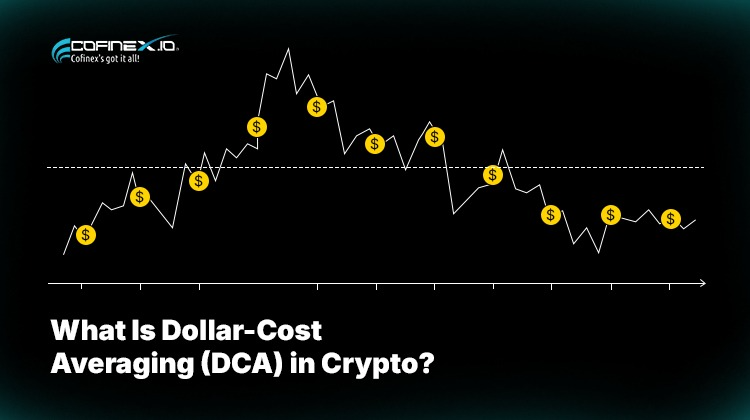
    Instead of trying to buy at the “perfect” price, DCA involves investing a fixed amount of money at regular intervals, regardless of whether the market is going up or down. This approach helps reduce emotional decision-making and encourages a consistent investing habit.

    What Is Dollar-Cost Averaging (DCA)?

    Dollar-Cost Averaging (DCA) is an investment strategy where you invest a fixed amount of money into an asset at regular intervals.

    For example, instead of investing $1,200 all at once, you might invest $100 every month for one year.

    With DCA, the amount you invest stays the same, but the number of cryptocurrency units you buy changes based on the market price.

    • When prices are lower, your fixed investment buys more cryptocurrency.
    • When prices are higher, the same investment buys fewer units.

    Over time, this approach spreads your purchases across different market conditions instead of relying on a single buying price.

    Why Do Investors Use Dollar-Cost Averaging?

    Cryptocurrency markets are known for their volatility. Prices can rise or fall significantly within a short period.

    Because of this, many investors find it difficult to decide when to invest.

    Dollar-Cost Averaging removes the pressure of trying to predict market movements. Instead of waiting for the “perfect” time, investors follow a consistent investment schedule.

    This approach can also reduce emotional decisions, such as buying during market excitement or selling during periods of fear.

    Although DCA does not eliminate investment risk, it encourages a disciplined approach to investing.

    How Does Dollar-Cost Averaging Work?

    Dollar-Cost Averaging follows a simple process.

    First, decide how much money you want to invest regularly.

    Next, choose how often you want to invest. Some people invest weekly, while others prefer monthly or quarterly investments.

    Then, continue investing the same amount regardless of the market price.

    For example, imagine you decide to invest $100 every month in Bitcoin.

    MonthBitcoin PriceAmount Invested
    JanuaryHigher$100
    FebruaryLower$100
    MarchHigher$100
    AprilLower$100

    Although the price changes each month, your investment amount remains the same.

    As a result, you buy more Bitcoin when prices are lower and less when prices are higher. Over time, this helps spread your purchases across different price levels.

    Benefits of Dollar-Cost Averaging

    Dollar-Cost Averaging offers several advantages, especially for beginners.

    Reduces Emotional Investing

    One of the biggest challenges in investing is controlling emotions.

    DCA encourages investors to follow a consistent plan instead of reacting to short-term market movements.

    Builds a Regular Investment Habit

    Investing a fixed amount regularly can help create long-term financial discipline.

    Reduces the Pressure of Market Timing

    Trying to predict the best time to invest is difficult.

    With DCA, investors focus on consistency instead of attempting to buy at the lowest possible price.

    Suitable for Volatile Markets

    Since cryptocurrency prices often fluctuate, DCA allows investors to spread their purchases over time instead of investing everything at once.

    Limitations of Dollar-Cost Averaging

    Although DCA is a popular strategy, it is not suitable for every situation.

    It is important to understand its limitations.

    • DCA does not guarantee profits.
    • It does not protect against investment losses.
    • During a consistently rising market, investing a lump sum earlier may produce better returns because more money is invested sooner.
    • Investors still need to choose suitable assets and understand the risks involved.

    For these reasons, DCA should be viewed as a strategy for managing investment timing rather than eliminating risk.

    Dollar-Cost Averaging vs Lump-Sum Investing

    Dollar-Cost AveragingLump-Sum Investing
    Invests a fixed amount regularlyInvests all available money at one time
    Reduces the need to time the marketDepends more on the market price at the time of investment
    Helps build consistent investing habitsMay benefit more during steadily rising markets
    Commonly used by beginnersOften chosen by experienced investors, depending on their strategy

    Both strategies have advantages, and neither is universally better. The most suitable approach depends on an individual’s financial goals, investment timeline, and risk tolerance.

    Is Dollar-Cost Averaging Suitable for Beginners?

    For many beginners, Dollar-Cost Averaging can be a practical way to start investing.

    It encourages consistency, reduces emotional decision-making, and removes the pressure of trying to predict short-term market movements.

    However, every investment carries risk. Before investing, take time to understand the asset you are buying and ensure it aligns with your financial goals.

    Frequently Asked Questions

    What is Dollar-Cost Averaging (DCA)?

    It is an investment strategy where you invest a fixed amount of money at regular intervals, regardless of the market price.

    Is Dollar-Cost Averaging good for beginners?

    Many beginners use DCA because it encourages consistent investing and reduces the pressure of trying to predict market movements.

    Does DCA guarantee profits?

    No. DCA is a strategy for spreading investments over time. It does not guarantee profits or protect against losses.

    Can I use DCA for Bitcoin and Ethereum?

    Yes. Many investors use it with Bitcoin, Ethereum, and other cryptocurrencies. However, it is important to research any asset before investing.

    How often should I invest using DCA?

    There is no single correct schedule. Some investors choose weekly, biweekly, or monthly investments based on their financial situation and investment plan.

    Disclaimer

    This lesson is for educational purposes only and should not be considered financial, investment, or legal advice. Dollar-Cost Averaging is an investment strategy and does not guarantee profits or prevent losses. Cryptocurrency markets are volatile, and all investments involve risk. Always conduct your own research and consider your financial goals before making investment decisions.

    Trade on the Go with the Cofinex Mobile App

    Download for Android

    Download for iOS

    Follow Cofinex

    Telegram: https://t.me/cofinexofficial

    X (Twitter): https://x.com/CofinexExchange

    Facebook: https://www.facebook.com/

    Instagram: https://www.instagram.com/cofinexexchange/

    LinkedIn: https://in.linkedin.com/company/cofinexexchange

    WhatsApp Channel: https://whatsapp.com/channel/0029VbBSQtJ2P59lfbaRXJ2k

    YouTube: https://www.youtube.com/@cofinexexchange

  • Public Key vs Private Key: Understanding the Difference

    Have you ever wondered how cryptocurrency reaches the right wallet? Or how the blockchain knows that you are the real owner of your Bitcoin or Ethereum?

    The answer lies in two important concepts: the public key and the private key.

    These cryptographic keys work together to help you send, receive, and protect your digital assets. Although their names sound similar, they have completely different purposes.

    Understanding the difference between a public key and a private key is one of the first steps to using cryptocurrency safely.

    What is a Public Key?

    A public key is a cryptographic key that helps generate your wallet address.

    Your wallet address is what you normally share when someone wants to send you cryptocurrency. It works like a digital destination where others can send Bitcoin, Ethereum, USDT, or other supported cryptocurrencies.

    For most users, the wallet address is all they need to share. The public key itself usually remains in the background and is managed by the wallet.

    Sharing your wallet address is safe because it only allows people to send cryptocurrency to you. It does not give anyone access to your digital assets.

    What is a Private Key?

    A private key is a secret cryptographic key that gives you control over your cryptocurrency.

    Whenever you send cryptocurrency, your wallet uses your private key to authorize the transaction. This proves that you are the owner of the wallet and have permission to move the funds.

    Unlike your wallet address, your private key should never be shared.

    If someone gains access to your private key, they may also gain control of the cryptocurrency associated with your wallet. For this reason, protecting your private key is one of the most important parts of cryptocurrency security.

    How do Public and Private Keys work together?

    Public and private keys always work as a pair.

    First, your wallet generates a public key and a private key.

    Next, your wallet address is derived from the public key.

    When someone sends cryptocurrency to your wallet address, the blockchain records the transaction.

    Later, if you decide to send cryptocurrency to someone else, your wallet uses the private key to authorize that transaction.

    Although the two keys are mathematically related, modern cryptography makes it practically impossible to calculate the private key from the public key. This helps keep your digital assets secure.

    A Simple Real-Life Example

    Imagine your home has a mailbox.

    Your home address is like your wallet address. Anyone can use it to send you a letter.

    Your house key is like your private key. Only you should have it because it allows you to unlock the mailbox and access what is inside.

    Knowing your home address does not allow someone to enter your house.

    In the same way, knowing your wallet address does not allow anyone to access your cryptocurrency.

    Public Key vs Private Key

    Public Key / Wallet AddressPrivate Key
    Used to receive cryptocurrencyUsed to authorize transactions
    Safe to shareMust always remain private
    Helps identify your walletProves your control over the wallet
    Shared with others when receiving fundsNever shared with anyone

    Both keys are essential, but they have very different roles.

    Why is your Private Key important?

    Your private key is one of the most valuable pieces of information connected to your wallet.

    If you use a self-custody wallet, your private key gives you full control over your cryptocurrency. This also means you are responsible for keeping it safe.

    Many self-custody wallets also provide a recovery phrase. This phrase can help you restore access to your wallet if your device is lost or damaged.

    However, you should protect your recovery phrase just as carefully as your private key. Anyone who has access to it may also be able to access your wallet.

    How can you protect your Private Key?

    Good security habits can help keep your cryptocurrency safe.

    Here are some simple best practices:

    • Never share your private key or recovery phrase.
    • Store your recovery phrase in a secure offline location.
    • Enable two-factor authentication (2FA) whenever available.
    • Use strong and unique passwords.
    • Download wallet applications only from trusted sources.
    • Always double-check wallet addresses before sending cryptocurrency because blockchain transactions are generally irreversible.

    Taking these precautions can greatly reduce the risk of losing your digital assets.

    Frequently Asked Questions

    Can I share my public key?

    Most people share their wallet address, which is generated from the public key. This is safe when receiving cryptocurrency.

    Should I share my private key?

    No. Your private key should never be shared because it gives access to your cryptocurrency.

    Can someone steal my cryptocurrency using my wallet address?

    No. Your wallet address only allows others to send cryptocurrency to you. It does not allow them to access your funds.

    What happens if I lose my private key?

    If you’re using a self-custody wallet and lose both your private key and recovery phrase, recovering your cryptocurrency may not be possible.

    Is a wallet address the same as a public key?

    No. A wallet address is derived from a public key. Most cryptocurrency users share their wallet address rather than the public key itself.

    Disclaimer

    This lesson is for educational purposes only and should not be considered financial, investment, or legal advice. Cryptocurrency involves risk, and users are responsible for protecting their wallets, private keys, and recovery phrases. Always conduct your own research before using any cryptocurrency or wallet service.

    TRADE NOW

    Trade on the Go with the Cofinex Mobile App

    Download for Android

    Download for iOS

    Follow Cofinex

    Telegram: https://t.me/cofinexofficial

    X (Twitter): https://x.com/CofinexExchange

    Facebook: https://www.facebook.com/

    Instagram: https://www.instagram.com/cofinexexchange/

    LinkedIn: https://in.linkedin.com/company/cofinexexchange

    WhatsApp Channel: https://whatsapp.com/channel/0029VbBSQtJ2P59lfbaRXJ2k

    YouTube: https://www.youtube.com/@cofinexexchange

  • What is a Crypto Wallet? How it works and why it matters?

    What is a Crypto Wallet? How it works and why it matters?

    Have you ever wondered where your Bitcoin or Ethereum is stored after you buy it?

    Many beginners believe that cryptocurrencies are stored inside a digital wallet, just like cash is stored in a physical wallet. However, that’s not how cryptocurrency works.

    Your cryptocurrency always remains on the blockchain. A crypto wallet simply gives you secure access to it.

    A crypto wallet is one of the most important tools for anyone using cryptocurrency. It allows you to send, receive, and manage your digital assets while keeping them secure.

    In this lesson, you’ll learn what a crypto wallet is, how it works, the different types of wallets, and how to protect your digital assets.

    What is a Crypto Wallet?

    A crypto wallet is a digital tool that helps you securely access and manage your cryptocurrency.

    Unlike a physical wallet, it does not store Bitcoin, Ethereum, USDT, or any other cryptocurrency. Instead, your digital assets remain on the blockchain.

    The wallet securely manages the cryptographic information such as your private key that allows you to access and control your cryptocurrency.

    If you’re using a self-custody wallet, your private key gives you complete control over your digital assets. Keeping this information secure is one of the most important responsibilities of every cryptocurrency user.

    How Does a Crypto Wallet Work?

    Every crypto wallet uses two important pieces of cryptographic information:

    • Public Address
    • Private Key

    Your public address works like an account number. You can safely share it with others so they can send cryptocurrency to you.

    Your private key works like a secret password. It proves that you own your cryptocurrency and allows you to authorize transactions.

    You should never share your private key with anyone.

    A Simple Real-Life Example

    Imagine your home has a mailbox.

    Your home address is like your public wallet address. Anyone can use it to send you a letter.

    Your house key is like your private key. Only you should have it because it allows you to open the mailbox and access what’s inside.

    In the same way, anyone can send cryptocurrency to your wallet address. However, only the person with the private key can access and manage those funds.

    What are the different Types of Crypto Wallets?

    Crypto wallets are generally divided into two main categories.

    Hot Wallets

    Hot wallets stay connected to the internet.

    Examples include mobile wallets, desktop wallets, and web wallets.

    Because they are always online, hot wallets make it easy to send, receive, and manage cryptocurrency. They are popular among people who trade frequently or make regular transactions.

    However, since hot wallets remain connected to the internet, users should follow good security practices to help protect their accounts.

    Cold Wallets

    Cold wallets store your cryptographic information offline.

    Hardware wallets are one of the most common examples of cold wallets.

    Since they remain offline most of the time, cold wallets offer additional protection against many online threats. For this reason, many long-term investors choose cold wallets for storing larger amounts of cryptocurrency.

    Even so, users should keep both the device and its recovery information in a safe place.

    Hot Wallet vs Cold Wallet

    Hot WalletCold Wallet
    Connected to the internetStored offline
    Easy to accessRequires physical access
    Suitable for everyday transactionsSuitable for long-term storage
    Convenient for active usersProvides additional protection against many online threats

    Both wallet types have advantages. The right choice depends on how you plan to use your cryptocurrency.

    Why is a Crypto Wallet important?

    A crypto wallet gives you access to your digital assets and allows you to manage them securely.

    With a crypto wallet, you can:

    • Send cryptocurrency to other users.
    • Receive cryptocurrency from anywhere in the world.
    • View your wallet balance.
    • Manage supported digital assets from one place, depending on the wallet you use.

    Most importantly, a self-custody wallet allows you to control your cryptocurrency without relying on a traditional bank or financial institution.

    How can you keep your Crypto Wallet secure?

    Keeping your wallet secure is just as important as choosing the right wallet.

    Here are some simple security tips:

    • Never share your private key or recovery phrase.
    • Enable two-factor authentication (2FA) whenever available.
    • Use a strong and unique password.
    • Download wallet applications only from trusted sources.
    • Keep your wallet software updated.
    • Always double-check wallet addresses before sending cryptocurrency because blockchain transactions are generally irreversible.

    Following these best practices can help protect your digital assets.

    Frequently Asked Questions

    What is a crypto wallet?

    A crypto wallet is a digital tool that securely manages the cryptographic information needed to access, send, receive, and manage cryptocurrency.

    Does a crypto wallet store cryptocurrency?

    No. Your cryptocurrency remains on the blockchain. The wallet provides access by managing the cryptographic information required to control your assets.

    What is the difference between a public address and a private key?

    A public address can be shared to receive cryptocurrency. A private key authorizes transactions and should always remain confidential.

    Which is better: a hot wallet or a cold wallet?

    Neither is universally better. Hot wallets are convenient for everyday use, while cold wallets provide additional protection because they remain offline.

    Can I have more than one crypto wallet?

    Yes. Many people use multiple wallets for different purposes. For example, they may use a hot wallet for daily transactions and a cold wallet for long-term storage.

    Disclaimer

    This lesson is for educational purposes only and should not be considered financial, investment, or legal advice. Cryptocurrency involves risk, and users are responsible for protecting their wallets, private keys, and recovery phrases. Always conduct your own research before using any cryptocurrency or wallet service.

  • What is Bitcoin Halving? How it works and why it matters

    What is Bitcoin Halving? How it works and why it matters

    Bitcoin is the world’s first cryptocurrency, but it is also different from traditional money in another important way. Unlike currencies that governments can print whenever needed, Bitcoin has a fixed maximum supply of 21 million coins.

    To maintain this limited supply, the Bitcoin network follows a built-in process called Bitcoin halving. This event reduces the number of new Bitcoins created through mining and helps keep Bitcoin scarce over time.

    If you’re new to cryptocurrency, don’t worry. This lesson explains Bitcoin halving in simple language so you can understand how it works and why it matters.

    What is Bitcoin Halving?

    Bitcoin halving is a scheduled event that reduces the reward miners receive for adding a new block to the Bitcoin blockchain by 50%.

    When miners verify Bitcoin transactions and successfully add a new block, the network rewards them with newly created Bitcoins. However, that reward doesn’t stay the same forever.

    Approximately every four years, the Bitcoin protocol automatically cuts the mining reward in half. This process continues until all 21 million Bitcoins have been mined.

    Bitcoin has gone through several halving events since its launch.

    Bitcoin Halving Timeline

    YearMining Reward
    200950 BTC
    201225 BTC
    201612.5 BTC
    20206.25 BTC
    20243.125 BTC

    The next halving will reduce the reward again after another 210,000 blocks have been mined.

    Why does Bitcoin Halving happen?

    Bitcoin’s creator, Satoshi Nakamoto, designed the network with a fixed supply. Instead of creating all Bitcoins at once, the protocol releases new coins gradually through mining rewards.

    Every halving slows the creation of new Bitcoins. As a result, fewer coins enter circulation over time.

    This predictable process helps maintain Bitcoin’s scarcity. It also ensures that new Bitcoins continue entering the market at a controlled pace rather than all at once.

    Many people compare Bitcoin to gold because both are limited in supply. However, Bitcoin’s supply follows rules written directly into its code, making the issuance process transparent and predictable.

    How does Bitcoin Halving work?

    Bitcoin halving is automatic. No company, government, or individual decides when it happens.

    Instead, the Bitcoin protocol reduces the mining reward after every 210,000 blocks. Because miners create a new block approximately every 10 minutes, a halving usually takes place about every four years.

    Every Bitcoin node follows the same rules. Therefore, the entire network reaches agreement without relying on a central authority.

    This built-in system has worked since Bitcoin launched and will continue until all Bitcoins have been mined.

    How does Bitcoin Mining relate to Bitcoin Halving?

    To understand Bitcoin halving, you first need to understand Bitcoin mining.

    Bitcoin mining is the process of verifying transactions and adding them to the blockchain.

    Miners use specialized computers to solve complex mathematical puzzles. The first miner to solve the puzzle earns the right to add the next block.

    After other nodes verify the block, it becomes a permanent part of the blockchain. The successful miner then receives the current block reward along with eligible transaction fees.

    Bitcoin uses a consensus mechanism called Proof of Work (PoW) to secure the network and prevent fraudulent transactions.

    If you’d like to learn more, continue with our Proof of Work vs Proof of Stake lesson.

    Why is Bitcoin Halving important?

    Bitcoin halving plays an important role in the network’s long-term design.

    First, it slows the creation of new Bitcoins. As a result, the supply grows more slowly after each halving event.

    Second, it helps maintain Bitcoin’s limited supply of 21 million coins. This makes Bitcoin different from traditional currencies, where new money can be issued over time.

    Finally, halving encourages miners to keep securing the network. Although block rewards become smaller after each halving, miners also earn transaction fees for processing Bitcoin transactions.

    Does Bitcoin Halving increase the price?

    This is one of the most common questions asked by beginners.

    The simple answer is no.

    It does not automatically increase Bitcoin’s price.

    However, it reduces the number of new Bitcoins entering circulation. If demand remains the same or increases while supply grows more slowly, market prices may change.

    Even so, Bitcoin’s price depends on many factors. These include market demand, investor sentiment, global economic conditions, regulations, and cryptocurrency adoption.

    For this reason, no one can guarantee how the market will react after a halving event.

    Frequently Asked Questions

    What is Bitcoin halving?

    It is a scheduled event that reduces mining rewards by 50%, slowing the creation of new Bitcoins.

    How often does Bitcoin halving happen?

    The Bitcoin network halves mining rewards after every 210,000 blocks, which is approximately every four years.

    Why is Bitcoin halving important?

    It helps control Bitcoin’s supply, supports its scarcity, and gradually reduces the number of new Bitcoins entering circulation.

    What is the current Bitcoin mining reward?

    Following the 2024 Bitcoin halving, miners receive 3.125 BTC for successfully adding a new block, along with eligible transaction fees.

    What happens after all 21 million Bitcoins are mined?

    Once all Bitcoins have been mined, miners are expected to earn transaction fees for verifying and processing Bitcoin transactions.

    Disclaimer

    This lesson is for educational purposes only and should not be considered financial, investment, or legal advice. Cryptocurrency markets are volatile and involve risk. Always conduct your own research before making investment decisions.

    Trade on the Go with the Cofinex Mobile App

    Download for Android

    Download for iOS

    Follow Cofinex

    Telegram: https://t.me/cofinexofficial

    X (Twitter): https://x.com/CofinexExchange

    Facebook: https://www.facebook.com/

    Instagram: https://www.instagram.com/cofinexexchange/

    LinkedIn: https://in.linkedin.com/company/cofinexexchange

    WhatsApp Channel: https://whatsapp.com/channel/0029VbBSQtJ2P59lfbaRXJ2k

    YouTube: https://www.youtube.com/@cofinexexchange